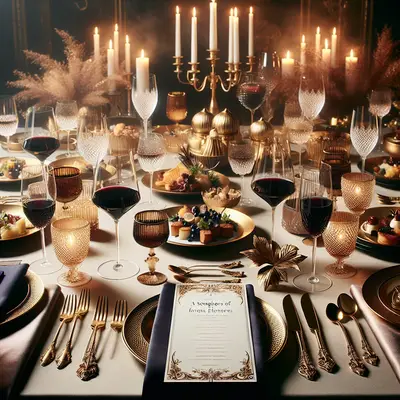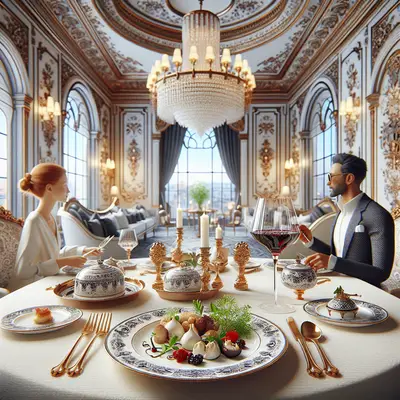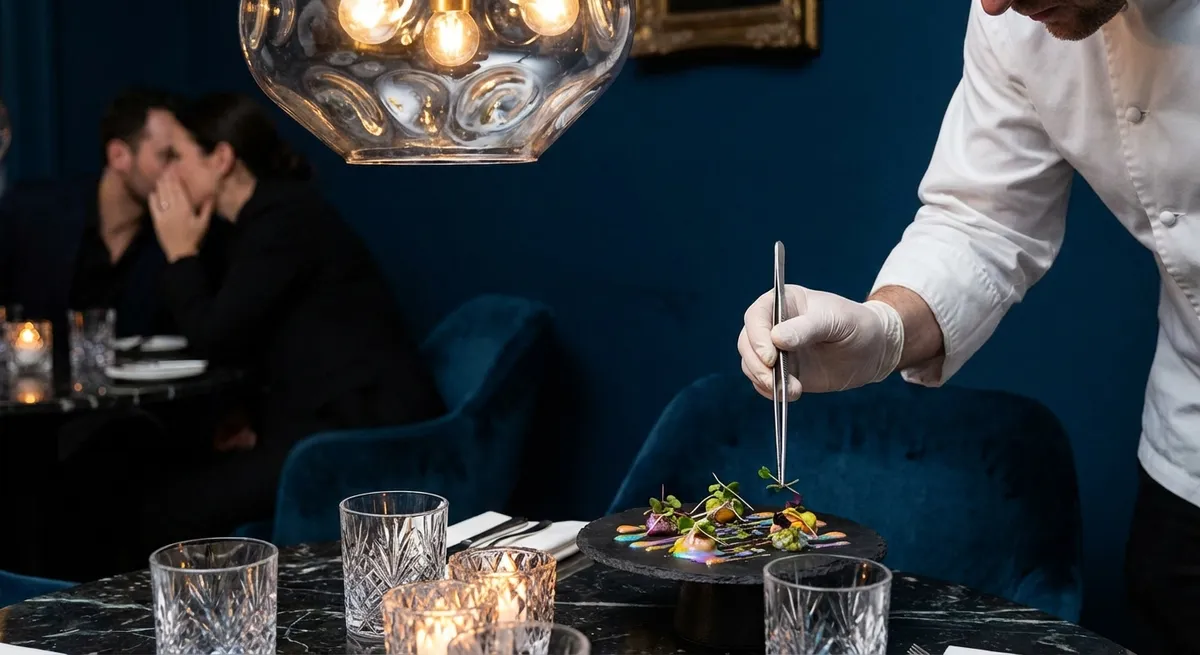
Luxury travelers do not seek just “a good restaurant.” They seek a dining room that feels like a whispered recommendation, a menu that reads like a private conversation, and a level of care that anticipates needs before they surface. Fine dining, at its highest expression, is not about theatrics or excess; it is about precision, intimacy, and an almost invisible choreography designed for those who notice everything.
For the Jet Ready guest, understanding this world means knowing what to look for beyond the Michelin stars and marquee chef names. It means recognizing the subtleties that separate a memorable meal from a truly rare experience. What follows are five exclusive insights that can quietly elevate every reservation you make, in any city, anywhere in the world.
The Signature of the Room: Reading a Dining Space Before You Sit
Long before the first glass is poured, the room tells you what kind of evening you are about to have. Fine dining is an architecture of intention—acoustics, light, spacing, and sightlines are not incidental. They are the first promise of how carefully your time will be handled.
In a truly exceptional restaurant, sound is calibrated as precisely as seasoning. You can hear your companion without raising your voice, yet the room never feels hushed to the point of self-consciousness. Tables are close enough to lend a sense of energy, yet subtly staggered to keep conversations psychologically private. Lighting reveals the table—crystal, porcelain, texture—while keeping the room itself gently veiled, as though the evening exists in a curated dusk.
Look for small signals: the feel of the chair when you settle in, the weight and balance of the cutlery, the absence of harsh scents from the open kitchen. Are bags and coats quietly handled, or left to clutter the floor? Are menus presented simultaneously, with equal gravity for each guest? These quiet details reveal a philosophy: in refined rooms, comfort is engineered so discreetly that you rarely notice it until you step somewhere less considered.
Luxury travelers learn to read a space in the first sixty seconds. If the room feels visually loud, if traffic flow through the dining area is chaotic, or if the table settings are purely decorative rather than functional, you are likely in for a beautiful but shallow performance. The finest rooms, by contrast, are composed for one purpose: to make your focus naturally narrow to the plate, the glass, and the person across from you.
The Chef’s True Voice: Ordering Beyond the Obvious
Menus in celebrated dining rooms often resemble curated galleries: a few seasonal highlights, a tasting menu, perhaps a concise à la carte section. Yet the most remarkable moments often happen off the page, in the space between what is printed and what is possible.
The chef’s true voice usually emerges in the seasonal or market-driven elements—dishes that appear fleetingly, anchored in what was exceptional that morning rather than what is permanently “on brand.” Luxury travelers cultivate relationships with these subtleties. They ask informed questions: Which dish is the chef personally excited about tonight? Is there a preparation the team is testing quietly for a future menu? Are there off-menu specialties based on current ingredients?
Approach this with knowledge, not entitlement. If the restaurant is known for a particular region, technique, or ingredient, signal that you are aware of it—then invite guidance. Mention a preference for a particular style (clean flavors, deeper reductions, wood-fired, raw preparations) rather than dictating dishes. This gives the kitchen both freedom and focus, and the result is often something quietly extraordinary: a variation of a signature course reimagined for your table, or a limited-quantity ingredient that never reaches the printed menu.
Discerning guests also recognize when to trust a tasting menu and when to compose their own. In temples of haute cuisine, the tasting progression is often the chef’s most precise narrative; it reveals balance, rhythm, and point of view. In more modern, globally influenced rooms, a carefully guided selection of shared dishes—anchored by one or two “centerpiece” plates—can feel more relaxed without diluting the experience. The art is not in ordering extravagantly, but in inviting the kitchen to express itself in a way that feels tailored rather than transactional.
Precision in Service: The Art of Being Anticipated, Not Managed
The difference between good and extraordinary service is not in how quickly a request is met, but in how rarely you need to make one. In refined dining rooms, service is an orchestral score: pace, timing, touchpoints, and disappearances are all arranged with intent.
Watch the cadence. Courses should land with a natural tempo—neither rushed nor languid. Plates are cleared only when the last diner finishes, and never mid-sentence. Staff move with quiet economy: no unnecessary interruptions, no hovering, no conspicuous display of memorized speeches. Instead, service feels like a series of gentle, well-placed edits to your comfort: a subtly adjusted chair, a refreshed napkin, a glass topped up only when it reaches an ideal point, not simply as a reflex.
Luxury travelers value a particular form of discretion: service that recognizes status without reinforcing it. Names remembered from previous visits, preferences recalled without fanfare, dietary needs anticipated and seamlessly accommodated—these are not indulgences, but marks of a team that treats hospitality as a craft, not a script. When traveling, note how quickly a staff can read your table’s mood. Do they recognize when you prefer conversation to explanation, or when you are open to deeper storytelling about the food and wine?
The finest service teams also handle missteps with elegance. A misfired dish, a delay, an overcooked course—these things happen, even in Michelin-starred rooms. What distinguishes a truly premium establishment is how they respond: immediate acknowledgment, a sincere correction, perhaps a quietly comped course or glass, and, above all, a restoration of rhythm. Luxury travelers understand that perfection is not the absence of error, but the presence of excellent recovery.
The Sommelier as Curator: Building a Relationship, Not Just a Wine List
For many, the wine list is the most intimidating object on the table. For the well-traveled guest, it is a map: a way to understand the restaurant’s priorities, its relationships with producers, and its confidence in its own taste. The sommelier is your guide through that territory—if you know how to engage them properly.
Exceptional wine programs are not measured only by the presence of grand crus and legendary vintages. They are defined by coherence: a sense that every bottle, from the house pour to the rarest allocation, belongs to a deliberate point of view. Pay attention to depth in unexpected regions, to thoughtful by-the-glass selections, to a willingness to highlight smaller growers alongside heritage estates. This is where the sommelier’s personality truly emerges.
When you meet the sommelier, offer parameters rather than prescriptions. Share your style preferences (structured vs. supple, mineral vs. opulent), your comfort range on pricing, and how you plan to dine (tasting menu, shared courses, emphasis on seafood, etc.). Luxury travelers often give a silent but clear budget cue—either with a range or by pointing generically to a category on the list—and then invite the sommelier to surprise them. This creates space for more nuanced pairings and for discoveries you won’t find in a simple “top ten” list of bottles.
Crucially, build relationships over time. In cities you visit frequently, return to the same restaurant and allow the sommelier to track your evolving tastes. They may set aside special bottles for your next arrival, or extend pre-release allocations that never appear on the printed list. This is where fine dining intersects with genuine privilege: not in ostentatious labels, but in access to experiences that exist only because someone has paid attention to what you appreciate—and remembers.
Quiet Access: Turning Reservations into Rituals
In major culinary capitals, the premium is no longer just on where you dine, but on when and how. For luxury travelers with fluid schedules and global itineraries, the true advantage lies in transforming reservations into informal rituals—anchors around which a city becomes personally legible.
Begin with curation, not conquest. Rather than chasing every “hot” table, identify a handful of restaurants in key cities whose values align with yours: craft over spectacle, intimacy over volume, provenance over trend. Become a recognizable regular, even if you visit only a few times a year. Arrive on time, treat the team with consistent courtesy, and respect the rhythm of the room. Over time, your name ceases to be just an entry in the booking system; it becomes a story the team knows.
This familiarity translates into meaningful advantages: preferred seating, late-notice accommodations when your flight shifts, or access to limited tasting menus available only to guests the restaurant trusts to understand them. In some cases, chefs will quietly create “once-only” menus for special occasions, drawing on rare ingredients or archival dishes no longer on public rotation. These experiences are rarely advertised; they are offered.
For the Jet Ready guest, it is also worth leveraging hotel concierges at truly exceptional properties. The best maintain direct, personal relationships with top dining rooms and can unlock tables that appear unavailable online—especially if your profile as a thoughtful, appreciative guest precedes you. The key is to use this access not to collect reservations as trophies, but to deepen your connection to a city’s culinary culture. Over time, certain evenings—Wednesday at a particular counter in Tokyo, Sunday lunch at a hidden dining room in Paris—become part of your own private geography.
Fine dining, at this level, shifts from being an occasional luxury to a quiet thread that runs through your travels: dependable, tailored, and deeply personal.
Conclusion
For discerning travelers, fine dining is no longer about opulence on the plate or bragging rights on social media. It is about the refinement of attention—yours, and that of the people who design, cook, and serve your evening. The room, the menu, the service, the wine, and the access all converge to form a private language of flavor and hospitality.
When you learn to read that language, each city you visit becomes more intelligible. A table ceases to be just a seat at a restaurant; it becomes a vantage point from which to understand local culture, global craftsmanship, and your own evolving tastes. What remains, long after the final course, is not the memory of luxury as display, but of luxury as fluency: the quiet confidence of knowing exactly why this experience, in this place, at this moment, could only have been designed for you.
Sources
- [Michelin Guide – How to Recognize Fine Dining Service](https://guide.michelin.com/en/article/dining-out/what-makes-great-restaurant-service) - Explores the hallmarks of exceptional restaurant service and guest experience
- [World’s 50 Best Restaurants – Insights on Global Dining Trends](https://www.theworlds50best.com/stories/News) - Provides context on evolving fine dining philosophies and restaurant culture worldwide
- [Institute of Masters of Wine – What Is a Sommelier’s Role?](https://www.mastersofwine.org/wine-knowledge) - Offers professional insight into wine curation and the dynamics of guest–sommelier interaction
- [CIA (Culinary Institute of America) – Elements of Restaurant Design](https://www.ciachef.edu/design-for-restaurant-success-pdf/) - Discusses how layout, acoustics, and ambiance are engineered in high-level dining rooms
- [UNWTO – Luxury Tourism Trends](https://www.unwto.org/news/new-report-on-luxury-tourism-trends) - Provides a broader view on how high-end travelers seek tailored, experiential dining and hospitality
Key Takeaway
The most important thing to remember from this article is that this information can change how you think about Fine Dining.