For the traveler who collects experiences rather than reservations, fine dining is less about spectacle and more about calibration. It’s where choreography, sourcing, sound, light, and human intuition are distilled into a few unhurried hours. At this level, dinner is not a plate; it is a language—quiet, exacting, and meant to be understood by those who pay attention.
This is not a list of “hot” restaurants or trending chefs. Instead, it is a lens: five discrete insights that help you recognize when a dining room has transcended fashion and entered the realm of true mastery.
1. The Architecture of Calm: How Serious Dining Rooms Control Energy
In exceptional restaurants, the room itself is doing as much work as the kitchen.
Notice how superior dining rooms manage tempo before you’ve even sat down. The entrance is rarely a bottleneck; there is a subtle decompression zone—often a short walk, a change in ceiling height, a soft curve in the hallway—that eases you from the city’s pace into the restaurant’s own, more deliberate rhythm. The best rooms allow you to arrive twice: once physically, and once mentally.
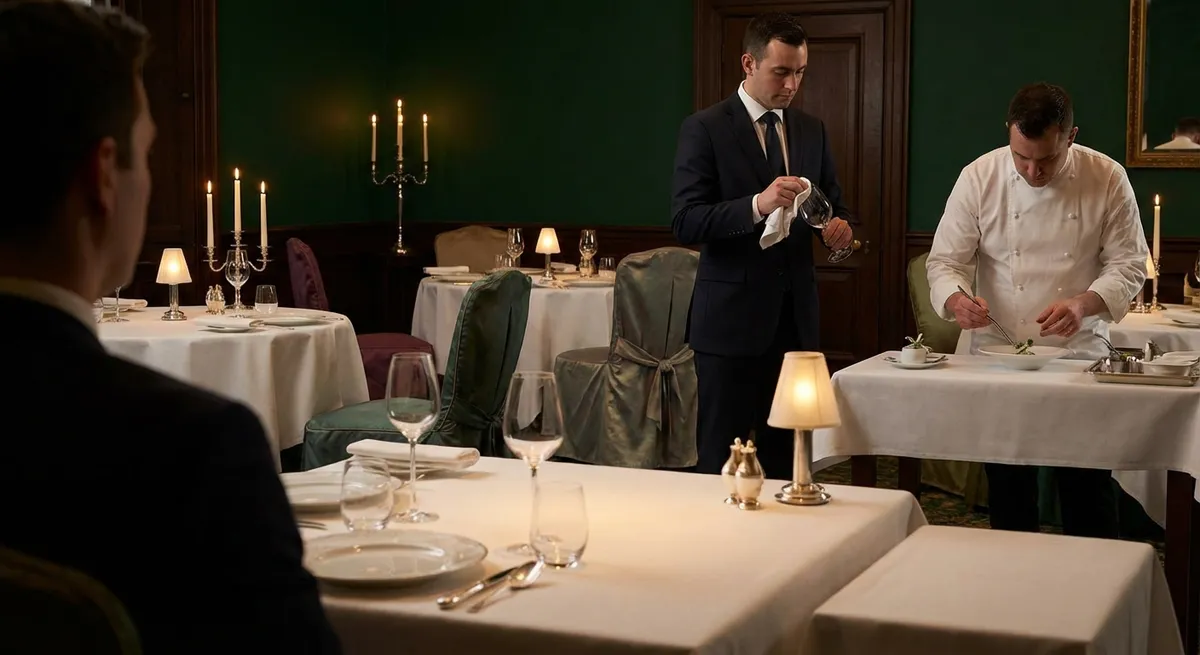
Lighting is obsessively tuned not to “dim” but to sculpt. Faces remain legible across the table; glassware catches light without glare; plates appear as small illuminated stages. Ambient sound is treated like another course: textiles, wall treatments, and table spacing are arranged to preserve intimacy without deadening the room’s sense of life.
Look, too, at sightlines. At the highest level, no guest is seated as an afterthought. Pillars, partitions, and banquettes are deployed to create pockets of privacy, yet your view always holds something intentional: a slice of the kitchen, a branch in seasonal bloom, a curated vignette of bottles or books. The room is not just beautiful—it is composed.
2. The Invisible Orchestra: When Service Becomes Precision, Not Performance
In true fine dining, service isn’t “attentive”; it’s anticipatory.
The hallmark is pattern recognition. Staff will clock which hand you favor for your glass, how quickly you move through a course, whether you lean into or recoil from strong aromas. Your water is topped before you glance at the carafe; a chair is steadied before you think to reach for it; a napkin is refolded during a fleeting absence without a hint of intrusion.
Pay attention to how information is offered. At lesser tables, descriptions feel memorized and breathless. At elevated ones, explanations are calibrated: a few quiet sentences, delivered at your pace, with the option to go deeper if your questions signal interest. Knowledge is deep but never weaponized; sommeliers and servers read your curiosity levels as carefully as your palate.
Timing, too, is a signature. Courses are neither rushed nor languid; they simply appear when your conversation has a natural pause. When there is a delay, it is acknowledged with the confidence of a team that doesn’t fear transparency. And when something is not to your liking, the response is never defensive—only solution-oriented, swift, and discreet enough that it leaves no social ripples at the table.
In the finest houses, the guest is never made to perform sophistication. Allergies, preferences, or last-minute changes are treated as design constraints, not inconveniences. You are made to feel not important, but understood.
3. Beyond Luxury Ingredients: The New Grammar of Provenance and Season
Caviar and truffle are no longer sufficient signals of luxury. Sophisticated travelers recognize that the true mark of a kitchen’s intent lies in its restraint and its sourcing narrative.
Examine the menu’s relationship to place and time. Serious restaurants now reveal a deep, almost scholarly engagement with their ecosystems: a short, focused list that pivots as seasons turn, not simply swapping garnishes but reimagining compositions around what is momentarily at its pinnacle. A single vegetable might be presented in multiple textures and maturities, celebrating the farmer as much as the flavor.
There is also a shift from global bragging rights to hyper-local nuance. While wagyu and bluefin may still appear, what distinguishes a modern, world-class table is often its devotion to nearby coastal waters, family-run dairies, heritage grains, or overlooked regional species. Menus may name producers not as a flourish, but as co-authors of the experience.
A refined traveler will note how luxury is encoded in decisions about sufficiency rather than abundance. The most elevated kitchens no longer feel compelled to overload plates with opulence. A single, perfectly matured scallop, treated with monastic focus, can speak more loudly about standards than a tower of expensive yet interchangeable ingredients.
Sustainability, at this level, is never a marketing bullet; it is a quiet given. You’ll see it in thoughtful portion sizes, in the inventive use of “secondary” cuts or seasonal surplus, and in the absence of fashionable but ecologically questionable products. Luxury becomes not the right to consume without consequence, but the access to practitioners who have already done the ethical editing for you.
4. Pairings as Portraits: Moving Beyond Wine Lists to Liquid Storytelling
For the well-traveled palate, wine pairings have evolved from a default add-on to a sophisticated form of narrative.
In advanced programs, the pairing is not simply about “what goes with fish.” It’s a dialogue between acidity, aromatics, texture, and tempo. A serious sommelier suite will map your tolerance for oxidation, sweetness, tannin, or volatility, and then build an arc that mirrors the meal’s own structure. Sparkling wines may reappear mid-menu to reset the palate; an unexpected chilled red might be introduced where you expect white; a sake or fortified wine might bridge from savory to sweet with surgical precision.
Non-alcoholic pairings have also matured beyond syrups and juices. In exceptional restaurants, they are crafted with the same intellectual rigor as the wine list: lacto-ferments, infusions, broths, cold-brewed teas, and clarified juices arranged to echo or counterpoint the flavors on the plate. For travelers who cross time zones and meetings, this opens the possibility of a fully immersive fine dining experience without the cognitive tax of alcohol.
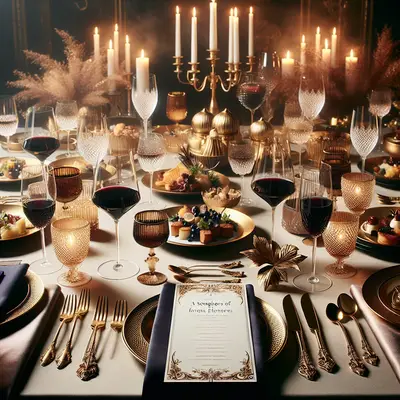
Watch for the quiet signals of a serious program: appropriate stemware variations, considered serving temperatures, and honest guidance around allocation and rarity. The most elegant gesture a sommelier can make is not to steer you toward the most coveted label, but toward the bottle or pairing that best fits your appetite, schedule, and state of mind that evening.
Ultimately, in the world’s best dining rooms, the liquid component—whether wine, tea, or an intricate infusion—ceases to be an accessory. It becomes a second language through which the restaurant tells you who it is.
5. Memory as the True Luxury: How Great Restaurants Design What You Take With You
At the highest tier, the real currency of fine dining is not the menu; it’s the afterglow.
Elite restaurants design for what your memory will choose to keep. That might be a single, impossibly precise aroma when a cloche is lifted; the hushed theater of a dish finished tableside; the texture of a hand-written note that follows you back to your suite; or the sense, days later, that you can still reconstruct the progression of flavors without effort.
For the seasoned traveler, customization over time is where true loyalty is won. Return to an exceptional restaurant and you may find that your previous preferences have been quietly logged. The room might seat you where the light flatters you best at the hour of your reservation. A dish you adored on your last visit may appear in a new, evolved form, acknowledging your history with the kitchen. This is hospitality as ongoing conversation, not a series of isolated performances.
Equally telling is how the restaurant handles the edges of the experience: how they call a car, guide you back into the city, or liaise with your hotel or jet operator. Menus might be emailed in a beautifully archived format, ready to be revisited or shared. A rare wine might be tagged in your profile, ensuring future access. Thoughtful teams understand that in an era of constant motion, they are building not just one evening, but a chapter in your personal atlas of pleasures.
In a world saturated with options, what lingers is no longer the lavishness of the setting, but the sharpness of detail: the feeling of having been exquisitely, almost eerily, well met.
Conclusion
For those who move easily between continents and time zones, fine dining at its best is less an indulgence than a discipline: a moment where countless artisans align to create a few hours of perfected stillness.
Recognizing the quiet architecture of the room, the invisible intelligence of service, the modern language of provenance, the narrative depth of pairings, and the deliberate engineering of memory allows you to distinguish the merely expensive from the genuinely exceptional.
When you view fine dining through this lens, reservations become something more: carefully curated coordinates in a life lived in motion, yet always anchored—at least for an evening—in remarkable precision.
Sources
- The World’s 50 Best Restaurants – Academy and Methodology – Overview of how leading restaurants are evaluated globally, highlighting current values in top-tier dining
- Michelin Guide – The Michelin Inspectors’ 5 Restaurant Rating Criteria – Official explanation of what defines excellence in food, service, and ambiance
- Harvard T.H. Chan School of Public Health – Sustainable Diets – Context for the growing focus on sustainable sourcing in modern fine dining
- Court of Master Sommeliers – About the Court – Insight into the standards and expertise behind world-class wine and beverage programs
- Cornell University School of Hotel Administration – Restaurant Ambience Research – Academic perspective on how lighting, sound, and design affect guest perception and satisfaction
Key Takeaway
The most important thing to remember from this article is that this information can change how you think about Fine Dining.