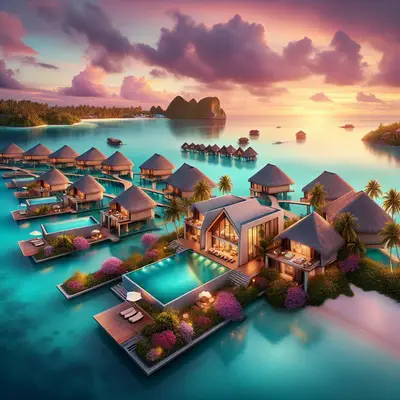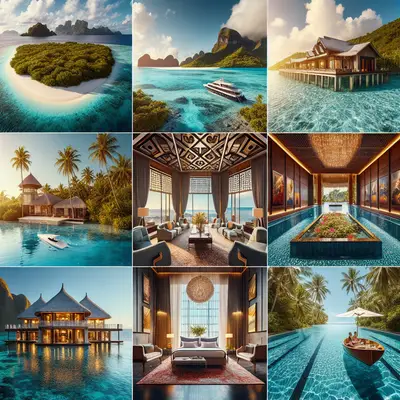
For the traveler who has already seen the postcard views and sampled the usual suite upgrades, exclusivity is no longer about size of room or thread count alone. It is about access—to silence, to rarity, to orchestration so precise it feels almost invisible. Exclusive resorts today operate as finely tuned ecosystems, where architecture, service, and privacy conspire to produce something that feels less like a vacation and more like a temporary, exquisitely curated life.
Below, five under‑discussed insights that shape the world’s most sought‑after retreats—and quietly separate the truly exceptional from the merely expensive.
1. The Architecture of Seclusion: How Privacy Is Engineered, Not Promised
At serious resorts, privacy is a design discipline, not a marketing claim. Site plans are drawn to choreograph what guests do not see as much as what they do—how footpaths curve to avoid sightlines, how infinity pools are angled to frame coastline rather than neighboring villas, how service corridors exist in a parallel universe so that laundry, luggage, and late‑night room service never disturb the illusion of effortless calm.
The savviest travelers now ask about these invisible blueprints. Is each villa accessed independently, or by shared corridors? Are plunge pools shielded from above, not just from the front? How are adjacent terraces staggered to prevent sound from carrying at dinner or sunrise yoga?
In the most elevated properties, landscaping is as strategic as the masonry. Native vegetation is layered to create natural acoustic buffers; elevation changes are used to “stack” spaces without compromising seclusion. The result is less fortress, more refuge—a sense that you are alone with the view, even when the resort is near capacity.
2. The Curated Periphery: Why What’s Around the Resort Matters More Than Ever
Location is no longer a pin on a map; it is a radius of possibility. Elite travelers are looking beyond the property line, asking how the surrounding region can be experienced in a way that feels both authentic and carefully filtered.
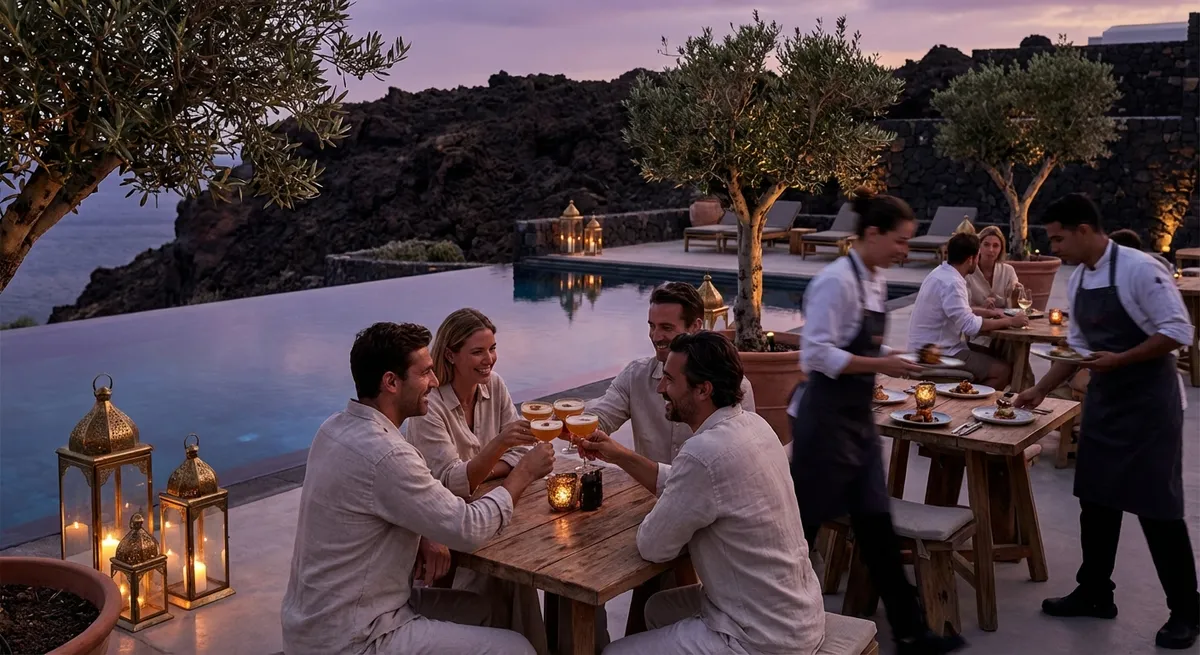
Leading resorts now act as cultural editors. They maintain small, trusted constellations of local artisans, private guides, and expert hosts—a winemaker who opens an unlisted cellar at dusk, a marine biologist who conducts a reef night‑dive for a single family, a chef who cooks in your villa using ingredients sourced that morning from micro‑producers.
Crucially, this is not about “exclusive access” as a blunt instrument—closing off public spaces or buying up entire beaches. It is about creating low‑impact, high‑depth encounters where the traveler engages with the destination’s substance while the resort remains accountable for standards of safety, discretion, and environmental sensitivity.
When evaluating an exclusive resort, it is worth asking less about on‑property entertainment and more about the resort’s long‑term relationships with the world beyond its gates: Who are their local partners? How many years have they worked together? How are communities compensated and represented?
3. Precision Personalization: When Service Remembers Before You Request
True personalization in luxury hospitality is moving beyond name recognition and pillow preferences. At the uppermost level, resorts are adopting a quieter form of intelligence—fine‑grained, anticipatory nuances that never need to be announced.
A thoughtful guest profile might capture the way you take your espresso, which side of the bed you favor, whether you prefer a room slightly cooler at night, if you tend to read in the early evening or swim at dawn. But the real artistry lies in how that data is deployed: discreetly, sparingly, and always under your control.
The most sophisticated properties now blend human intuition with restrained technology. Staff are trained to modify service cadence based on your behavior—lingering at breakfast if you engage in conversation, retreating if you prefer quiet mornings. Turndown may include not just chocolates, but a precisely chosen book on the local region, in your native language, placed on the side of the bed you actually sleep on.
For the discerning traveler, a good litmus test is consistency across touchpoints. Does the driver who meets you at the airstrip already know your luggage has soft sides and shouldn’t be stacked? Does the spa confirm your preferred pressure without asking you to repeat your preference each visit? These are signs that personalization is integrated, not improvised.
4. Rhythms of Time: The New Luxury of Unsynchronized Schedules
Mass luxury still runs on timetables: fixed breakfast hours, scheduled excursions, standardized check‑in and check‑out. Exclusive resorts are quietly rejecting this rigidity, designing experiences around the natural rhythms of each guest rather than the convenience of operations.
This shift is subtle but transformative. Breakfast that appears whenever you actually wake, served where you are—terrace, poolside, boat deck. Housekeeping that arrives when your villa systems register you have left, not at 11:00 a.m. by default. Wellness programs that can be broken into micro‑sessions around your day rather than requiring a fixed retreat schedule.
The most thoughtful properties also coordinate activities with environmental rhythms: snorkeling timed to optimal visibility, hiking aligned with shade and wind, stargazing mapped to moon phases. Your days become less about “fitting into” the resort program and more about a temporal choreography that feels organically suited to your body, your jet lag, and your preferences.
When assessing a purportedly exclusive resort, inquiring about flexibility—late check‑outs, off‑schedule dining, private access to typically group‑based activities—often reveals more about its true caliber than any photo gallery.
5. Quiet Sustainability: Ethics as an Integrated, Not Performed, Luxury
For the contemporary luxury traveler, sustainability is not a brochure section; it is part of the definition of excellence. Yet the most refined resorts rarely shout about their efforts. Instead, environmental and social responsibility are woven into the fabric of the stay in ways you may feel, but not always notice.
This can be as granular as the absence of single‑use plastics, or as ambitious as on‑site water treatment, renewable energy systems artfully concealed within the architecture, or reef‑safe docks and moorings designed to minimize marine disruption. It can mean menus centered on short supply chains—vegetables from the resort’s own gardens, fish sourced under rigorous local quotas, wines selected from wineries practicing regenerative viticulture.
Equally important is a resort’s relationship with its human environment: long‑term local employment, apprenticeships, language training, and cultural programming developed with community leaders rather than for social media appeal. When the same faces welcome you back year after year, it often signals a property that invests in its people as thoughtfully as in its design.
For travelers, the new due diligence includes asking for sustainability reports, certifications, or third‑party audits—not as a test of perfection, but as evidence of transparency and continuous improvement. In the most elevated versions of exclusivity, conscience and comfort are not in tension; they are mutually reinforcing.
Conclusion
Exclusive resorts, at their best, offer more than seclusion and spectacle. They orchestrate an entire ecosystem of experience—architectural privacy, curated surroundings, deeply attuned service, liberated time, and quietly rigorous ethics.
For those who have already sampled the obvious icons of luxury, the real distinction now lies in nuance: the resort that edits your world so precisely that you can inhabit it fully, without performance or pretense. The future of exclusivity is not louder, brighter, or more opulent. It is more considered—crafted for travelers who value depth over display and refinement over noise.
Sources
- [World Travel & Tourism Council – Luxury Travel Report](https://wttc.org/research/insights/luxury-travel) – Industry insights into evolving expectations and behaviors of luxury travelers.
- [Forbes Travel Guide – What Makes a Five-Star Hotel](https://www.forbestravelguide.com/about/forbes-travel-guide-star-rating) – Detailed criteria that illuminate how top-tier properties differentiate service, privacy, and personalization.
- [Virtuoso – 2024 Luxe Report](https://www.virtuoso.com/travel/articles/virtuoso-2024-luxe-report) – Analysis from a leading luxury travel network on trends such as sustainability, personalization, and experiential travel.
- [Condé Nast Traveler – The Future of Sustainable Luxury Travel](https://www.cntraveler.com/story/the-future-of-sustainable-luxury-travel) – Explores how high-end properties are integrating environmental and social responsibility.
- [United Nations World Tourism Organization (UNWTO) – Tourism and Sustainability](https://www.unwto.org/sustainable-development) – Frameworks and guidelines shaping responsible practices adopted by leading resorts.
Key Takeaway
The most important thing to remember from this article is that this information can change how you think about Exclusive Resorts.