The most coveted resorts are no longer defined by square footage, thread count, or the number of infinity pools. For the genuinely seasoned traveler, exclusivity is measured in subtler currencies: invisibility when desired, precision when required, and a level of orchestration that feels almost preternatural. This is the realm where access is curated, not advertised; where the rarest luxury is not excess, but exactness.
Below, five quietly guarded insights reveal how the world’s most discerning guests are experiencing exclusive resorts today—and how to recognize when a property belongs in that echelon.
The Invisible Architecture of Access
In truly exclusive resorts, access is engineered long before arrival. This is not about VIP lanes and velvet ropes, but about a seamless choreography that ensures you almost never encounter friction—or a crowd.
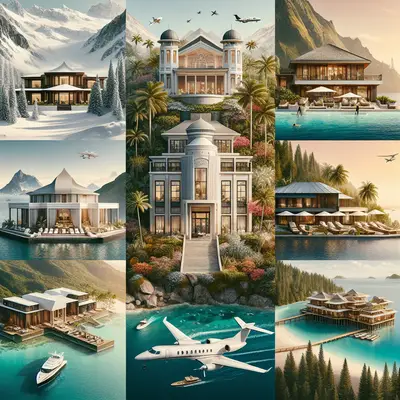
At the highest level, access begins with private aviation coordination and arrivals designed to bypass conventional bottlenecks. Properties with dedicated teams often liaise directly with FBOs, customs, and security to minimize exposure and compress the journey from tarmac to suite into a private, controlled experience. The guest rarely sees the paperwork, only the result: a glide-path approach to relaxation.
Once on property, exclusivity is expressed through spatial intelligence rather than ostentation. Suites and villas are oriented to avoid direct sightlines, arrival routes are staggered, and key amenities are subtly duplicated (a secondary pool, a discreet breakfast terrace) to ensure intimacy even at full occupancy. You’re never told that you’re shielded from the crowd—only that “this route might be more comfortable,” or “we’ve reserved a quieter corner for you.”
The distinction is simple yet profound: resorts that truly understand exclusivity do not merely restrict access; they refine it, curating proximity and privacy with the same care they devote to design.
The Art of Anticipation, Executed with Restraint
Personalization is no longer a differentiator; anticipation is. The most exclusive resorts excel at reading between the lines of your preferences, then acting with calibrated restraint.
Pre-arrival questionnaires are only the visible layer. Behind the scenes, elite properties cross-reference seemingly minor data points—arrival times, meal pacing, spa bookings, even the rhythm of your email replies—to infer whether you prefer structure or spontaneity, interaction or solitude. The outcome is an experience that feels uncannily aligned with your internal tempo.
The refinement lies in what they choose not to do. Instead of flooding you with options, your butler or dedicated host might present a single, well-judged recommendation: a late-night in-villa tasting when they sense you’re jet-lagged, a shortened tasting menu if you arrived on a long-haul flight, or a discreetly staggered housekeeping schedule that respects late-morning calls with different time zones.
For the luxury traveler, the signal of true exclusivity is not the sheer number of amenities, but the restraint with which they are deployed. Precision timing, quiet course-corrections, and the feeling that the property is adapting to you—not the other way around—mark the difference between premium and exceptional.
Privacy as a Crafted Experience, Not Just a Feature
Privacy has become a generic promise in luxury hospitality; in the most exclusive resorts, it is treated as a bespoke design challenge. The aim is not only to keep you unseen, but to give you choices in how visible you wish to be at any given moment.
Architecturally, this can mean layered thresholds: a private drive and arrival court, then a screened courtyard, and finally an interior retreat where even terrace views are angled to preserve sightline discretion. High-tier villas might offer dual outdoor spaces—one with a horizon-facing view, another enclosed garden for complete invisibility.
Operationally, the most sophisticated properties give you control over your own exposure. A simple toggle in an app or a quiet word with your butler can adjust how frequently you are approached, how deliveries are made, and even which staff are cleared to enter your orbit. Linen refreshes, turndown, and in-villa dining can be orchestrated to ensure you never encounter staff unless you invite the interaction.
The litmus test: you can move through your day without ever feeling observed or “handled,” yet when you do step into shared spaces—a bar, a terrace, a shoreline—you sense that the environment has been gently edited to your comfort. The illusion is that nothing has been arranged; the reality is that everything has.
Time as the Ultimate Luxury Commodity
In the uppermost tier of resort experiences, time becomes the primary asset being protected and enhanced. This goes far beyond expedited check-ins and late check-outs; it’s an entire operational philosophy designed to reclaim hours you never realized you were losing.
It begins with information asymmetry resolved in your favor. Flight delays, weather shifts, or regional events are often anticipated and absorbed into the property’s planning before you are even aware of them. Your airport transfer is automatically moved, a dinner is quietly rebooked, spa times adjusted—all without a flurry of calls or emails.
On property, time optimization is executed with almost concierge-level foresight. Restaurant pacing can be subtly tuned based on your schedule; a tasting menu can be compressed if you have an early call, or elongated if your day ahead is deliberately unstructured. Activities are layered so that transitions are frictionless: a boat transfer to lunch that doubles as a coastal cruise, or a spa treatment sequenced precisely between meetings for maximum impact.
Most importantly, the resort understands when not to fill your hours. True exclusivity respects unstructured time and protects it from over-curation. Instead of a packed itinerary, you’re offered a framework and given permission for elegant idleness: a private terrace breakfast that exceeds any restaurant table, or a late afternoon where the only appointment is the light changing over the water.
For the discerning traveler, the most telling mark of an exceptional stay is returning home with the sense that your time expanded, rather than evaporated.
Sustainability Elevated to Quiet Stewardship
In the rarefied tier of exclusive resorts, sustainability is no longer a marketing bullet—it is a form of stewardship practiced with quiet rigor. The new luxury traveler expects environmental and social responsibility to be embedded, not announced.
The most advanced properties invest deeply in place. This can mean on-site water treatment and desalination plants invisible to guests, marine or wildlife biologists on staff, or partnerships with local communities that go far beyond token sourcing. Menus may be composed almost entirely from regional producers not because it photographs well, but because supply chains are being shortened with intention.
Crucially, the guest experience of this stewardship is subtly elegant. Renewable materials are chosen as much for tactile pleasure as for ethics; high-performance glass that maximizes views while reducing energy consumption; or native landscaping that feels wild yet is meticulously planned to support local biodiversity. You are offered glass carafes instead of bottled water, yet the glassware itself feels weighty and bespoke.
Social sustainability is woven in with similar care. Local staff are not just present; they occupy senior roles, lead experiences, and convey a sense of cultural authority. Philanthropic initiatives are offered as optional, deeply considered engagements rather than guilt-driven add-ons—an afternoon with a local artisan cooperative, or the chance to support a reef restoration you can actually snorkel above.
For the well-informed traveler, exclusivity is increasingly aligned with this level of conscientiousness. The rarest comfort today is knowing that your indulgence is underwritten by a serious, well-governed commitment to the place that hosts you.
Conclusion
The future of exclusive resorts is not louder, bigger, or more visually theatrical. It is more attuned—architected around access, anticipation, privacy, time, and stewardship with a degree of nuance that cannot be improvised. For those shaping their next journey, the real question is no longer “How luxurious is it?” but “How precisely does it fit the way I wish to live, just for a few days?”
When a property can answer that without ever having to say it aloud, you are no longer simply a guest. You have entered a private conversation with a place designed for very few, but executed as if it were made for you alone.
Sources
- [UNWTO: Tourism Definitions and Trends](https://www.unwto.org) - Provides global context on luxury and high-end tourism trends
- [Virtuoso: 2024 Luxe Report](https://www.virtuoso.com/travel/articles/virtuoso-2024-luxe-report) - Insights into evolving preferences of luxury travelers and what they now value in exclusive stays
- [Forbes Travel Guide](https://www.forbestravelguide.com) - Professional criteria and evaluations that illuminate how top-tier resorts deliver service, privacy, and personalization
- [Aman Resorts Official Site](https://www.aman.com) - Illustrative examples of design-led privacy, anticipatory service, and integration with local environments at ultra-luxury properties
- [Condé Nast Traveler: Sustainable Luxury Travel](https://www.cntraveler.com/gallery/sustainable-luxury-travel) - Explores how high-end resorts are embedding sustainability and stewardship into the guest experience
Key Takeaway
The most important thing to remember from this article is that this information can change how you think about Exclusive Resorts.