A new tier of hospitality has quietly emerged—one that is less about marble lobbies and logo-heavy branding, and more about orchestration, privacy, and deeply personal narratives. Today’s finest exclusive resorts have become custodians of time, attention, and place, translating the world’s most coveted destinations into experiences that feel both effortless and impossibly tailored. For the discerning traveler, the true luxury is no longer arrival; it is the way every moment after unfolds with near-invisible precision.
A New Definition of Access: When Privacy Is the Real Upgrade
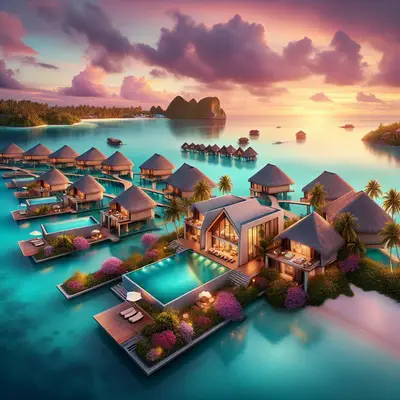
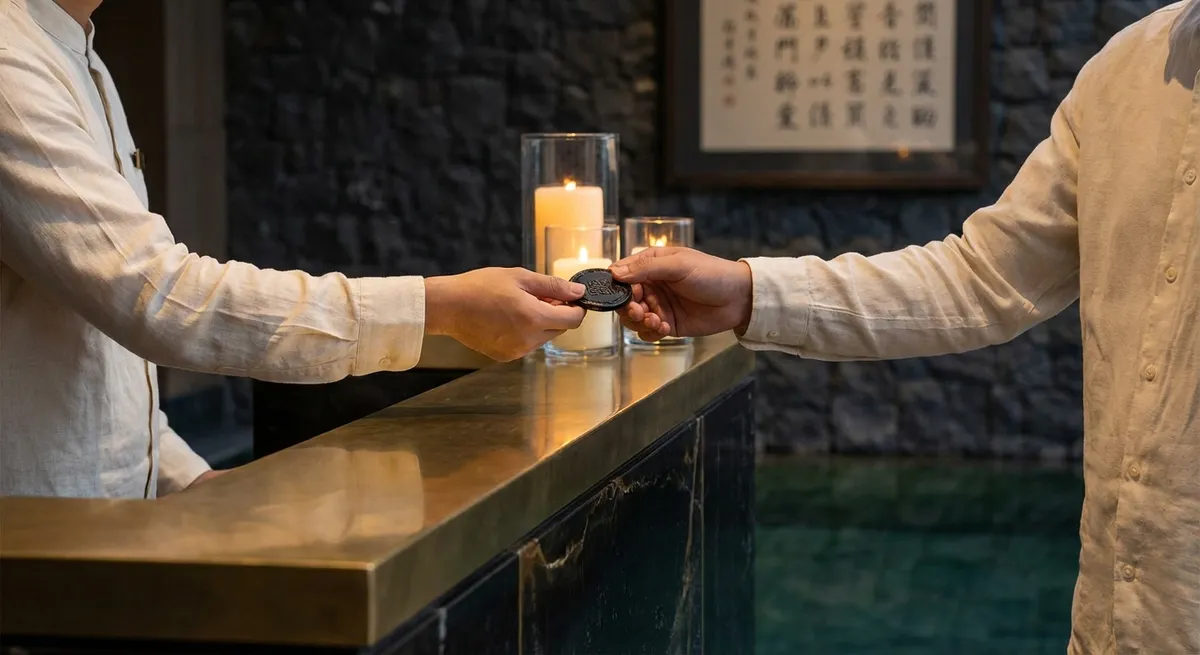
In the realm of exclusive resorts, access is curated, not advertised. The most coveted properties no longer compete on sheer visibility; they win on how little of your stay is visible to anyone else. Arrival routes are staggered, check-in is conducted in private pavilions or within your villa, and staff members are trained to recognize you without asking for your name or room number.
This is privacy as design principle rather than afterthought. Villas are oriented to capture ocean or mountain views while making neighboring guests feel pleasantly theoretical. Some resorts employ discrete perimeter security and off-grid logistics so that VIP arrivals never intersect with the main flow of guests, even at full occupancy.
What emerges is a new understanding of upgrade: not a larger suite or a better view, but the quiet assurance that you can move through your stay unobserved, unhurried, and entirely on your own terms. For high-profile travelers, it is the difference between being accommodated and being protected.
The Invisible Concierge: Anticipation as an Art Form
The signature of an exceptional resort is not the welcome drink; it is the way the property seems to know what you need before you articulate it. This is the invisible concierge—a fusion of human intuition and softly deployed data.
Prior visit histories, preference profiles, and even travel arrival patterns are studied not to overwhelm you with options, but to remove friction from your day. Your favored mattress firmness is already in place. The minibar reflects your actual tastes rather than a generic premium selection. A particular jasmine tea appears after dinner because you once requested it at a sister property three years ago.
The best resorts deploy technology sparingly and discreetly. Tablets and apps exist, but they never compete with the human presence of a dedicated butler or guest experience curator. Communication is multi-channel and adaptive: if you prefer a handwritten note to a notification, that preference becomes part of your travel grammar.
For luxury travelers, this anticipation becomes the true marker of belonging. You are not merely recognized; you are remembered with precision and acted upon with restraint.
Sense of Place, Elevated: From Postcard Views to Lived Geography
Where traditional luxury once prized a standardized aesthetic, exclusive resorts now define themselves by how deeply they embody their location. It is no longer sufficient to be “on the beach” or “in the mountains.” The property must feel as though it could exist nowhere else.
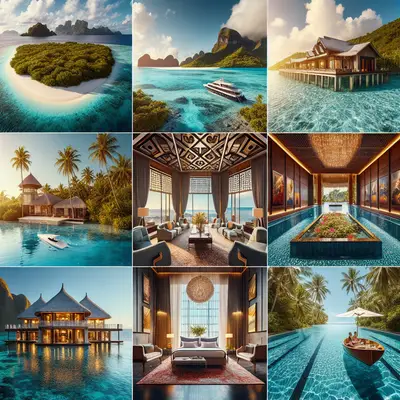
Architecture is guided by local materials and vernacular design rather than imported opulence. A coastal resort might draw from historic fishing villages in its palette and proportions, while an alpine retreat references centuries-old chalets in its timberwork and rooflines. The aim is not nostalgia but authenticity interpreted through a contemporary lens.
Culinary programs emphasize origin with almost academic rigor: estate-grown produce, hyper-local fishing cooperatives, or foraging-led menus that shift with the season. Cultural programming moves beyond staged performances to intimate interactions—private atelier visits, after-hours access to historic sites, or conversations with local winemakers in their own cellars.
The result is a stay that reads less like a generic luxury vacation and more like an elegantly edited immersion. You leave not just rested, but fluent in the subtleties of a specific corner of the world.
Time as the Ultimate Amenity: Designing for Deep Rest and Focus
In elite circles, time has quietly replaced space as the most coveted luxury. Top-tier resorts are responding by engineering environments where time feels both expansive and under your complete command.
Rigid schedules are softened or eliminated. Breakfast hours stretch into the afternoon; spa rituals are structured around your internal clock rather than a preset timetable. Housekeeping is coordinated with your personal rhythm to ensure your villa is never disturbed at inopportune moments, yet always feels freshly tended.
Some properties curate “low-stimulus corridors” of the day—periods with no housekeeping knocks, no non-essential messages, and minimal resort-wide activity—designed for deep rest or concentrated work. Lighting schemes shift subtly throughout the evening to cue the body’s natural circadian rhythms. Noise pollution is treated as seriously as air quality, with acoustic engineering that makes neighboring occupancy almost imperceptible.
For guests whose day-to-day lives are relentlessly scheduled, this re-framing of time is transformative. You are not simply on vacation; you are temporarily liberated from the tyranny of the calendar.
Precision Personalization: When Bespoke Becomes the Baseline
Personalization at its highest level is less about dramatic gestures and more about exact calibration. The most refined resorts have moved beyond generic “tailored experiences” and into the realm of genuine customization, where almost every touchpoint is adjustable within a well-considered framework.
Fitness and wellness offerings, for instance, are no longer limited to massages and standard training sessions. Instead, you may encounter pre-arrival consultations with wellness directors, data-informed programs based on your current routines, and nutrition calibrated to your preferences without sacrificing culinary pleasure. A morning might begin with a private movement session designed around your travel fatigue, followed by a breakfast that quietly reflects your dietary preferences without the need for repetitive requests.
Experiences, too, are written around you instead of you fitting into a pre-existing program. A yacht excursion may be timed to avoid popular anchorages. A vineyard visit might focus on specific vintages or varietals aligned with your existing collection at home. Children’s programming is adapted not just by age, but by temperament and learning style, with staff discreetly briefed on how each child engages best.
This precision is the true frontier of exclusivity: not more, but better; not louder gestures, but sharper alignment with who you are and how you prefer to move through the world.
Five Exclusive Insights for the Sophisticated Traveler
- Discretion is a design element, not a service line.
The most elite resorts embed privacy into architecture, staffing, and logistics. When evaluating a property, look beyond private pools and consider arrival routes, villa orientation, and how staff interact in shared spaces.
- Data is most luxurious when it disappears.
Personalization should feel organic, not monitored. The finest properties use guest history to remove friction, not to upsell. If you feel “profiled” rather than understood, the calibration is off.
- Authenticity now outperforms uniform opulence.
A sense of place is no longer a soft benefit; it is a primary criterion of excellence. Seek resorts whose architecture, cuisine, and cultural engagement could not simply be cut and pasted into another destination.
- Time policies are the new dress codes.
Examine how a resort handles scheduling: rigid seating times, inflexible spa slots, and repetitive confirmations are signals of operational convenience, not guest-centric thinking. True luxury shapes itself around your temporal needs.
- Bespoke should extend to the invisible layers.
The most advanced personalization touches elements you never thought to request: air quality, lighting temperature, acoustic privacy, pre-cooled or warmed floors, customized turndown rituals. These subtleties often distinguish a pleasant stay from a profoundly restorative one.
Conclusion
Exclusive resorts today operate less like hotels and more like finely tuned ecosystems calibrated to the lives of those who pass through them. Their true artistry lies not in spectacle, but in a deliberate quiet—rooms that feel intuitively correct, staff who appear and vanish with impeccable timing, and experiences that seem to unfold precisely as you might have wished, had you taken the time to specify.
For the traveler who values privacy over prominence, depth over display, and precision over excess, these properties offer something rare: a version of the world edited to your exact preferences, without ever needing to announce itself as such. In that subtlety lies the new pinnacle of luxury.
Sources
- Forbes Travel Guide – What Makes a Five-Star Hotel - Insight into service, privacy, and personalization standards that define top-tier properties
- Virtuoso – The Future of Luxury Travel - Explores evolving expectations among high-end travelers, including personalization and sense of place
- Condé Nast Traveler – The Gold List - Curated selection of top hotels and resorts worldwide, illustrating current benchmarks in exclusive hospitality
- Aman Resorts – Brand Philosophy - An example of how an ultra-luxury brand approaches privacy, design, and guest experience
- World Travel & Tourism Council – Luxury Travel Report - Industry perspective on trends shaping the luxury and exclusive travel segment
Key Takeaway
The most important thing to remember from this article is that this information can change how you think about Exclusive Resorts.