Luxury travel has evolved far beyond thread counts and ocean views. For a growing circle of discerning travelers, the true privilege is not merely where they stay, but what remains quietly inaccessible to almost everyone else. Exclusive resorts—those operating on invitation-only memberships, limited-key footprints, and discreet partnerships—have become the modern equivalent of a private club scattered across the globe. This is the realm where privacy is engineered, experience is curated with almost forensic precision, and every detail is designed to feel like it could only have happened to you.
The Architecture of Privacy: Design That Protects Your Time
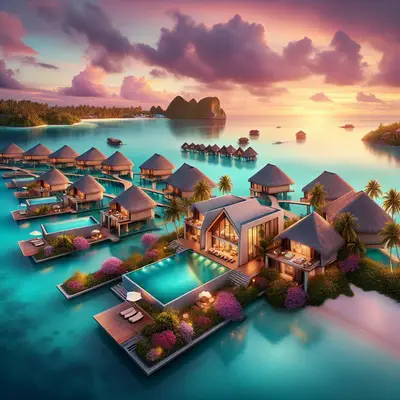
At the most coveted private-access resorts, privacy is not a promise—it is a structural principle. Villas are positioned along natural contours to ensure that sightlines never intersect. Paths are curved, not straight, to slow movement and soften encounters. Landscaping is used not simply for beauty, but as a subtle veil: a dense line of native trees becomes an invisible sound barrier; a reflecting pool doubles as a visual buffer between suites.
Behind the scenes, guest flows are orchestrated with the same care as a performance. Peak breakfast times are modeled; spa appointments are staggered to avoid waiting rooms; airport transfers are choreographed to minimize overlap. Rooms may have separate staff entrances so service feels almost telepathic. The objective is not isolation, but control—your ability to choose when to be seen, and when to return to the quiet of your own horizon.
For luxury travelers accustomed to constant visibility—professionally, socially, digitally—this engineered privacy is not indulgence; it is recovery. Time expands when interruptions disappear, and exclusive resorts understand that the rarest commodity they can offer is uninterrupted presence.
The New Concierge: Curators, Fixers, and Quiet Problem-Solvers
The traditional concierge has evolved into something far more nuanced at the world’s most discreet properties. Today’s top-tier guest relations professionals function as curators, cultural intermediaries, and crisis-averse planners who often know what you need several steps before you do. Their craft depends on memory, restraint, and a quiet network of trusted contacts across destinations and disciplines.
Instead of presenting a standard list of “things to do,” they will recall that you requested a particular sake on a previous stay in another country, and arrange a private tasting with a local sommelier whose expertise aligns with your palate. If you travel with staff, they anticipate their needs as well—organizing off-duty schedules, sourcing specialist suppliers, or handling last-minute requirements without formal requests ever having to reach you.
Perhaps most importantly, these professionals understand what not to propose. They sense when your day should remain gloriously unstructured, when a single exceptional experience is more valuable than a packed itinerary, and when logistics need to be invisible. For seasoned luxury travelers, the true sign of excellence is not the length of the options list, but the precision with which it is edited to fit your preferences, energy, and mood.
Culinary Privilege: Beyond the Tasting Menu
At elite resorts, the culinary experience is no longer confined to reservations and set menus. The most sophisticated properties now treat food as a deeply personal narrative—one that blends regional authenticity, global technique, and your own history of tastes and travels. It is not about excess, but about resonance.
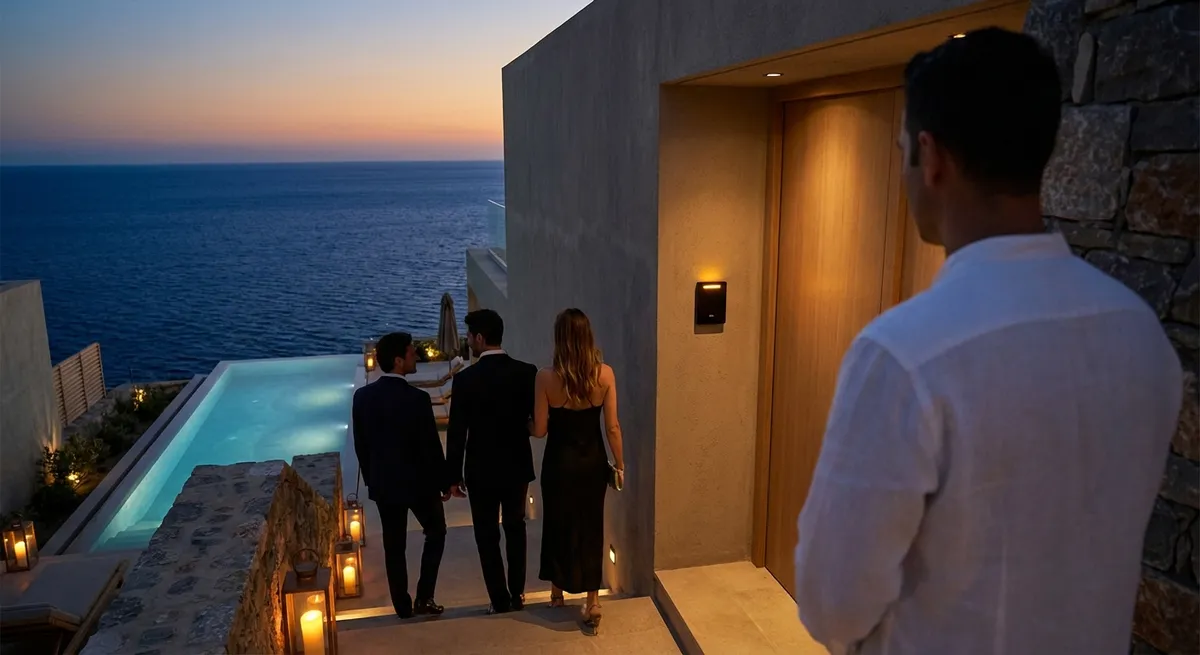
Private-access guests may find that the most memorable dinner is not in the signature restaurant, but at a table set in a rarely accessed part of the property: on a working pier at blue hour, in a hidden garden lit only by lanterns, or in front of a single live-fire hearth. Menus are composed after a conversation, not before; dietary preferences are treated as creative parameters rather than limitations. If you have a favorite dish from another part of the world, the chef may quietly reinterpret it using local produce and techniques, crafting something that feels both familiar and entirely new.
Sourcing is another subtle luxury. The best kitchens have deep relationships with small-scale producers, fishermen, farmers, and foragers—often securing first choice of micro-seasonal ingredients that never appear on public markets. For the traveler who understands provenance, this access feels far more privileged than simply being served “the most expensive bottle” on the list. It is the luxury of having the right ingredients handled by the right hands, in the right moment.
Time as a Service: Precision in Transitions and Logistics
For the guests who frequent these resorts, travel is rarely simple. It involves multiple time zones, complex schedules, and often, a constant expectation of availability. In this context, the true test of an exclusive property is how it handles the transitions—the moments when you are between destinations, between roles, between states of mind.
Seamless airport experiences are only the beginning: expedited immigration where legally possible, private lounges, luggage pre-clearance, and cars that are not merely “waiting,” but correctly sized, stocked, and staffed according to your preferences and security requirements. Helicopter or seaplane transfers are timed to optimal light and weather conditions, not just timetable convenience. Early arrivals and late departures are treated not as exceptions, but as part of an assumed continuum of movement.
On property, your schedule is treated as a living document. If a meeting overruns in another time zone, yoga is shifted quietly; a dinner is delayed without your having to call; childcare or teen activities are extended with sophistication and sensitivity. For those who cannot “switch off” entirely, there is immense value in a place that does the difficult work of time management on your behalf—making each hour feel elongated, not fragmented.
Layered Access: Experiences That Deepen With Each Stay
Perhaps the most exclusive dimension of these resorts is not what is visible on a first visit, but what gradually reveals itself over time. The most refined properties treat access as layered: guests are never overwhelmed with everything at once. Instead, each return visit brings new privileges, deeper context, and more meaningful encounters.
On a first stay, you may be introduced to the property’s essential experiences—a private stretch of coastline, a signature treatment, a curated local excursion. On a subsequent visit, doors begin to open into more private realms: a behind-the-scenes tasting in the kitchen with the executive chef, a sunrise hike with a naturalist who has worked the land for decades, a one-on-one session with an artist-in-residence whose work you admired in the lounge.
Long-term members and regular guests quietly enter a different tier of recognition. Rooms are adjusted in line with your evolving preferences without comment—different pillow types, lighting scenes, even room fragrances that match prior stays. You may be given discreet access to not-yet-launched experiences, off-menu dishes, or partner properties before they are publicly announced. For the seasoned traveler, this sense of deepening—of not having “seen it all” after one or two visits—is what separates a pleasant escape from a place that begins to feel like a private world.
Conclusion
In the rarefied circle of truly exclusive resorts, luxury is no longer a checklist of visible features—it is an invisible architecture of decisions designed around your time, your privacy, and your evolving tastes. The finest properties understand that what their guests value most cannot be photographed easily: the absence of friction, the right conversation at the right moment, the comfort of being known without being displayed.
For those who live much of their lives in public, these places offer something quietly radical: the ability to move through the world without spectacle, yet with every refinement at hand. In that balance between discretion and depth, between access and restraint, lies the new frontier of luxury travel—reserved for the few, but designed with extraordinary thoughtfulness for each individual who crosses the threshold.
Sources
- Virtuoso: The Future of Luxury Travel - Industry insights into emerging expectations and behaviors of high-end travelers
- Forbes Travel Guide - Global ratings and editorial on luxury hotels and resorts, highlighting service standards and trends
- Condé Nast Traveler – What Luxury Travelers Want Now - Analysis of shifting definitions of luxury and exclusivity in hospitality
- Skift Research: The State of Luxury Travel - Data-driven perspective on luxury travel demand, personalization, and exclusivity
- Cornell Center for Hospitality Research - Academic studies on hospitality design, service models, and guest experience optimization
Key Takeaway
The most important thing to remember from this article is that this information can change how you think about Exclusive Resorts.