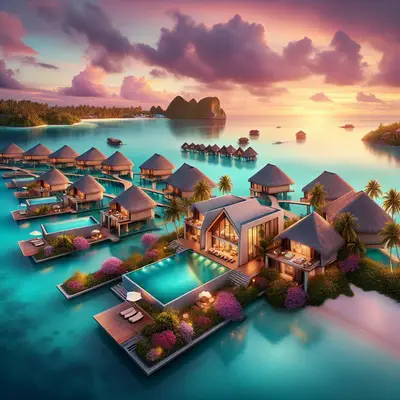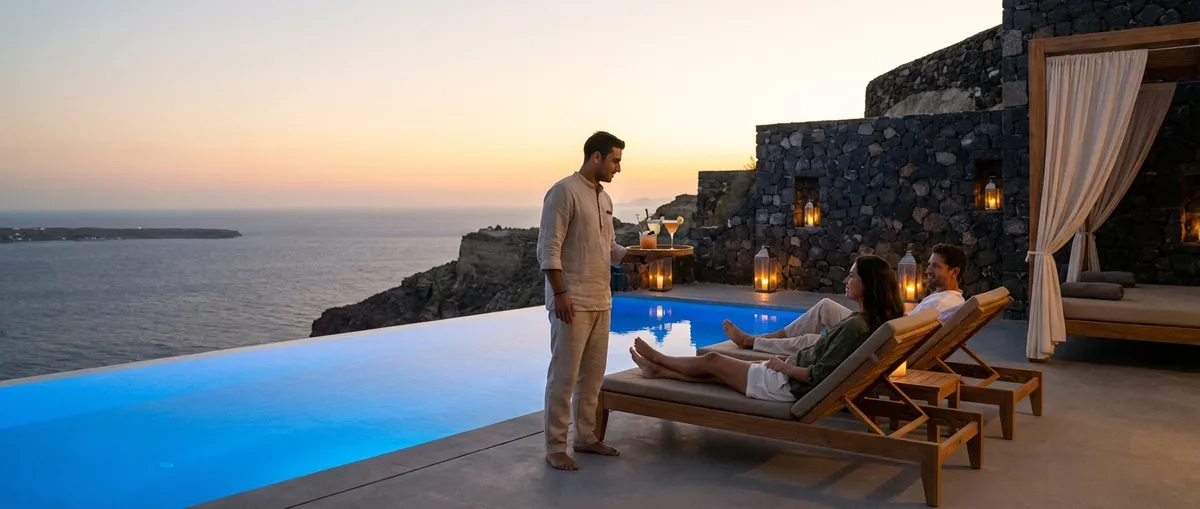
Exclusivity, in its most refined form, is no longer about gold-plated fixtures or ostentatious logos. For today’s most discerning travelers, true luxury is measured in privacy, intuition, and the quiet precision of a stay that seems to anticipate needs before they surface. Exclusive resorts have evolved into discreet ecosystems—equal parts sanctuary, atelier, and private members’ club—where every detail is orchestrated yet nothing feels staged.
This is not a directory of where to go, but a lens into how the most elevated properties are quietly redefining what it means to arrive, belong, and withdraw from the world on your own terms. Below are five exclusive insights that shape the new language of high-end resort travel—signals that you are not merely checking in, but entering a carefully curated orbit.
1. The New Currency: Hyper-Personalized Silence
In the upper tier of luxury, silence is not the absence of sound but the presence of control. At the most exclusive resorts, the stillness you experience is engineered with the same sophistication as their design.
The layout of villas, the distance between suites, the direction of terraces, and the orientation of pools are not arbitrary—they are the result of acoustic studies, wind pattern analyses, and sightline mapping. A pathway is curved subtly so you never cross another guest’s direct gaze. Service corridors are hidden in plain sight, ensuring that luggage, housekeeping, and private dining arrive seamlessly without the choreography ever being seen.
For the discerning traveler, the tell is simple: you feel profoundly unobserved, yet flawlessly attended to. Your room remains immaculate though you never see housekeeping. Your preferred sparkling water appears replenished, though you never requested it twice. The premium is not in the marble, but in the meticulous management of your mental bandwidth. In such environments, the world contracts to only what you choose to let in.
2. Invisible Data, Visible Comfort
The quiet sophistication of top-tier exclusive resorts increasingly lies in their use of data—discreetly collected, meticulously protected, and deployed only in service of comfort. The most refined properties have elevated guest profiles into living documents that evolve with each stay.
Your preferred pillow density, bath temperature, and late-morning espresso order are not “remembered” by chance. They are structured into resort systems that sync across departments: spa, dining, housekeeping, transportation. If a resort truly understands luxury, they will have the sensitivity to never overuse this familiarity. There is a calibrated restraint—enough anticipation to feel seen, never so much that it feels intrusive.
This is where technology recedes into the background. Smart lighting presets quietly align with your circadian rhythm; room temperatures adjust in anticipation of your return from a sunset excursion; in-villa entertainment is already pre-loaded with content appropriate to your profile and language preferences. The guest experiences a seamless flow, entirely unaware of the infrastructure beneath the surface. The luxury is not the gadget; it is the elegance of not having to ask twice.
3. Private Worlds Inside Wider Destinations
The most exceptional exclusive resorts operate as self-contained worlds that still maintain a meaningful relationship with their surroundings. They understand that their guests seek both removal and relevance—privacy without detachment.
Rather than positioning themselves as isolated fortresses, these properties become skilled interpreters of place. They may occupy entire private islands, remote stretches of coastline, or vast estates, but the experiences they curate are deeply anchored in local culture. A private tasting might feature rare, small-batch wines that never reach retail. A sunrise yacht departure may be timed not simply to avoid crowds, but to align with local fishing rhythms, marine migration patterns, or religious observances, turning an outing into a quiet education wrapped in leisure.
The most sophisticated travelers will recognize a kind of double access: you are shielded from the generic tourist experience while still being subtly woven into the region’s cultural and ecological narrative. Art is not simply imported from global galleries; it is commissioned from local artists working at a high level. Ingredients are not “locally sourced” as a slogan; you may be invited—if you wish—into the stories of the foragers, growers, and artisans who shape the region’s flavor and texture. The resort becomes a private proscenium from which you can view the world, without ever being pulled into its noise.
4. Culinary Privilege Without Theater
In exclusive resorts, dining has evolved far beyond the conventional “signature restaurant” model. For the most discerning guests, excess performance at the table can feel exhausting; what is prized instead is impeccably executed, quietly confident gastronomy that never demands attention yet consistently rewards it.
The most elevated properties now design their culinary programs around intimacy rather than spectacle. A chef’s table may be offered not as a show but as a conversation, a chance to explore ingredients and philosophies in a low-lit, quietly attentive environment. Menus are often unprinted or deliberately understated because the resort already understands your preferences and aversions. A pescatarian who prefers lighter lunches and exploratory dinners never has to explain this repetitively; the pattern is noted and interpreted.
The finest expression of culinary privilege is not the parade of rare ingredients, but the ability to request something very specific—perhaps a dish you experienced on a previous visit, or a taste memory from a different part of the world—and have it appear, respectfully reimagined, at the right moment. The true indicator of a top-tier culinary program: you never feel the need to post it, yet you will remember it for years.
5. Time as the Ultimate Amenity
In the rarefied world of exclusive resorts, time is orchestrated with the same precision as architecture and service. The most sophisticated properties understand that their guests are not buying amenities; they are reclaiming hours, mental space, and decision-making energy.
This manifests in subtle, almost invisible curation. Activities are not presented as an overwhelming menu but as a considered handful of options aligned with your stated or observed state of mind. If you arrive after an overnight flight, the first 24 hours of your stay may be gently stripped of commitments: a softly lit suite on arrival, a staged unpacking service, a light but deeply nourishing welcome meal, and a spa appointment that was tentatively reserved and can be confirmed with a single nod.
The resort’s greatest luxury is its refusal to rush you. Departure times are treated as flexible horizons rather than hard stops; check-outs feel like a soft fade rather than an abrupt exit. For guests who travel frequently and intensely, this recalibration of time—where nothing is urgent, yet everything is precise—is often the most compelling reason they return. The resort becomes not just a place, but a different way of experiencing hours and days.
Conclusion
For those who live much of their lives between cities, screens, and boardrooms, exclusive resorts now function as carefully crafted interludes—moments where control is elegantly surrendered, yet identity and preferences are preserved with uncompromising fidelity. The truest measure of their success is not visible opulence, but the quiet after-effect: you leave feeling not merely rested, but recalibrated, as if the volume of the world has been subtly, expertly turned down.
In these sanctuaries, exclusivity is no longer synonymous with distance or display. It is defined instead by calibration: the right degree of privacy, the right depth of cultural connection, the right balance of anticipation and discretion. For the seasoned luxury traveler, the destination matters—but the design of the experience, and the intelligence behind it, matters even more.
Sources
- Skift: The New Definition of Luxury Travel - Industry analysis on how luxury travel has shifted toward personalization, privacy, and experience design
- Forbes Travel Guide: What Makes a Luxury Hotel - Criteria and philosophy behind rating high-end properties, including service, privacy, and personalization
- Virtuoso: The Future of Luxury Travel - Insights on emerging preferences among affluent travelers for curated, meaningful, and discreet experiences
- Condé Nast Traveler: Private Island Resorts - Examples of exclusive resort environments and how they create privacy, immersion, and tailored experiences
- Harvard Business Review: Competing on Customer Experience - Explores how elite brands use data, design, and service to create seamless, anticipatory experiences
Key Takeaway
The most important thing to remember from this article is that this information can change how you think about Exclusive Resorts.