There is a quiet evolution unfolding behind the polished marble and discreet entrances of the world’s most rarefied retreats. The true markers of exclusivity are no longer chandeliered lobbies or logo-forward amenities, but a subtler, more intimate choreography of service, design, and privacy. Today’s most discerning travelers are not collecting hotel brands; they are curating atmospheres, rituals, and relationships that feel almost impossibly bespoke.
At Jet Ready, we see a new class of resort emerging—places where the guest list is as carefully edited as the wine cellar, where time itself feels privately owned, and where every detail is designed not to impress the world, but to resonate deeply with the individual. Below, explore five under-the-radar insights that define the new language of truly exclusive resorts.
1. The Art of the “Invisible Itinerary”
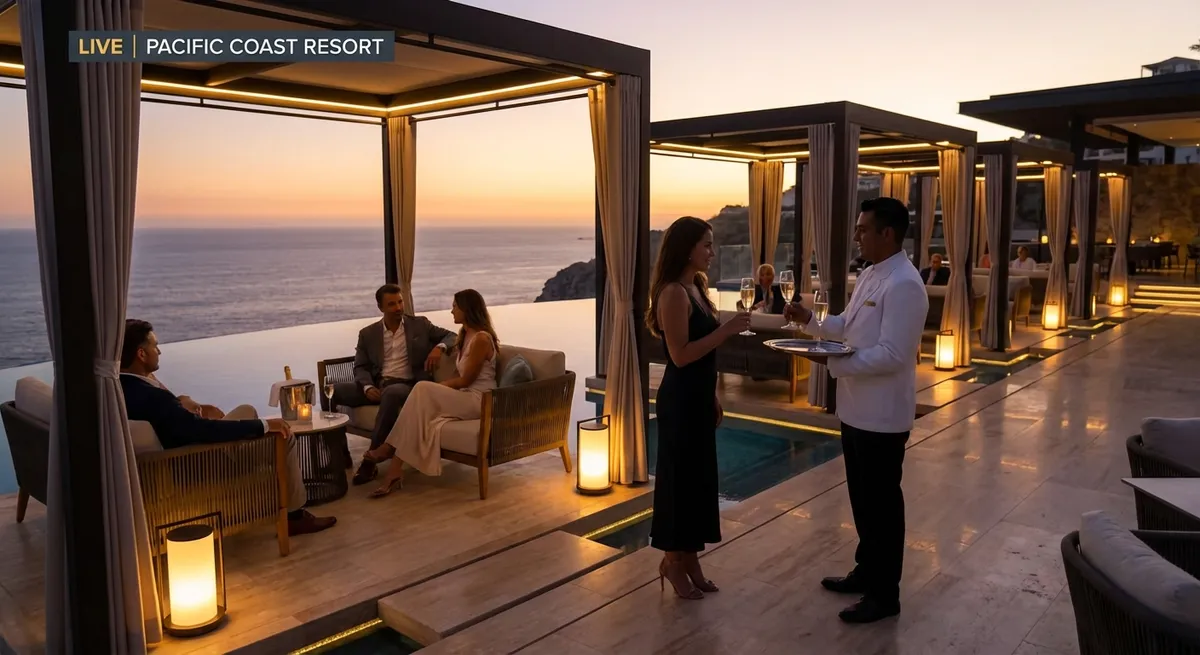
In the most exclusive resorts, itineraries rarely arrive as printouts or app notifications. Instead, they unfold with the subtlety of a well-directed film. A favorite table seems to “open up” just as you wander into the restaurant. A yacht is “unexpectedly” available at the precise moment the sea turns molten gold at sunset. A yoga pavilion is empty and candlelit just as you wake earlier than planned.
This is not coincidence; it is the art of invisible orchestration. These properties invest heavily in anticipatory intelligence—quietly tracking preferences, reading micro-signals, and synthesizing them into a fluid, living itinerary that feels neither scheduled nor improvised. For the guest, the experience is one of effortless synchronicity: nothing appears prearranged, yet everything aligns. This level of curation cannot be standardized or scaled. It is often overseen by a small, highly-trained core team that collaborates like a private concierge guild, ensuring each moment feels intuitively timed rather than administratively planned.
2. Architectures of Seclusion, Not Spectacle
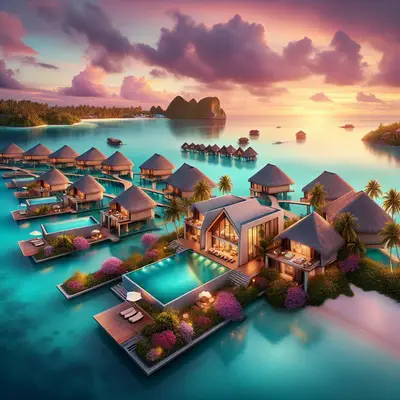
True exclusivity is rarely found in skyline statements or photogenic lobbies designed to go viral. The most coveted resorts today treat architecture as a protective shell for privacy and stillness. From the outside, they may appear almost understated—low-slung villas woven into the landscape, entrances barely visible from the main road, signage that feels almost coy.
Inside, however, the architecture is obsessively calibrated around personal space: sightlines are arranged to avoid accidental encounters; plunge pools are oriented toward unbroken horizons rather than neighboring terraces; pathways curve and soften to encourage wandering without being seen. Materials are chosen as much for their acoustic qualities as their aesthetics—plaster that mutes footsteps, fabrics that soften echoes, glass that reduces the hum of the outside world. Guests aren’t meant to be impressed upon arrival; they are meant to exhale. In this new era, architectural bravado has given way to architectural discretion, and luxury is measured not in scale but in how gently the property disappears around you.
3. Quiet Access to the Otherwise Inaccessible
The most privileged amenity a resort can now offer is not a larger suite or a more elaborate pool; it is curated access to worlds that are normally opaque or unreachable. This might look like a closed-door tasting with a winemaker who does not pour for the public, or sunrise entry to a heritage site before it officially opens, or a private atelier visit with a designer whose name rarely appears in mainstream fashion media—but whose pieces line the wardrobes of people who never tag their outfits.
These experiences are often unstated in marketing materials and cannot be simply “booked” like spa appointments. They are extended through relationships cultivated over years, sometimes decades, between the resort’s ownership and a network of cultural custodians, artisans, or private estates. Guests are introduced, not processed. The result is a feeling less like tourism and more like being momentarily folded into a confidential, off-record world. In a landscape saturated with “exclusive experiences,” what truly stands apart is access that feels almost too discreet to mention.
4. Personal Staff as Curators, Not Simply Service
In conventional luxury, staff are trained to be flawless and invisible. In the rarest resorts, they are something more: curators of mood, texture, and narrative. A butler who simply unpacks a suitcase is performing a task; a butler who notices the books you brought, the fabrics you favor, how you take your tea, and subtly edits your surroundings to mirror your tastes is crafting an ecosystem around you.
These properties often handpick staff for cultural fluency as much as professional polish. A driver may be a former art student who can introduce you to the city’s emergent gallery scene; a sommelier may remember your vintage preferences years later and have a bottle waiting when you return. The relationship becomes slightly more enduring than a stay and markedly less transactional. Crucially, these interactions are never performative for social media. Names are remembered, details are archived, and connections are built with the quiet understanding that the greatest luxury is feeling completely known without ever feeling exposed.
5. Time as the Ultimate Bespoke Amenity
The defining hallmark of the most exclusive resorts is their radical reconfiguration of time. Check-in and check-out hours fade into irrelevance. Breakfast arrives when you wake, not when the dining room is open. Housekeeping works around your rhythms, not the other way around. Spa therapists don’t consult a schedule; they consult your sleep, your flight, your mood.
Time is treated as the rarest currency, and the goal is to return it to you in its purest form: unfragmented, unsupervised, unhurried. Stays are often designed to dissolve the usual markers that segment the day—no push notifications from the property app, no relentless offers of activities, no anxious reminders of “last call” or “final seating.” Instead, guests are gently encouraged into a slower, almost analog tempo. Watching the tide, lingering over a half-finished bottle of wine, allowing a conversation to stretch past midnight without staff signaling closure—these become the new signature amenities. In an age of constant urgency, the ability to move through a day without being timed is perhaps the most elite privilege of all.
Conclusion
Exclusive resorts today are less about spectacle and more about subtlety. Their true luxury is encoded in what is not immediately visible: the invisible itineraries, the architecture that shields rather than showcases, the rarefied access that can’t be mass-produced, the staff who curate a world uniquely calibrated to you, and the reclaimed time that feels almost impossibly generous.
For the traveler seeking more than a beautiful room and a celebrated restaurant, these properties offer something deeper: the sensation that, for a brief span, the world has been quietly rearranged around your preferences—and no one else needs to know.
Key Takeaway
The most important thing to remember from this article is that this information can change how you think about Exclusive Resorts.