Fine dining, at its highest level, is no longer about white tablecloths and a tasting menu. It is the quiet precision behind every gesture, the unspoken choreography between kitchen and dining room, and the sense that—just for a few hours—the world has been edited down to exactly what you need, before you even know you need it. For the luxury traveler, the most memorable meals are not merely eaten; they are curated, staged, and tuned to the slightest nuance of mood, timing, and place.
Below, five exclusive insights reveal how to recognize, request, and truly savor this elevated tier of dining—where refinement is felt more than seen, and the rarest luxury is effortlessness.
1. The Invisible Architecture of Service
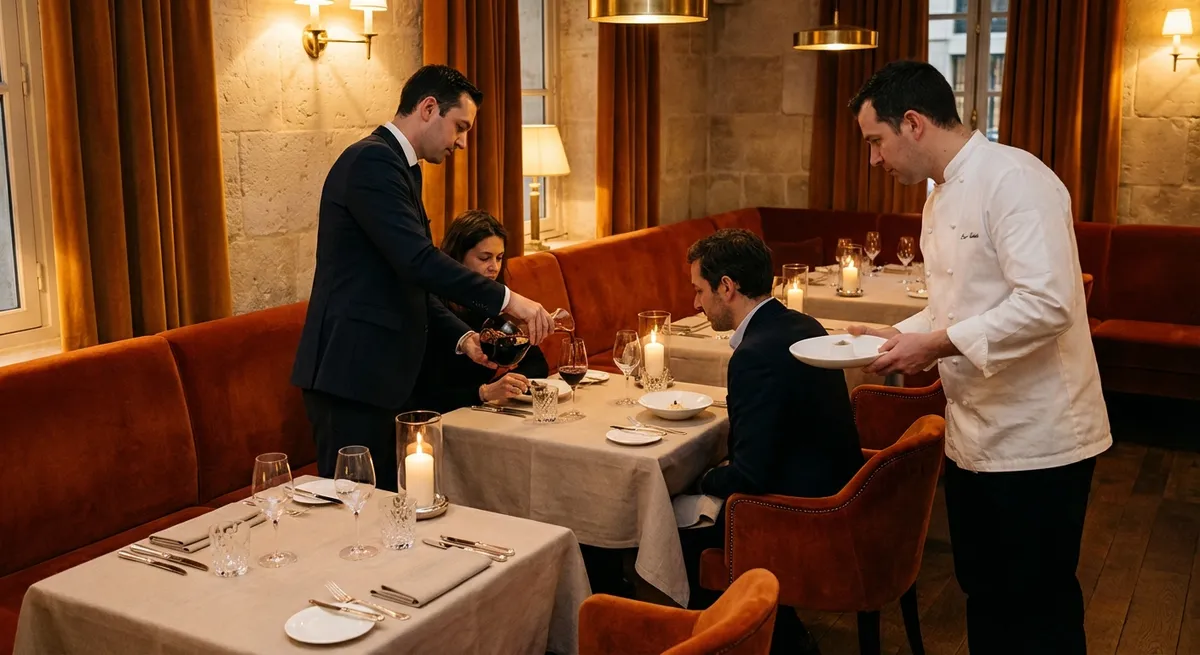
At exceptional restaurants, service is not performance; it is architecture. It holds the entire experience in place while remaining nearly unseen. Luxury travelers often describe the best service as “telepathic” because it anticipates needs without hovering or interrupting.
Watch the cadence of interaction: the way a sommelier appears precisely when your curiosity flickers; how water is replenished without the clink of glass; the way a dropped napkin is replaced before you even look down. These are not accidents; they are the product of disciplined training and an almost military sense of timing behind the scenes.
Discerning guests also notice how service adapts: formal yet warm if you’re celebrating, discreet and minimalist if you’re dining alone after a long flight. The most refined rooms shift their entire tempo depending on the table—slowing down for deep conversation, accelerating deftly if you have a curtain time. True luxury is not a rigid standard of service; it is an individually tuned one.
2. The Kitchen as Atelier, Not Factory
For the world’s finest kitchens, the dining room is just the final gallery; the real story unfolds in the quiet discipline behind the pass. The luxury traveler understands that the best meals are less about spectacle and more about intention—how chefs think, source, and build flavor over time.
In leading restaurants, menus are not simply seasonal; they are hyper-specific to micro-seasons, working with ingredients at their absolute peak for a few fleeting weeks. A seemingly simple tomato course in late August or a single oyster in early winter can represent months of relationship-building with producers and painstaking trials in the test kitchen.
What sets true fine dining apart for the seasoned guest is the sense of continuity. The most sophisticated diners return to a restaurant over years, watching its narrative evolve: how a chef’s palate matures, how signature dishes are refined, or how a new region’s influence quietly appears after a culinary research trip. Dining becomes less about “the meal” and more about being present for the ongoing work of a culinary atelier.
3. The Private Language of Pairing and Mood
For many restaurants, wine pairing is a list. For the world’s best, it is a conversation about mood, context, and identity. Luxury travelers know that a sommelier’s deepest skill is not reciting vintages but decoding the evening you want to have.
There is a difference between pairing to the dish and pairing to the guest. You may technically be “supposed” to pair shellfish with a crisp white, but perhaps you’ve had a long day in transit and crave the comfort of a mature red—structured yet silken. The most attuned sommeliers will gently recalibrate the journey, adjusting serving temperatures, glassware, and pacing so that what’s in the glass responds to you, not only to the plate.
Increasingly, top-tier dining rooms also extend this philosophy beyond wine. Non-alcoholic pairings; nuanced tea courses; low-intervention wines; and even customized progressions based on climate, altitude, or time zone are quietly shaping experiences for global travelers. A late seating after a red-eye flight might be paired with softer tannins, lower alcohol, and more delicate aromatics, acknowledging that the finest pairing is with how your body feels, not just what’s on the menu.
4. True Exclusivity: Access, Not Opulence
For the seasoned luxury traveler, exclusivity is rarely about ostentatious décor or impossible-to-get reservations. It is about access—doors that open because you are understood as a guest, not just a booking. The most discreet advantages rarely appear on websites or social channels.
Cultivated relationships with concierges, private aviation services, and high-end travel advisors can translate into experiences that don’t officially exist: off-menu lunches in closed dining rooms; early previews of a new tasting menu; a chef’s table offered on a night when it is “technically” unavailable; or a last-minute accommodation when every seat is spoken for. These moments are the currency of trust between restaurants and the gatekeepers luxury travelers depend on.
Equally valuable is temporal exclusivity: securing a first or last seating when the restaurant is at its quietest, or arranging a long lunch in a space that usually only hosts dinner service. At this level, exclusivity is less about being seen somewhere “impossible to get into” and more about the feeling that—for a defined window of time—the entire operation is calibrated around your table.
5. Savoring the Afterglow: Extending the Experience
The finest dining experiences do not end with dessert. Their true measure is the afterglow—the way the evening lingers, the details you find yourself recounting days or weeks later. Luxury travelers know how to extend this, turning a single meal into a longer narrative thread in their journeys.
This might mean asking for a list of the producers featured in your meal so you can visit a vineyard, a cheesemaker, or a market in the region. It might mean purchasing a bottle you adored to enjoy later in a different city, turning that wine into a private reminder of the night. Some restaurants now offer curated “after-service” touches: a small gift from the pastry kitchen for breakfast the next morning, a printed menu with notes from the sommelier, or a follow-up email with recommendations in the city that match your palate.
Frequent travelers often keep a personal dining log—digital or handwritten—recording not just what they ate but who they were with, how the room felt, and which details stood out. Over time, this becomes a private atlas of taste, guiding future reservations and helping them seek out experiences that resonate on a deeper level than “best table in town.” The meal ends; the relationship with your own discernment continues.
Conclusion
At its most refined, fine dining is less about luxury on display and more about precision concealed: in service that feels inevitable, in kitchens that operate like ateliers, in pairings that read your mood, and in a quiet web of access that transforms a reservation into an experience. For the luxury traveler, the rarest privilege is not merely to dine at celebrated restaurants, but to move through them as if each one has been subtly reconfigured around your presence.
In a world saturated with lists, stars, and rankings, the true connoisseur looks for something rarer: an evening that feels unrepeatable, rooted in its time, place, and company. That is the discreet art of true fine dining—and the standard by which every future table is measured.
Sources
- [Michelin Guide – Understanding the MICHELIN Star](https://guide.michelin.com/en/article/dining-out/michelin-star-criteria) - Outlines the core criteria inspectors use to evaluate top-level restaurants, including quality, technique, and consistency
- [World's 50 Best Restaurants – About the Academy](https://www.theworlds50best.com/academy) - Explains how global experts vote on leading restaurants and how regional perspectives shape fine dining recognition
- [Wine & Spirit Education Trust (WSET)](https://www.wsetglobal.com/knowledge-centre/wine) - Provides authoritative insights into professional wine service, pairing principles, and evolving beverage trends
- [Cornell University School of Hotel Administration](https://sha.cornell.edu/faculty-research/centers-institutes/chr/research/) - Features research on hospitality, service design, and guest experience at the luxury level
- [UNWTO – Global Tourism Trends](https://www.unwto.org/tourism-data) - Offers data on high-end travel behaviors and how shifting travel patterns influence premium dining experiences
Key Takeaway
The most important thing to remember from this article is that this information can change how you think about Fine Dining.