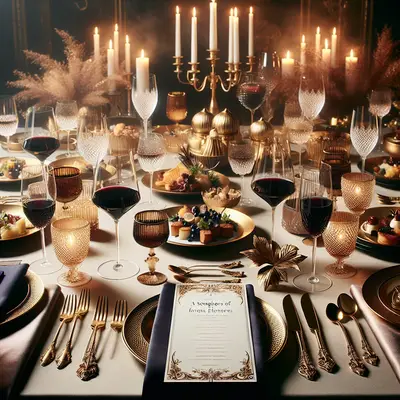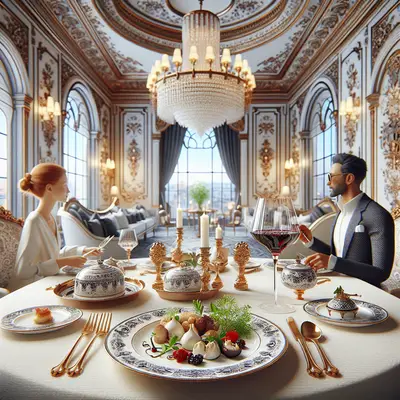
Fine dining has evolved far beyond the choreography of courses and cutlery. For the globally mobile, it is now a private operating system: a discreet network of chefs, sommeliers, and dining rooms that quietly shape where we go, who we meet, and how our evenings unfold. The true luxury is no longer a coveted reservation; it is the ability to bend time, taste, and service to one’s own preferences—without ever disturbing the surface calm of the room.
Below are five exclusive, insider-level dimensions of fine dining that seasoned luxury travelers quietly cultivate—not as spectacle, but as a personal standard.
The Off-Menu Conversation: Cultivating a Dialogue with the Kitchen
For most guests, a tasting menu is a script to be followed. For the quietly connected, it is a suggestion—an opening scene that can be re-edited in real time.
The most sophisticated diners do not demand; they converse. A whispered mention of a favored producer, a preferred texture, a flavor memory from a different continent—these become cues the kitchen can interpret. At this level, the chef is not merely serving; they are composing a private narrative around the guest. Ingredients appear that never touch the printed menu. A dish may be lightly restructured to echo a guest’s known preferences, retrieved from notes kept across previous visits.
Luxury travelers understand that this dialogue is built over time. They return, often at irregular intervals, but with consistency of attitude: appreciation without performance, curiosity without entitlement. They share feedback with precision—never “I didn’t like it,” but “I found the acidity a touch sharp for this pairing.” The reward is an invisible tier of hospitality: tables held back, impromptu half-portions of experimental dishes, and a level of personalization that makes even the most celebrated dining rooms feel like an extension of one’s own home.
The Private Geography of the Room: Where You Sit Is What You Experience
To the casual eye, a restaurant’s tables are interchangeable. To the seasoned traveler, the room is a map—of sightlines, soundscapes, and microclimates of attention.
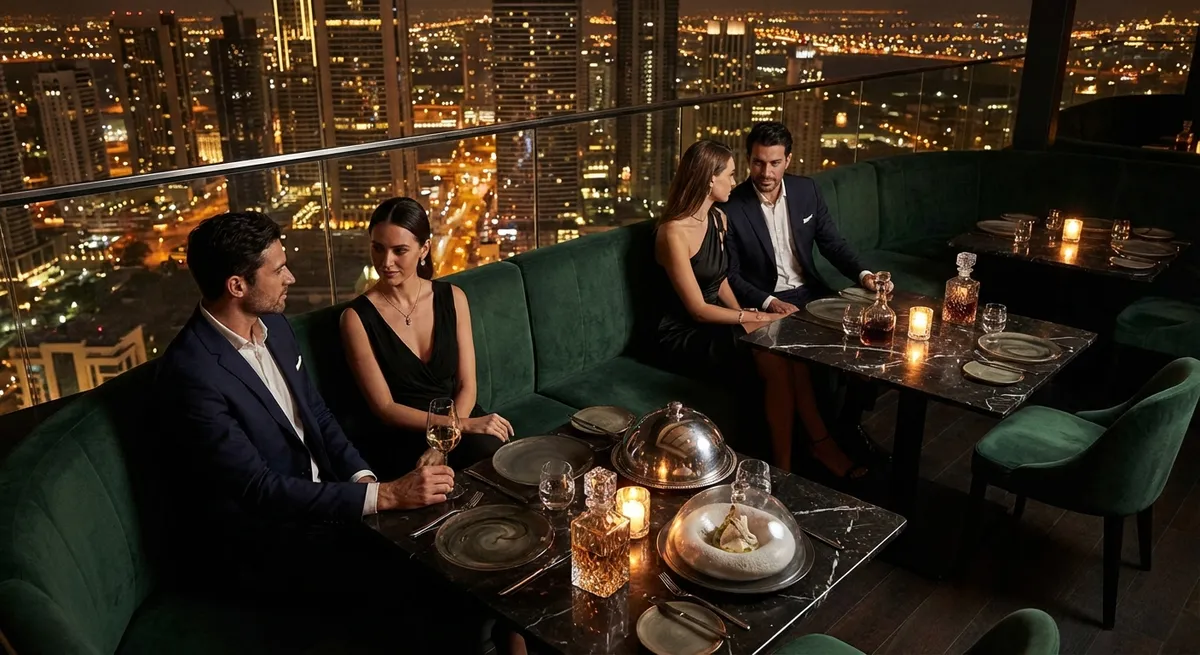
The most desirable seats in a serious dining room are rarely the most obvious. Corner banquettes that offer both privacy and a full view of the room. Tables near natural light at lunch service, subtly repositioned as the sun shifts. Spots within arm’s reach of the sommelier station, enabling nuanced, unhurried wine discussions without repeated disruptions. In some properties, there is a single “house table” very few guests know exists—held back for owners, long-standing patrons, or those whose names travel faster than they do.
Luxury travelers who move frequently between global capitals learn to read these subtleties. They notice the distance between their table and the service station, the direction from which the plates arrive, the trajectory of sound as the room fills. Over time, they begin to request by description rather than number: “a quieter corner with a view into the room, not the street,” or “something near the cellar, if available.” The result is an evening choreographed not only on the plate, but in space—an invisible architecture that ensures conversations, negotiations, or simple shared silence are perfectly held.
Time as the Ultimate Pairing: Owning the Rhythm of the Meal
In true fine dining, timing is as refined as flavor. Yet the default tempo of a tasting menu rarely aligns perfectly with the needs of a global traveler arriving from a twelve-hour flight, a late board meeting, or a different time zone altogether.
The sophisticated guest treats pacing as something to be curated. Before the meal begins, they quietly communicate constraints: a departure time, a desire for a more extended evening, or the need to front-load lighter courses. A skilled team will respond by rebalancing the cadence: pauses lengthened or shortened, wine pours adjusted to anticipate the next dish, kitchen fire times re-sequenced in the background.
At a certain echelon, restaurants maintain detailed guest profiles that include not just allergies and preferences, but typical pacing expectations—whether a guest tends to linger between courses, step outside for a brief call, or prefers a focused two-hour progression. Luxury travelers understand the power of consistency: by signaling their rhythm clearly and repeatedly, they earn an experience that feels seamlessly intuitive, even in a city they’ve just arrived in that morning.
Cellar Access: When the Wine List Becomes a Conversation, Not a Catalog
For many guests, the wine list is a test; for the well-traveled, it is an index of the restaurant’s relationships with the world. Names of cult producers, back vintages quietly resting below street level, limited allocations shared only with a small circle of dining rooms—these are signals of a restaurant’s position within the global wine ecosystem.
Experienced luxury travelers know that the real story seldom appears in print. Some of the most exceptional bottles—rare magnums, aging Rieslings, single-vineyard Champagnes, or experimental cuvées from rising winemakers—exist only as spoken options, offered when the sommelier senses an interested mind. The language a guest uses matters: references to vintages by year and region, the names of specific vineyards or grower-producers, or memories of bottles previously enjoyed in other cities all help unlock deeper recommendations.
At the highest level, sommeliers maintain parallel mental cellars organized by guest. They remember that a traveler favors older Barolo with minimal decanting, or that another is exploring high-acid whites from volcanic soils. This turns wine selection into a standing, evolving dialogue that transcends individual meals. For frequent travelers, establishing these relationships across cities—Paris, Tokyo, New York, Singapore—creates a continuous, global thread of recognition and anticipation, anchored by the bottle, not the building.
The Discreet Ecosystem Around the Table: Networks, Introductions, and Access
Fine dining, at its most elevated, is not an isolated event; it is an intersection point of people, projects, and possibilities. Many of the world’s most influential figures do not hold meetings in boardrooms; they hold them at carefully chosen tables.
Luxury travelers understand that a serious restaurant is also a quiet intelligence network. The maître d’ knows who is in town, which creative director just arrived from Milan, which art advisor is seated two tables away, which winemaker is hosting a small group in the private room. This information is never stated outright—but with the right degree of discretion and trust, small doors begin to open. A simple introduction after dessert. A last-minute visit to the kitchen, where the chef shares not merely tonight’s menu, but news of an upcoming collaboration or pop-up in another city.
The most seasoned guests treat this ecosystem with care. They tip generously but invisibly, respect the privacy of others, and never press for access that has not been quietly, willingly offered. Over time, they find themselves at the receiving end of invitations that do not reach the public: pre-opening tastings, winemaker dinners with no published listing, or seats at experimental chef’s counters that operate as much as laboratories as restaurants. Fine dining becomes, in effect, a curated social graph—one built on mutual confidence and an unspoken understanding that what happens at the table does not leave it.
Conclusion
For those who live in motion, fine dining is not a trophy to collect, but a language to be spoken fluently in multiple cities. The luxury lies less in the spectacle and more in the nuance: the off-menu dish that appears as if by intuition, the table that feels designed for your conversation, the pacing that respects your time, the bottle chosen as if it had been waiting specifically for you, the introduction that subtly alters the trajectory of your next project or stay.
To move through the world with this level of dining experience is to understand that the most refined hospitality is almost invisible. It doesn’t insist on being noticed; it simply ensures that, wherever you land, the evening unfolds as though the restaurant had been expecting you all along.
Sources
- [The World’s 50 Best Restaurants – About the Awards](https://www.theworlds50best.com/stories/News/about-the-worlds-50-best-restaurants.html) - Context on how top-tier restaurants are evaluated globally and the standards they uphold
- [Michelin Guide – How We Inspect](https://guide.michelin.com/en/about-us) - Insight into the criteria and methods used to assess fine dining establishments worldwide
- [Cornell University School of Hotel Administration – Restaurant Revenue Management](https://scholarship.sha.cornell.edu/cgi/viewcontent.cgi?article=1073&context=chrpubs) - Academic perspective on table management, pacing, and the economics behind premium dining experiences
- [Institute of Masters of Wine – About the IMW](https://www.mastersofwine.org/about/the-institute-of-masters-of-wine) - Authoritative background on wine expertise and the role of high-level sommeliers
- [Harvard Business Review – The Power of Moments in Service Experiences](https://hbr.org/2017/09/the-power-of-moments) - Explores how carefully designed “peak moments” shape high-end service encounters, relevant to luxury dining interactions
Key Takeaway
The most important thing to remember from this article is that this information can change how you think about Fine Dining.