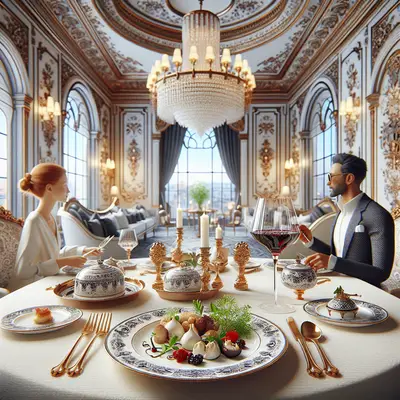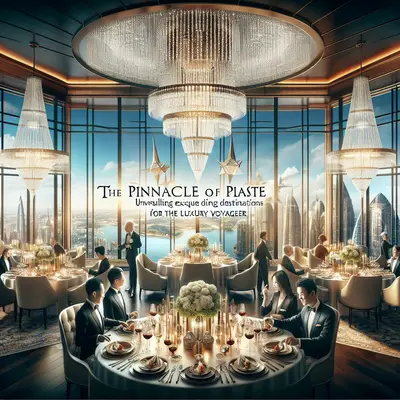
Fine dining, at its highest level, is no longer a matter of white tablecloths and elaborate plating. For the luxury traveler, it is a quiet calibration of place, people, and palate—a way of orienting oneself in a city or resort with the same precision one might use to select a private jet, a villa, or a watch. The venues may be Michelin-starred, discreetly anonymous, or hidden behind unmarked doors, but the true constant is intention. What follows are five exclusive, under-discussed insights that separate a merely excellent meal from a genuinely memorable dining experience for the discerning traveler.
The Invisible Choreography: Reading a Restaurant’s Rhythm
In the world’s most refined dining rooms, service is a kind of choreography you feel before you consciously see it. The seating pattern, the spacing between tables, the hum of conversation, and even the way glassware aligns along a single plane offer clues about what kind of evening you’re about to have.
Luxury travelers can learn to “read” this rhythm within minutes of arrival. Note how swiftly water is poured after seating, how naturally the first interaction unfolds, and whether the staff’s eye contact is confident yet unhurried. In the best houses, the room breathes with you—service accelerates when your conversation ebbs, then recedes when it becomes more animated. This level of attentiveness suggests a deeply trained brigade and a kitchen that paces courses with almost musical precision.
For travelers moving between time zones and cultures, this rhythm matters. A jet-lagged arrival might be better served by a restaurant whose tempo is calm and unhurried, while a celebratory dinner calls for a room that feels alive, almost theatrical. Those attuned to this choreography use it as a filter: if the room feels misaligned with the purpose of the evening within the first ten minutes, the truly seasoned guest thinks ahead—ordering differently, adjusting the length of the meal, or even truncating the experience before the more indulgent courses arrive.
The Intelligence of the Wine List: Beyond Labels and Ratings
For the refined traveler, a wine list is not merely an inventory; it is a map of the establishment’s philosophy. The world’s most sophisticated lists no longer rely solely on trophy bottles or familiar prestige cuvées. Instead, they show a deliberate tension between heritage and discovery: Burgundies and Barolos sit alongside meticulously chosen grower Champagnes, small-production island whites, and aged Rieslings from producers known only to the initiated.
The key insight is to read the architecture of the list rather than just the labels. Look for depth—not only in flagship regions like Bordeaux or Napa, but in quieter categories: half-bottles, magnums, mature vintages, and wines from regions currently favored by top sommeliers (Etna, Jura, Swartland, or English sparkling, for example). A list that offers thoughtful options by the glass at multiple price tiers often signals a sommelier team more interested in precision pairings than in pushing you toward the most expensive bottles.
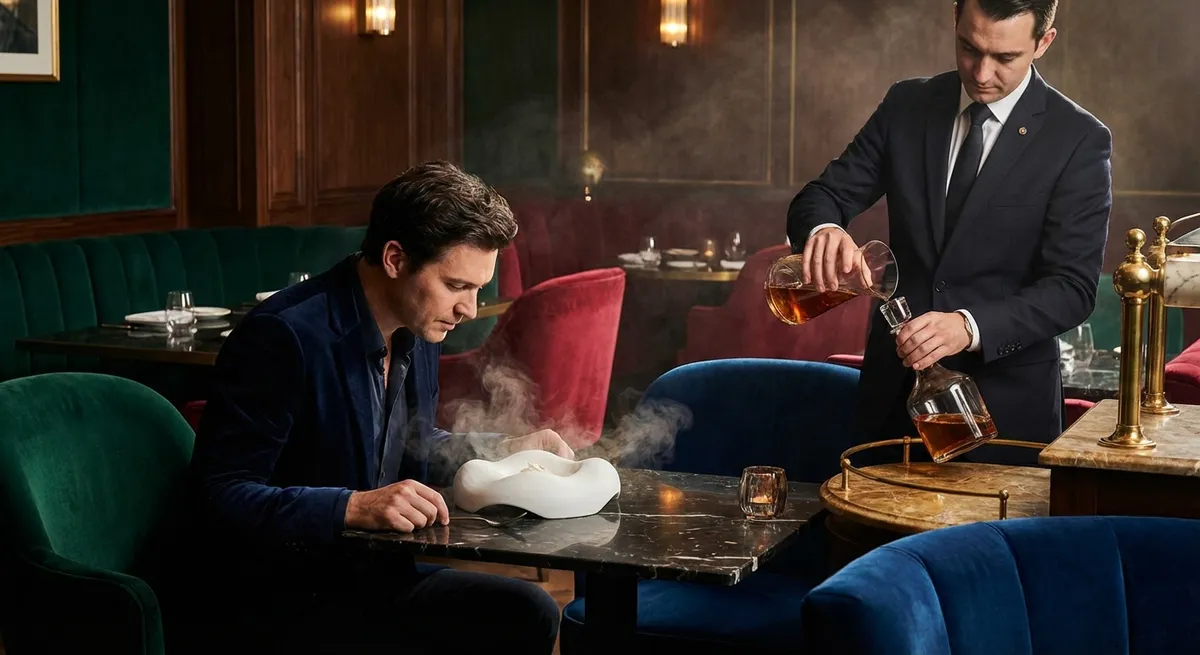
Luxury travelers can also use the wine list as a discreet way to gauge the house’s openness to collaboration. A sommelier who asks how you like to drink (texture, weight, energy) rather than simply your preferred grape or region is signaling a more nuanced approach. The conversation becomes less about budget and more about narrative: what you’ve already enjoyed that day, whether you are flying the next morning, how rich the menu is likely to be. The resulting bottle—or curated sequence of glasses—becomes a highly tailored extension of your journey rather than a generic prestige gesture.
The Power of the Off-Menu Conversation
The most rewarding fine dining experiences often take place slightly off the printed menu. This doesn’t mean demanding special treatment; it means understanding that the house has capabilities it shows only to guests who know how to ask.
For luxury travelers, the key move is a quiet, precise conversation early in the evening. Rather than announcing allergies or dislikes with a rote list, share a few refined constraints and hints: your appetite level, whether you prefer vegetables to be central or supportive, your tolerance for spice, whether you’re in the mood for comfort or surprise. In elite kitchens, these details are gold. They give the chef and front-of-house permission to adjust portioning, pacing, and even course selection without breaking the structure of the tasting menu.
In certain properties, especially destination restaurants attached to high-end hotels or resorts, the kitchen may also have access to ingredients not listed that evening: a particular local catch landed late, an off-cut reserved for in-the-know regulars, or the last of a seasonal product. A simple, discreet question—“Is there anything special the chef is working with tonight that isn’t on the menu?”—often yields the most memorable bite of the trip.
This off-menu dialogue is also where a traveler’s broader itinerary can be woven into the meal. Letting the team know that this is your final evening in the city, or that you’ve just come from a significant meeting or long-haul flight, allows them to adapt with additional restorative courses, lighter finishes, or a quietly celebratory gesture that feels attuned rather than theatrical.
Place as Ingredient: Dining as a Lens on a Destination
At the highest levels, fine dining doesn’t merely reference local produce; it interprets the surrounding environment with the rigor of a curator. Luxury travelers are increasingly drawn to restaurants that serve as a distilled expression of a region, whether it’s a Nordic kitchen built around fermentation and smoke, a coastal property with a marine-forward sensibility, or a city restaurant that draws from its markets, immigrant neighborhoods, and urban tempo.
The insight here is to think of fine dining not just as a treat, but as research—one of the most efficient ways to understand how a place thinks about itself. Menus that name specific farmers, fishermen, millers, and foragers suggest a real network rather than a token gesture to “local sourcing.” Wine and beverage pairings that explore regional producers—vermouths, ciders, sakes, or low-intervention wines—give you a structured, intelligent tasting of the area’s liquid culture in a single evening.
For the luxury traveler, aligning bookings with this philosophy pays dividends far beyond the meal. The restaurant’s suppliers often become destinations in their own right: a cheesemaker to visit on a later excursion, a winemaker whose estate merits a detour, or a specialty roaster whose coffee you have shipped home. This transforms a single dinner into a constellation of future experiences and extends the resonance of the trip long after checkout.
The Exit Moment: Designing a Graceful Afterglow
In many restaurants, attention peaks with the main course and slowly dissipates as the bill arrives. The finest houses understand that the final twenty minutes of the experience are as critical as the first ten. This “exit moment” is where luxury travelers can most clearly distinguish between polished service and true hospitality.
Observe how the room handles the close of evening: the timing of the check, the offer of a final infusion or digestif, the handover of a card, small gift, or printed menu to take with you. In some properties, the staff may already have coordinated with your hotel or driver, ensuring a seamless, almost frictionless transition from table to car. In others, a final, precisely chosen sweet—never excessive, always balanced—signals that the evening has landed rather than simply stopped.
Sophisticated travelers can subtly shape this afterglow. Indicating at the time of booking or early in the meal that you have a firm departure time encourages the team to build a well-paced arc rather than a rushed finale. In hotel-based restaurants, letting the maître d’ know your room number can result in a more personalized goodbye, with notes added to your guest profile for future visits—preferred table, ideal pacing, favored water, even your aversion to overly sweet desserts.
The real luxury lies in continuity. When you return months or years later and find that the restaurant has remembered not only your name but your tempo, your way of eating, and your approach to the evening, you are no longer just a guest; you are part of the house’s own narrative.
Conclusion
For the discerning traveler, fine dining is less about spectacle and more about calibration: the tempo of service, the intelligence of the wine program, the nuance of off-menu dialogue, the way a restaurant interprets its surroundings, and the grace with which it lets you re-enter the night. These details, often invisible to the casual diner, are precisely what transform a reservation into an experience worthy of a journey. In a world where luxury is increasingly defined by personalization rather than excess, the most memorable tables are those that seem to recognize not only who you are, but how you like to move through an evening—and, by extension, through the world.
Sources
- Michelin Guide – What Is a Michelin Star? - Background on how top restaurants are evaluated and what defines excellence
- World’s 50 Best Restaurants – Academy & Voting Process - Insight into global fine dining standards and regional perspectives
- Court of Master Sommeliers – What Is a Sommelier? - Overview of the sommelier’s role and the philosophy behind curated wine service
- Harvard T.H. Chan School of Public Health – The Nutrition Source: Dining Out - Context on how menu design and dining choices intersect with broader wellness
- UNESCO – Gastronomy as Intangible Cultural Heritage - Explores how cuisine reflects regional identity and culture, relevant to destination-focused dining
Key Takeaway
The most important thing to remember from this article is that this information can change how you think about Fine Dining.