Luxury travelers are no longer simply booking a place to stay; they are curating an ecosystem around how they want to think, rest, and be recognized. Exclusive resorts have become the discreet architecture behind that experience—less a destination, more a finely tuned operating system for how you move through the world. What separates a merely expensive property from a genuinely exceptional one is often invisible at first glance. It lives in the details: the way a space absorbs your schedule, anticipates your preferences, and edits out friction before you ever notice it.
This is where the modern exclusive resort excels. For the traveler who values privacy over performance, precision over spectacle, the most meaningful luxuries are rarely advertised. They’re discovered. Below are five refined, under‑the‑radar insights that separate truly world‑class exclusive resorts from the rest of the five‑star landscape.
Insight 1: The True Luxury Is Intelligent Invisibility
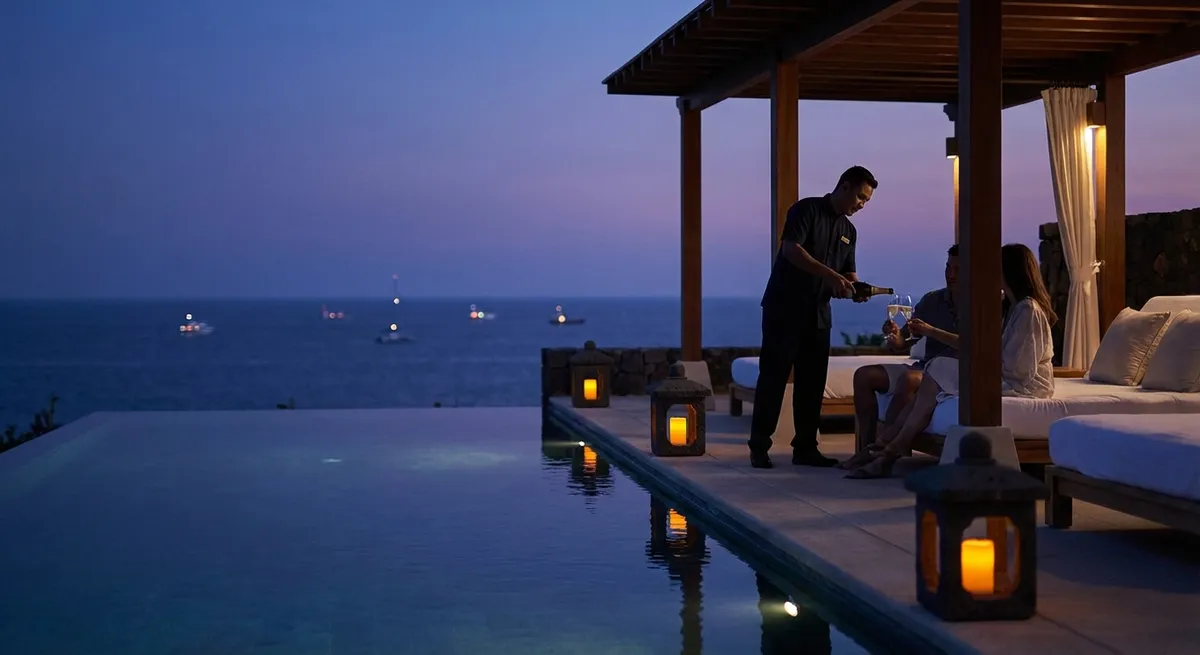
The best exclusive resorts understand that discretion is not a service category; it is the operating principle. Staff are present without being observed, responsive without being summoned, and informed without being intrusive. Housekeeping knows the rhythm of your day by the second afternoon. Your preferred tea appears in the room before you think to request it. The team notes that you dine late, rise early, or prefer walking paths over golf carts—and adjusts the choreography of service accordingly.
What matters here is not the volume of attention but the accuracy of it. A pre‑arrival call asking “What time does your day usually begin?” is more sophisticated than a generic “Do you have any special requests?” Resorts operating at this level often employ quiet data discipline, building nuanced guest profiles over repeat stays while honoring strict privacy. The effect is a kind of curated invisibility: your world is perfectly supported, yet the machinery remains out of sight.
For seasoned luxury travelers, this creates something priceless—cognitive silence. No need to repeat preferences, no energy spent correcting minor frictions. You move through the property as if it has known you for years.
Insight 2: Spatial Intelligence Matters More Than Square Footage
In an age of social media, it is easy to be seduced by volume: vast villas, oversized pools, dramatic double‑height spaces. But experienced guests know that true comfort is about proportion and flow, not scale alone. The most thoughtful exclusive resorts design their villas and residences around how you actually live across a single day, rather than how the space will appear in photographs.
This can be felt in details such as sightlines from bed to view, how the bathroom connects to dressing areas, the distance from terrace to plunge pool, or the position of workspaces relative to natural light. Public spaces are similarly tuned: enough separation between loungers to preserve privacy, walking paths that offer both direct routes and scenic detours, dining rooms that absorb conversation without raising the volume.
A sophisticated resort will also modulate the “temperature” of its spaces—quiet reading nooks, social bar areas, contemplative gardens—so that you can design your own social exposure without ever leaving the property. This type of spatial intelligence is rarely advertised, yet it is the reason you end a week’s stay feeling genuinely restored instead of subtly overstimulated.
Insight 3: Time Is the Most Carefully Managed Amenity
In conventional hospitality, time is sliced into reservation slots, check‑in windows, and fixed schedules. True exclusive resorts reverse that equation: the property orbits your clock, not the other way around. This begins before you arrive. Flexible arrival windows, seamless airport transfers, and expedited formalities compress the “unnecessary” parts of travel, turning what used to be downtime into protected personal time.
On property, this time stewardship is even more precise. Breakfast that respects late mornings without penalty. Spa experiences that can adjust to flight delays without drama. Activities that can be re‑sequenced, shortened, or extended based on your energy, not a printed timetable. At the highest level, a dedicated concierge or member services team quietly builds a temporal framework around your stay—a loose architecture where key moments are anchored but everything else remains breathable.
For the executive traveler or family managing complex schedules, this is transformative. The resort doesn’t merely provide activities; it manages transitions. The walk from wellness treatment to dinner feels unhurried. Children’s schedules are folded into adults’ plans without conflict. Even check‑out can feel like a gentle fade‑out rather than an abrupt endpoint. When time is curated with this level of intention, the stay feels longer, not because hours were added, but because none were wasted.
Insight 4: Culinary Excellence Has Shifted from Opulence to Precision
Luxury travelers today are increasingly informed, often dining at leading restaurants around the world. For them, resort cuisine cannot simply be “very good.” It must be contextually intelligent. The most elevated exclusive resorts understand that culinary programming is not about abundance; it is about alignment—with place, with your preferences, and with how you want to feel.
You will find fewer overwrought tasting menus and more flexible formats that honor local ingredients at their most expressive. Menus respect not only dietary requirements but your personal culinary rhythm: lighter, mineral‑driven dishes at lunch; deeper, more layered flavors in the evening; intelligent non‑alcoholic pairings that feel crafted, not compensatory. The kitchen may keep an internal ledger of your prior stays: which dishes you finished, which you barely touched, how adventurous you were with spice or texture.
Equally telling is restraint. A truly sophisticated resort knows when not to intervene: allowing a simple grilled fish to stand on the strength of its sourcing, or serving fruit at peak ripeness with minimal embellishment. The breakfast table might feature locally milled grains rather than generic international pastries, or a quietly excellent espresso program that matches leading urban cafés. This is not culinary theater but culinary literacy—and for the well‑traveled guest, it is instantly legible.
Insight 5: Membership Is Evolving into a Private Cultural Network
While the physical resort remains central, the most forward‑thinking exclusive resort brands are subtly reimagining themselves as private cultural ecosystems. Membership is no longer only about guaranteed access to properties; it is about continuity of experience across borders, seasons, and even life stages.
This may take the form of reciprocal arrangements with partner hotels, private clubs, or yacht services; curated access to art fairs and design events; or introductions to local experts in key destinations. The resort becomes a trusted curator not just of rooms and villas, but of people, experiences, and knowledge. For families, the value multiplies: children’s programs that evolve as they age, educational experiences that go beyond generic “kids’ clubs” into language immersion, environmental stewardship, or cultural encounters designed with sensitivity.
Crucially, this network remains discreet. The emphasis is on compatibility, not spectacle—gathering like‑minded travelers without forcing interaction. For the highly mobile individual or family, the result is a sense of belonging that travels with you: a familiar standard of taste and consideration, re‑expressed in different geographies but grounded in the same quiet code.
Conclusion
For the discerning traveler, the decision to align with an exclusive resort brand is less about collecting destinations and more about refining a personal operating system for how to live away from home. Intelligent invisibility, spatial and temporal precision, culinary literacy, and an evolving membership network form the new language of elevated hospitality. These are not amenities in the traditional sense; they are patterns—subtle, consistent, and deeply felt.
In a world saturated with visible luxury, the most meaningful advantages are often the ones no one needs to speak about. They simply appear when you arrive, recede when you depart, and make the space in between feel remarkably, unmistakably your own.
Sources
- World Tourism Organization (UNWTO) – Tourism Market Intelligence - Data and analysis on evolving traveler preferences and luxury tourism trends
- Skift – The Future of Luxury Travel - Industry reporting on how high‑end hospitality is shifting toward personalization and experiential value
- Forbes Travel Guide – What Makes a Five-Star Hotel - Criteria and insights into service standards, discretion, and design in luxury properties
- Harvard Business Review – The Value of Customer Experience - Research on how anticipatory, frictionless service drives loyalty among high‑value customers
- Robb Report – How Luxury Resorts Are Redefining Privacy - Coverage of privacy, personalization, and design trends in top‑tier resorts
Key Takeaway
The most important thing to remember from this article is that this information can change how you think about Exclusive Resorts.