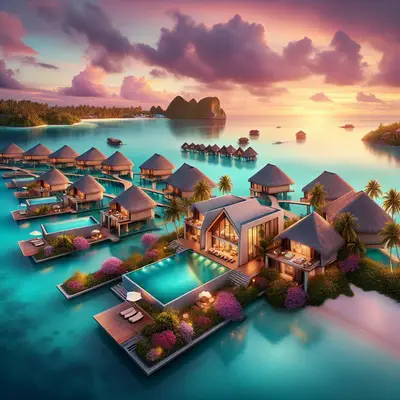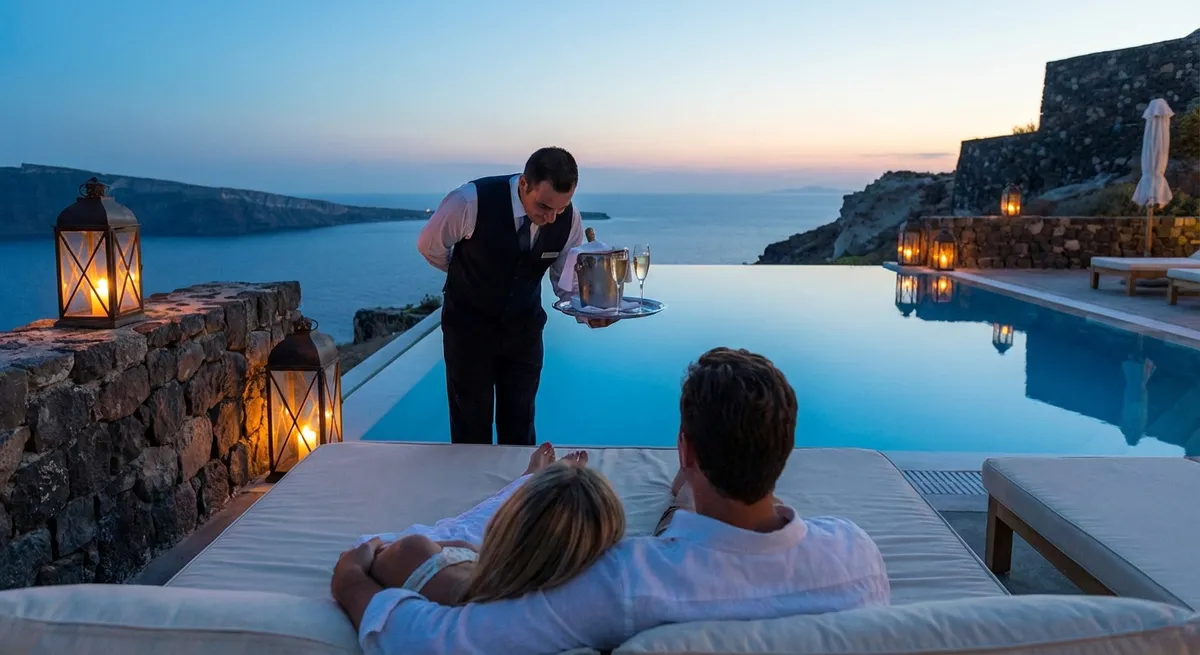
For a certain tier of traveler, a resort is no longer a destination—it is a coded ecosystem of privacy, precision, and quiet power. The modern exclusive resort is less about ostentation and more about orchestration: how seamlessly a life of standards can be transplanted, uninterrupted, into unfamiliar geography. At this level, square footage and thread count are assumed; differentiation comes from a finer calculus—how time is protected, how tastes are anticipated, and how the resort’s invisible architecture aligns with a guest’s private logic of comfort.
This is the world behind the welcome drink—where the real conversation is not about “amenities,” but about trust, discretion, and the deliberate choreography of rarity.
The New Benchmark: When Privacy Becomes Infrastructure
At truly exclusive resorts, privacy is not a marketing promise; it is hardwired into the design, operations, and culture. The most sought-after properties are engineered so that high-profile guests can occupy the same site without ever intersecting unless by design. Access roads are tiered, arrival paths are staggered, and service corridors trace a shadow network that keeps staff omnipresent yet unseen.
Architects increasingly build with “visual silence” in mind: sightlines from suites and villas are drawn to avoid neighboring windows; infinity pools terminate into horizon lines rather than shared beaches; terraces are oriented to protect against even distant observation. Landscaping becomes a strategic asset, with native flora double-tasked as both ecological buffer and privacy veil.
The result is less a resort and more a private campus—an environment where guests can move without calculation, unguarded yet fully protected. For luxury travelers, the value here is not only anonymity but the mental clarity that comes from inhabiting a space that feels entirely their own.
Exclusive Insight #1:
When evaluating an exclusive resort, the real test is not the villa itself, but the paths around it—ask about private access routes, in-villa check-in, and how the property segregates arrivals for high-profile or security-sensitive guests.
Hospitality as Intelligence: The Rise of Deep-Profile Service
At this level of travel, service is no longer about politeness; it is about precision. The most advanced resorts quietly operate as boutique intelligence hubs, building confidential guest profiles that evolve over years. They track not just allergies and pillow preferences, but preferred table positions (window vs. wall), morning beverage sequence, temperature tolerances, and even favored reading light intensity.
Pre-arrival, guest relations teams will often liaise with private offices, executive assistants, and family offices to construct an operational brief. This can include security protocols, dietary restrictions at medical-grade specificity, preferred workout formats, and even the social dynamics within a traveling party.
The artistry lies in how seamlessly this data is executed on property without feeling clinical or overfamiliar. A favorite grape varietal appears by the glass on a second evening, not the first. The gym is pre-set at the right temperature. A specific style of jazz is queued in the villa at dusk. Nothing is announced, yet everything feels improbably aligned.
Exclusive Insight #2:
Discerning guests should expect their “preferences file” to travel with them globally within the same ultra-luxury group. The most sophisticated travelers treat this as a long-term relationship—updating details after each stay so every future arrival is more exact.
Time as the Ultimate Currency: Designing Days Without Friction
For the truly time-poor, resort design is less about spectacle and more about the eradication of friction. An exclusive resort that understands this treats time-savings as its most valuable amenity.
Helipad or private jet terminal proximity is carefully considered to compress transfer windows. Immigration fast-track services and on-site customs clearance are arranged where legally possible. Spa, wellness, and dining schedules flex around the guest, not the other way around; “hours of operation” become a soft suggestion rather than a hard constraint.
Internally, distance is managed as an invisible luxury. Strategic placement of villas near key facilities can be arranged on request, while private buggy fleets, discreet internal drivers, and seamless wayfinding reduce cognitive load. Activities are layered, not stacked—so a guest can move from ocean to treatment room to dinner without wasted intervals, wardrobe miscalculations, or redundant check-ins.
Exclusive resorts have begun using subtle technology—secure pre-stay apps, encrypted messaging, and invisible RFID—to reduce interruptions. Preferences are communicated once, then propagated across outlets, so a guest’s choices at breakfast silently inform the evening’s wine recommendations or in-villa amenities.
Exclusive Insight #3:
The most valuable question to ask a reservation team is not “What does the room include?” but “How will you protect my time?” Their answer will reveal how evolved their operational philosophy truly is.
Beyond Amenities: Curated Access to Closed Worlds
At the uppermost tier, the resort itself is only part of the proposition. The real magnet is access to experiences that cannot be replicated, regardless of spend, by the general public.
This may mean after-hours entry to heritage sites with a private curator; a marine biologist-led night dive in a no-access conservation zone; a winemaker opening library vintages that never reached the open market; or a bespoke performance by regional artists in a setting that blurs the line between recital and conversation.
The most compelling properties act as cultural and intellectual conduits, cultivating relationships with local institutions, artisans, and thought leaders long before the guest arrives. These relationships are built on mutual respect rather than simple transaction, allowing the resort to curate experiences that feel of the place, not simply staged for it.
The hallmark of true exclusivity is subtlety: no social media signage, no obvious staging, no sense that the experience was designed to be consumed as content. Instead, these are moments guests rarely share publicly—because their power lies in their scarcity and intimacy.
Exclusive Insight #4:
When selecting an exclusive resort, inquire not just about “excursions,” but about their institutional partnerships—museums, conservation projects, ateliers, academic centers. Properties with deep, long-term relationships can unlock the rarest experiences.
The Emerging Standard: Sustainability Without Compromise
For the globally mobile elite, there is growing discomfort with the old equation of luxury at ecological cost. The most advanced exclusive resorts are recoding sustainability from obligation to aesthetic—clean energy, conscious sourcing, and conservation woven into the guest experience with minimal overt signaling.
Many leading properties now operate on hybrid or fully renewable energy, treat and reuse water on-site, and enforce stringent building footprints to protect native ecosystems. Farm-to-table has evolved into estate-to-table: organic gardens, on-site roasting and fermenting programs, and aquaculture initiatives that support—not strain—local food systems.
Crucially, the new elite guest is no longer satisfied with a token donation to an environmental cause. They want traceability: where staff are from, how they are trained and compensated, how local communities participate in governance and benefit from the resort’s presence. The most forward-thinking properties open the backstage—inviting guests to see conservation labs, reef restoration nurseries, or agricultural programs as part of their stay.
This is not philanthropy as spectacle, but aligned self-interest: preserving the environments and cultures that make these destinations worth visiting in the first place.
Exclusive Insight #5:
The most future-proof exclusive resorts can articulate, in detail, their environmental and community impact metrics—not just policies. Ask for specifics: energy mix, water strategy, local employment percentages, and long-term conservation commitments.
Conclusion
The modern exclusive resort is no longer simply a beautiful room in an enviable location. It is an ecosystem calibrated around a guest’s privacy, time, taste, and conscience. What distinguishes the truly exceptional from the merely expensive is an invisible architecture: data used with restraint, design that prioritizes psychological ease, access that feels quietly extraordinary, and ethics that match the sophistication of the experience.
For luxury travelers who move through the world with high expectations and limited time, these properties offer something increasingly rare: the feeling that every element has been considered, yet nothing feels forced. In an age of spectacle, the new language of exclusivity is written in understatement, exactitude, and the quiet assurance that behind every effortless moment lies an intricate, unseen design.
Sources
- Forbes Travel Guide: What Makes a Five-Star Hotel? – Outlines service and infrastructure standards that underpin ultra-luxury properties
- Virtuoso: The Future of Luxury Travel – Explores evolving expectations of high-net-worth travelers and emerging trends
- Condé Nast Traveler: The Rise of Ultra-Private Travel – Discusses privacy, exclusivity, and tailored experiences in the luxury travel sector
- World Travel & Tourism Council – Hotel Sustainability Basics – Provides insight into sustainability standards increasingly adopted by high-end resorts
- UNWTO: Tourism and Culture Synergies – Examines how tourism partnerships with cultural institutions create deeper, more meaningful experiences
Key Takeaway
The most important thing to remember from this article is that this information can change how you think about Exclusive Resorts.