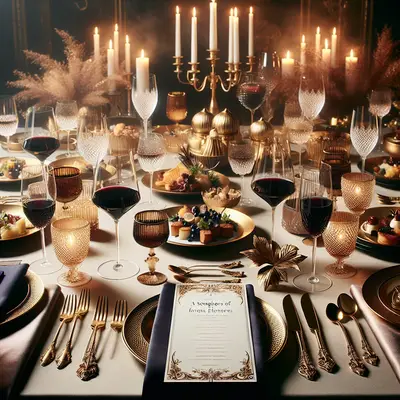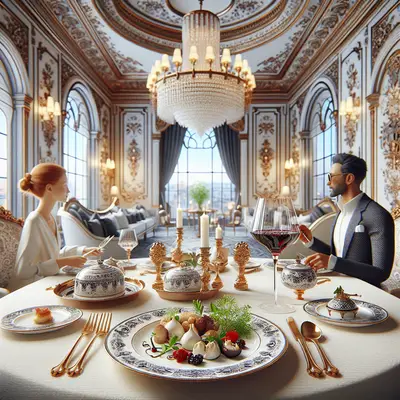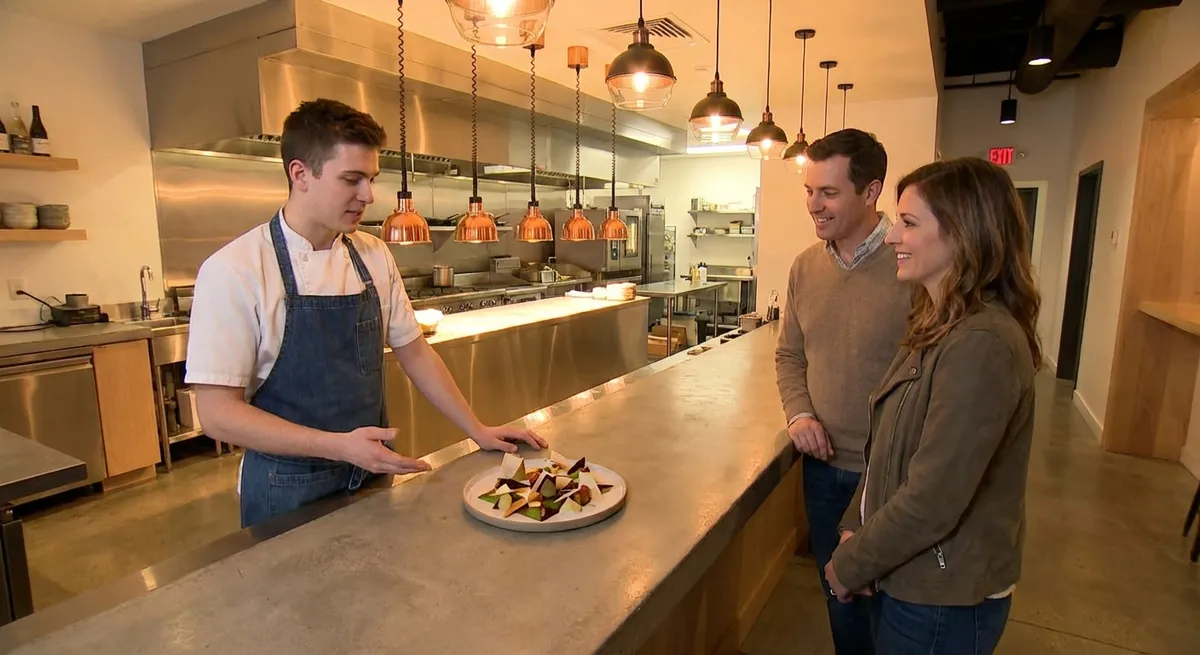
In the world of true luxury, fine dining has quietly evolved from a parade of courses into a private conversation—between chef and guest, place and palate, story and sensory memory. For the discerning traveler, the most coveted tables today are less about spectacle and more about precision: of sourcing, of design, of timing, of silence. The experience is still theatrical, but the spotlight has shifted from opulence to intention.
What follows is not a guide to “hot” restaurants, but a set of insider cues. These are the subtle signals that a dining room is operating on a different level entirely—details that seasoned luxury travelers notice instinctively, and that separate a memorable meal from a truly rarefied one.
1. The Unspoken Choreography of Service
At the highest end of fine dining, service is not simply “attentive”—it is choreographed. You will sense it the moment you sit: napkins placed in a synchronized movement, water poured from the same side of the table in perfect sequence, and plates set down so that each guest begins their dish in the same orientation, as the chef intended. The most refined teams move like a silent ensemble, rarely interrupting conversation yet somehow always present at the exact moment you realize you need something.
Look for micro-gestures: a server who subtly adjusts the angle of your chair rather than asking you to move, or one who notes which hand you reach with and places your glass accordingly. At this level, there are no generic questions about “how everything is”; instead, there are precise observations—“you seemed to favor the sauce; may I suggest a pairing that mirrors that profile for the next course?” It is service that anticipates without intruding, calibrating the entire pace of the evening to your comfort rather than the kitchen’s convenience.
2. A Cellar That Tells a Story, Not Just a Price Tag
In truly elevated dining rooms, the wine list is not designed to impress with size alone. Instead, it reads like a curated library, revealing the personality of the sommelier and the philosophy of the restaurant. There will, of course, be grand marques and legendary vintages; but the real luxury is in the unexpected: a small, biodynamic producer from an overlooked region, a rare vintage poured by the glass, a thoughtful selection of half-bottles for nuanced pairings.
Notice how the sommelier speaks. The most skilled will ask what you enjoy in terms of texture and mood, not just grape or brand: “Are you in the mood for something that feels like silk or something with a bit of tension?” They may propose a progression that mirrors your journey—starting with a precise, mineral-driven white to reset the palate after travel, then unfolding into deeper, more contemplative reds as the meal extends into the evening. In such settings, wine is not an accessory; it is an edited narrative that runs parallel to the food, and the sommelier is its discreet author.
3. Design That You Feel Before You See
For the luxury traveler, the room itself is often the first indicator that you are in the right place. Yet in the most sophisticated fine dining spaces, design is meant to be felt more than noticed. Lighting is a key marker: the room glows softly, with individual pools of light that honor the plate without exposing the entire table. Surfaces are tactile but quiet—linen that feels substantial, glassware that is almost weightless, porcelain that yields a delicate chime rather than a heavy clink.
Acoustics are another sign of true refinement. The best rooms are engineered so that you can hear your companion clearly while the energy of the room remains alive around you. Materials are chosen as much for their sound absorption as their beauty. Art and objects are subtly integrated, often referencing local craftsmanship or the restaurant’s culinary narrative without shouting it. When you notice that your shoulders have relaxed, that you’re speaking at a natural volume without strain, and that the space allows you to fully inhabit the moment—that is when design has quietly fulfilled its purpose.
4. Ingredients with Provenance—and Restraint
Luxury in fine dining is no longer defined by a checklist of caviar, truffle, and wagyu. The new prestige lies in provenance and restraint: ingredients chosen not because they are universally expensive, but because they are uniquely right. The most interesting menus today often feature a single extraordinary element on the plate, surrounded by a constellation of supporting flavors that exist solely to amplify it.
Ask—discreetly—about sourcing, and listen for specificity. “Local” is not enough; at this level, your server might mention the exact grower, the micro-season, or even the particular corner of a farm where the produce thrives. You may find that what appears to be a minimal plate carries a remarkable depth of preparation: a simple broth that has been simmered for 48 hours, or a vegetable glazed in a reduction made from its own juices. The luxury traveler will recognize that the true indulgence is not in how much is on the plate, but in how much thought is behind it.
5. The Exit That Lingers Longer Than Dessert
In the most memorable fine dining experiences, the final impression is as carefully curated as the first greeting. It might be a parting gift, but not the predictable box of chocolates; instead, perhaps a small jar of house-fermented butter to enjoy at breakfast, a handwritten note with a recipe adapted for home, or a delicate tea blend reflecting the flavors of your menu. This is hospitality that understands the power of remembering—and being remembered.
Pay attention to what happens as you leave. A restaurant operating at the highest level will often have already anticipated your onward journey: a car ready at the exact time requested, a shawl returned already warmed if you left it with the cloakroom, a quiet check that your dietary preferences have been noted on your profile for future visits. Follow-up is part of the experience, too. A thoughtful email the next day—brief, personal, and devoid of marketing language—signals a relationship rather than a transaction. For the luxury traveler whose time and attention are perpetually in demand, this level of consideration transforms a dinner into a discreet, enduring connection.
Conclusion
For those who travel in pursuit of the exceptional, fine dining is no longer about chasing reservations at the most talked-about restaurant. It is about seeking rooms where intention is layered into every detail, where service is a conversation rather than a script, and where the memory of a dish lingers not just on the palate, but in the way you were made to feel.
The next time you book a coveted table, look beyond the menu and the Michelin stars. Instead, notice the choreography, the cellar’s quiet confidence, the design you feel in your posture, the integrity of each ingredient, and the elegance of your farewell. In these subtleties lies the new language of fine dining—fluent, understated, and perfectly attuned to the expectations of the modern luxury traveler.
Key Takeaway
The most important thing to remember from this article is that this information can change how you think about Fine Dining.