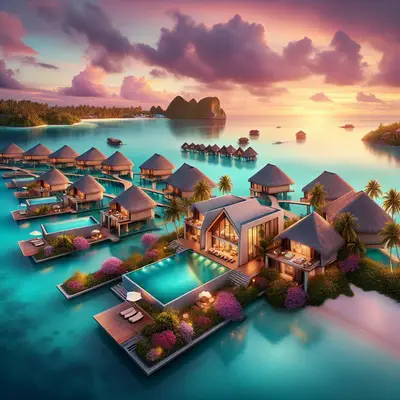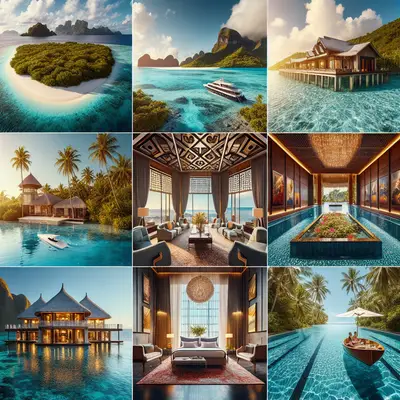
The most discerning travelers are no longer chasing square footage, thread counts, or nameplate prestige. They are tracing something quieter: the choreography of comfort, the privacy of time, and the rare alignment between a place and the way they prefer to move through the world. In the realm of exclusive resorts, luxury is increasingly defined by what is edited out—crowds, friction, noise—as much as by what is curated in. This is a landscape where access is whispered, experiences are orchestrated with precision, and the rarest amenity is a sense of being entirely, elegantly unhurried.
Redefining Access: When the Resort Becomes a Private Network
Exclusive resorts have evolved from static destinations into dynamic private networks—ecosystems of villas, members-only residences, and invitation-only enclaves that stretch across continents. For the well-traveled, the appeal is not a single spectacular property, but the assurance that wherever they land, the standard, discretion, and aesthetic are already aligned with their expectations.
In this world, access is layered. Public-facing spaces may exist, but the true experience unfolds behind keycard-guarded corridors, private docks, and unlisted floors. Some ultra-luxury brands now reserve entire wings or standalone compounds that never appear on booking engines; they are released only to a calibrated circle of guests, often via a dedicated relationship manager who knows not just preferences, but patterns.
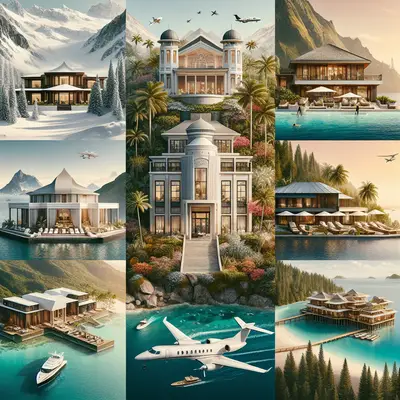
The advantage for the traveler is continuity without repetition. A guest might arrive on a private jet to a Caribbean residence, later transition to an alpine chalet within the same brand’s portfolio, and expect the same intuitive service, culinary nuance, and privacy architecture. It is less about points and perks, more about belonging to a quiet, floating neighborhood that simply relocates with the seasons.
The Invisible Service Ballet: Precision Without Performance
In truly exclusive resorts, service is not a performance but a presence—constant, precise, and nearly imperceptible. The most sophisticated guests are not looking for theatrical flourishes; they are looking for an environment where their preferences appear to happen naturally, without ceremony.
This is the domain of silent choreography. Housekeeping schedules itself to your circadian rhythm, learning over several stays when you typically leave the room and how you prefer it to be left. The sommelier remembers the exact Burgundy you favored three seasons ago and has a comparable bottle decanted before you sit down, without announcing the gesture. The resort’s transport team monitors flight paths and local air traffic, proactively adjusting departure times from the property’s helipad to ensure you glide around—not through—congestion.
When done at the highest level, this service ballet eliminates negotiation. There are fewer questions, fewer check-ins, fewer interruptions. The staff’s training is built not only on hospitality standards, but on reading micro-signals—pace of conversation, tone, eye contact—to adjust engagement. For the guest, the result is a rare sensation in modern travel: never needing to ask twice, and often not needing to ask at all.
Exclusive Insight #1: The most coveted resorts aren’t defined by how much staff you see, but by how fluently the staff you barely notice is shaping your experience.
Time as the Ultimate Suite Upgrade
For serious travelers, time is the only asset that cannot be extended, but it can be exquisitely rearranged. Leading exclusive resorts now design entire guest journeys around the elimination of friction, transforming what once felt like transit into a smooth, almost cinematic progression.
This begins well before arrival. Travel designers aligned with top-tier resorts pre-clear immigration where possible, coordinate luggage transfers from aircraft to villa without the guest seeing a carousel, and stagger check-in formalities so that signatures and documentation happen days before departure. The guest’s first physical encounter with the resort is not a front desk, but a drink in hand on a terrace that already feels familiar.
On-property, time is freed by intelligent density. A villa’s plunge pool, outdoor shower, workspace, and dining terrace are configured so guests can move from video call to swim to private tasting dinner without leaving their own structure. Golf carts, e-bikes, or private cars are positioned based on your historical patterns, not generic routes. Even wellness programming has shifted: treatments are structured as modular “time blocks” that can flex with changing plans rather than rigidly scheduled slots.
Exclusive Insight #2: The highest expression of luxury is not late check-out; it is never feeling rushed from the moment your journey begins.
Privacy by Design, Not by Request
True privacy is not achieved by simply closing doors. In the best exclusive resorts, it is engineered into the master plan—an architectural, operational, and digital strategy that anticipates how guests wish to disappear.
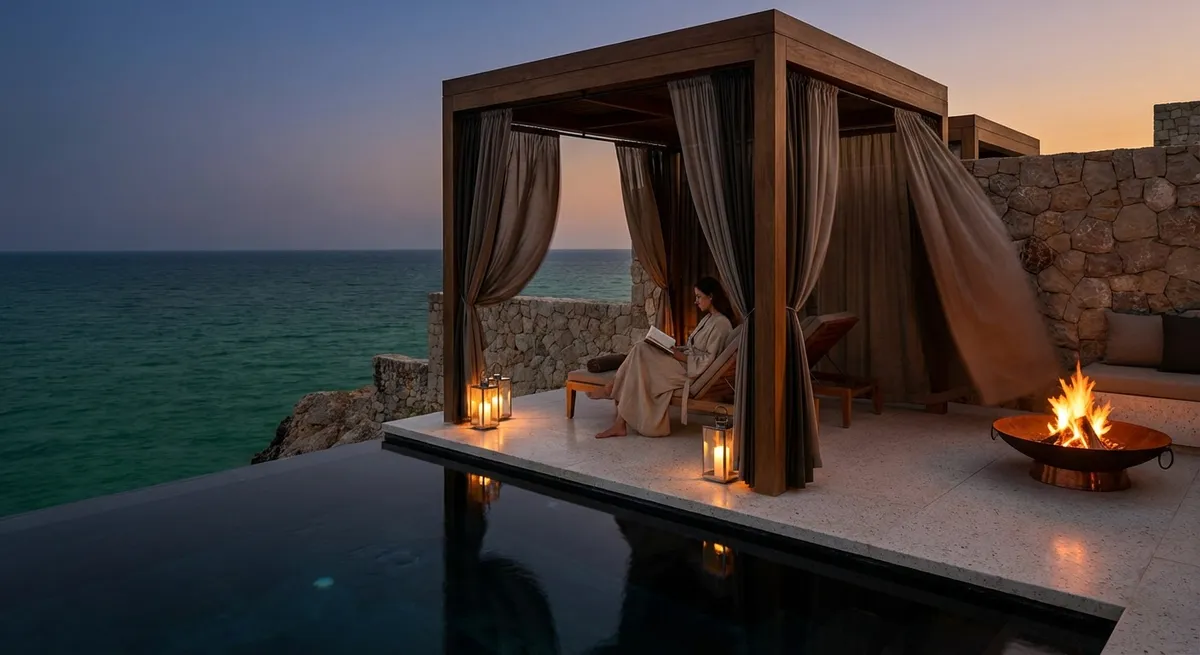
Visually, this means sightlines are carefully managed. Infinity pools and terraces are angled so that you float above the landscape without seeing anyone else doing the same. Pathways curve simply to break direct views between villas. Landscaping is not decorative but functional, using native flora to create layers of seclusion, sound-absorption, and shade rather than ornamental excess.
Operationally, privacy is maintained through zoning. Children’s clubs, main pools, and high-energy venues are deliberately kept at a gentle distance from residential-style suites and members-only quarters. Arrival and departure routes for high-profile guests often bypass the main portico entirely, shifting through service corridors and side entrances that feel intentionally designed rather than improvised.
Digital privacy is now part of this equation. Secure, high-bandwidth networks are standard, but so are data-minimization practices: minimal in-room devices, opt-out facial recognition where used, and clear boundaries on how guest preferences are stored. For guests whose work follows them everywhere, the ability to host confidential conversations or conduct sensitive video conferences from their villa without infrastructure concerns is no longer a perk—it is a prerequisite.
Exclusive Insight #3: The most advanced resorts treat privacy as a structural element, not a special request.
The New Quiet Luxury: Context Over Spectacle
In an era where almost anything can be photographed and replicated, the rarest form of resort luxury is context—those experiences that cannot be transplanted because they are inseparable from where they occur. For the contemporary luxury traveler, understated authenticity has more gravitational pull than spectacle.
Instead of generic “local experiences,” sophisticated resorts create entries into the private life of a destination. A sunrise sail with a third-generation fisherman who quietly explains the shifting coastline; a tasting inside a winemaker’s working cellar, scheduled at the time of day they actually prefer to taste their own barrels; a private after-hours museum visit curated not by a guide, but by the institution’s own conservator.
The aesthetic follows suit. Interiors do not shout their budget; they whisper their provenance. Handwoven textiles by regional artisans, bespoke ceramics commissioned from a single studio, and custom scents inspired by the local environment create a sensory continuity across the stay. The aim is not to dress the property in clichés of “place,” but to integrate it into the local cultural and ecological fabric so thoroughly that it could not exist anywhere else.
Exclusive Insight #4: The new status symbol is not having “seen it all,” but having been immersed somewhere in a way that cannot be repeated in another postcode.
Personal Ecosystems: Wellness, Work, and Pleasure in Balance
For modern luxury travelers, life does not neatly divide into vacation and non-vacation. The most advanced exclusive resorts understand this, designing environments that support a continuous, personalized ecosystem where wellness, work, and pleasure are not competing forces but complementary rhythms.
Wellness is no longer confined to the spa wing. Air and water quality are calibrated in villas, circadian lighting systems align with time zones, and sleep programs go beyond pillow menus to include tailored mattress configurations, noise mapping, and customized soundscapes. Fitness is similarly integrated: private reformer studios, in-villa cold plunges, and guided outdoor movement sessions that feel like exploration, not exercise.
Work is accommodated, not resented. Sound-insulated spaces, robust cybersecurity, and on-call tech concierges create a reliable environment for board calls or deal negotiations. Yet break points are intentionally engineered—a late-afternoon yacht transfer timed to follow a critical meeting, or a standing early-morning ocean swim with a resident coach that becomes a ritual anchor.
The most successful properties function as extensions of a guest’s existing life, not intermissions from it. They recognize that the luxury traveler wants to return home not only rested, but subtly recalibrated: better sleep, sharper focus, deeper connection with family or partners, and a renewed sense that their time away was not an escape, but an enhancement.
Exclusive Insight #5: The finest resorts now act less like destinations and more like finely tuned ecosystems designed around how you actually live—at your best.
Conclusion
The universe of exclusive resorts is quietly reorganizing itself around a new hierarchy of value. Space, design, and amenities still matter, but they are no longer the story; they are the staging. What truly distinguishes the uppermost tier is how deftly a property can choreograph time, guard privacy, interpret place, and tune itself to the specific rhythms of each guest’s life.
For those who move through the world with intent, luxury is no longer a collection of features—it is a feeling of seamless alignment. The resort, in its most elevated form, becomes less a destination and more a carefully drawn map of comfort, discretion, and possibility, waiting to be unfolded whenever you choose to step out of view.
Sources
- Forbes Travel Guide: What Makes a Five-Star Hotel – Overview of the service and design standards used to evaluate top-tier luxury properties
- Virtuoso: 2024 Luxe Report – Insights into evolving preferences among high-net-worth and ultra-high-net-worth travelers
- Condé Nast Traveler – How the World’s Best Hotels Stay So Quietly Luxurious – Exploration of subtle service, privacy, and design in leading luxury hotels and resorts
- World Travel & Tourism Council (WTTC) – High Net Worth Travelers Trends Report – Data and analysis on trends shaping the behavior and expectations of affluent travelers
- Aman Resorts – Brand Philosophy – Example of a leading ultra-luxury brand’s focus on privacy, sense of place, and personalized experiences
Key Takeaway
The most important thing to remember from this article is that this information can change how you think about Exclusive Resorts.