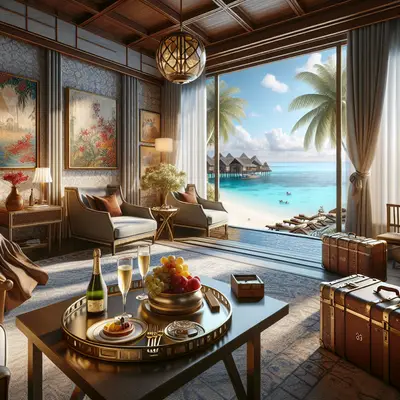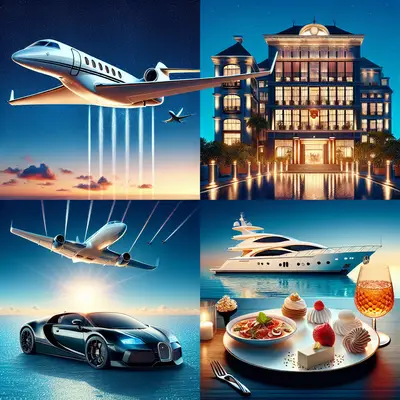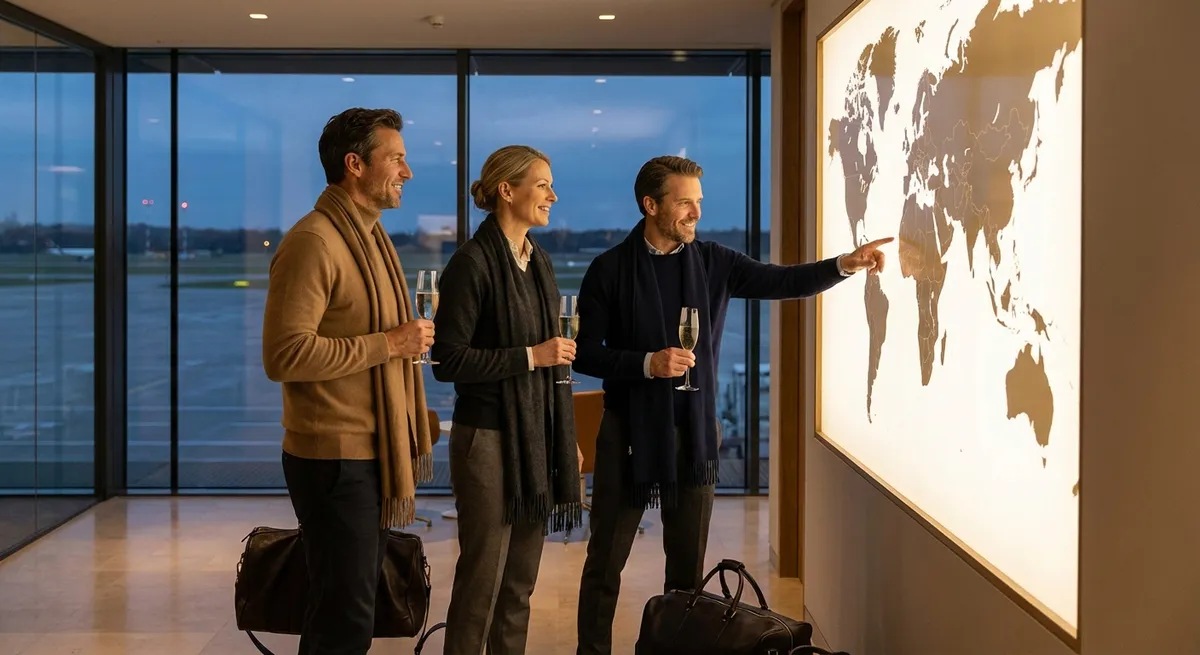
There is a particular kind of traveler whose itinerary is never fully visible. Their plans are written less in bookings and more in relationships, timing, and discretion. For them, movement is not a disruption but a continuation of a carefully edited life. This is the realm of the contemporary premium lifestyle in transit: a world where comfort is assumed, but true luxury lives in seamlessness, intention, and the elegant use of time.
What follows are five exclusive, quietly powerful insights shaping how sophisticated travelers now orchestrate their journeys—subtle codes that rarely appear on itineraries, yet define them.
The Invisible Itinerary: Designing Flow, Not Just Trips
For the truly discerning traveler, a journey is less about destinations and more about the choreography between them. The question is no longer, “Where are you going?” but “How will this movement feel?”
This begins with an invisible itinerary: a framework that privileges rhythm over rigidity. Flights are chosen as much for their departure windows and airport environments as for their route. A 10:30 a.m. departure that allows a measured morning and a composed arrival may be preferable to a redeye that steals recovery, even in a lie-flat seat.
Premium travelers now quietly enlist specialized travel advisors and concierge services who understand their cadence of life: who know which lounge offers true privacy rather than mere branding, which hotel has a “soft arrival” policy that allows access to a room ahead of schedule, and which transfer partner can guarantee a low-friction, non-performative arrival at the tarmac.
Digital tools are curated just as carefully. Instead of a dozen travel apps, there might be three: one for operational control (airline or private-jet operator), one for on-the-ground logistics (chauffeurs, local transfers), and one for lifestyle (restaurant access, private shopping, wellness). The goal is not more options, but fewer, better pathways—so the journey feels like an unbroken line rather than a series of administrative fragments.
In this world, the finest compliment a journey can earn is that it “barely felt like travel at all.”
Time as the Rarest Amenity: Curating Hours, Not Just Suites
At a certain level, square footage and thread count cease to be differentiators; what matters is how a place handles your time. For the seasoned luxury traveler, time is not a backdrop to the trip—it is the primary asset being protected and refined.
This begins even before departure. Private airport services, VIP screening, and expedited immigration are not simply vanity extras; they are strategic tools for reclaiming hours that can be reallocated to sleep, work, or quiet enjoyment. Seamless pre-clearance, chauffeur coordination directly to the gate, and luggage projected to the room without visible handling are now baseline expectations for the truly premium experience.
At the destination, the most coveted properties are those that design time intelligently. Late check-outs and early check-ins are not ad hoc favors but built-in flexibilities. In-room dining is elevated from “food in a room” to a restaurant-level, punctual, beautifully plated experience that respects the guest’s schedule rather than the kitchen’s convenience. Housekeeping is invisible yet exacting—never interrupting, always attuned to when the room naturally releases itself for service.
Perhaps the most sophisticated evolution is the rise of “compressed experiences”: private viewings, curated gallery hours, early-access museum entries, or off-hours wellness sessions that condense what would otherwise require an entire day into a precise, high-quality hour or two. For the traveler whose calendar is genuinely scarce, the true luxury is not an endless list of activities—it is a handpicked few, executed flawlessly, in the right slivers of time.
Precision Comfort: The New Subtle Codes of Cabin and Suite
Today’s premium traveler expects comfort not as spectacle, but as quiet precision. The aesthetic may be minimalist, but the thinking behind it is deeply layered.
In the air, this shows up as a preference for cabins that understand human physiology: circadian lighting calibrated to reduce jet lag, cabin pressurization and humidity that lessen fatigue, menus designed with digestion and hydration in mind rather than just visual drama. Seats are valued not only for recline and privacy, but for thoughtful details: intuitive storage for personal items, soft-close compartments, tactile controls that can be used in the dark, and surfaces that feel intentionally chosen rather than generic.
On the ground, the most appreciated suites are those that demonstrate an almost anticipatory intelligence. Light controls are intuitive rather than theatrical. Outlets and USB ports are exactly where a traveler’s hands expect them to be. The bed is not merely “luxurious,” but tuned for rest: appropriate pillow menu, natural fiber options, blackout that actually blacks out, and a climate system that quietly maintains without aggressive cycling.
Small, high-impact touches distinguish the truly refined stay: a carafe of filtered water at turndown instead of a single plastic bottle; a compact, elegant steamer instead of a basic iron; a curated mini-bar with low-sugar, low-additive options instead of predictable mass-market beverages. Room fragrance is delicate and adjustable, not imposed.
This is the new language of comfort: micro-considerations that acknowledge how a frequent traveler’s body feels at 6 a.m. after a late arrival—and design for it without fanfare.
The Private Network: Human Infrastructure as a Luxury Asset
Behind every “effortless” journey is an invisible network of people whose primary currency is trust. For refined travelers, this personal ecosystem is as valuable as any elite status tier.
At its core are a few key roles: a travel advisor or PA who understands both practical logistics and personal nuance; a preferred aviation partner (commercial, private, or hybrid) who knows historical preferences; and a handful of on-the-ground contacts in frequently visited cities—hotel GMs, guest-relations managers, restaurateurs, private drivers, even gallery directors or wellness practitioners.
These relationships are nurtured, not merely used. Thank-you notes are sent. Feedback is specific, not vague. Preferences are shared clearly but respectfully, allowing teams to tailor experiences over time with greater precision: preferred in-room amenities, lighting and temperature preferences, arrival rituals, dietary boundaries that go beyond simple labels.
The benefit of such a network is compounding. A last-minute change no longer feels like a crisis, but a simple recalibration. A fully booked restaurant finds a quiet corner. A particular suite “happens” to be available. A local experience is arranged in a manner that is private, safe, and aligned with the traveler’s sensibility, not simply their budget.
For the luxury traveler who moves frequently, this human infrastructure offers something even more valuable than VIP treatment: continuity. Wherever they land, someone already understands how they prefer to live.
Discreet Wellbeing: Sustaining the Body in Constant Motion
The most sophisticated travelers understand that their greatest vulnerability is not logistics—it is depletion. True premium living in transit is no longer about indulgence at every turn; it is about sustaining health, clarity, and composure while in constant motion.
This often starts with a personal “transit protocol”: a set of non-negotiables that travel with the individual from city to city. A compact wellness kit might include tailored supplements, electrolyte options chosen for minimal sugar, noise-cancelling tools, an eye mask, and a slim, high-quality travel yoga mat or mobility band. Screen time is managed deliberately on long-haul flights, with intervals of movement, hydration, and genuine rest.
At hotels and villas, wellness is curated quietly. The choice of property may depend less on its spa spectacle and more on access to natural light, green space, quality fitness equipment, and in-room dining that can deliver something nourishing, unprocessed, and properly portioned at almost any hour. Increasingly, premium travelers are interested in properties offering evidence-informed wellness programs—sleep consultations, circadian-friendly lighting, or nutrition guidance—without crossing into ungrounded trends.
Movement is integrated into the day rather than forced. Instead of a heroic workout after a red-eye, the preference might be a 20-minute stretch session, a walk outdoors to anchor the body to the new time zone, or a short, guided breathwork practice. Alcohol is chosen intentionally, not reflexively—perhaps a single well-made drink with dinner instead of a continuous pour “because it’s included.”
The outcome is subtle but profound: fewer days written off to exhaustion, more clarity in meetings, more presence at dinners, and a body that can sustain the pace without quietly rebelling.
Conclusion
Premium travel today is no longer defined by conspicuous performance. It is a quieter art: of structuring time with intention, engineering comfort down to the smallest detail, cultivating human networks that smooth every edge, and protecting wellbeing as fiercely as any reservation.
For those who move often and far, these five insights are not luxuries in the decorative sense; they are instruments. Used well, they turn transit from a cost of doing business—or a side effect of pleasure—into a refined extension of a life already lived with precision and care.
In this strata of travel, the most telling marker of status is not how loudly a journey announces itself, but how effortlessly it disappears into the fabric of a well-designed life.
Sources
- [U.S. Department of State – Smart Traveler Enrollment Program (STEP)](https://travel.state.gov/content/travel/en/international-travel/before-you-go/step.html) - Official guidance on safer, more informed international travel, relevant to planning discreet, secure journeys
- [International Air Transport Association (IATA) – Passenger Experience](https://www.iata.org/en/programs/passenger/passenger-experience/) - Insight into evolving standards in cabin comfort, seamless journeys, and airport processes
- [Mayo Clinic – Jet Lag Disorder](https://www.mayoclinic.org/diseases-conditions/jet-lag-disorder/symptoms-causes/syc-20374025) - Evidence-based information on managing jet lag, informing wellness and circadian strategies while traveling
- [Harvard Business Review – The Dark Side of Frequent Travel](https://hbr.org/2016/02/the-dark-side-of-cross-border-travel) - Analysis of the physical and psychological toll of frequent travel, underscoring the need for intentional wellbeing practices
- [Leading Hotels of the World – Sustainability & Wellness Initiatives](https://www.lhw.com/our-initiatives) - Examples of how high-end properties integrate wellness, sustainability, and guest-centric services into the premium travel experience
Key Takeaway
The most important thing to remember from this article is that this information can change how you think about Premium Lifestyle.