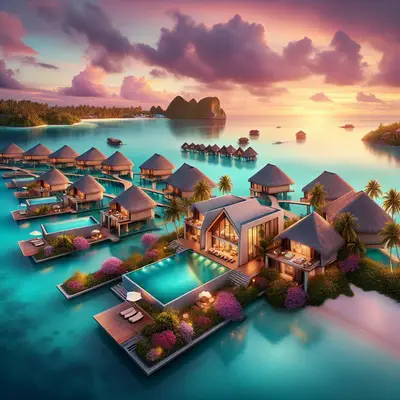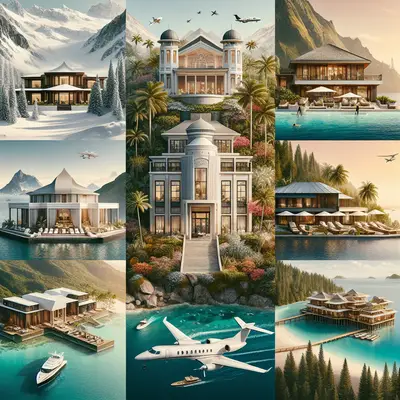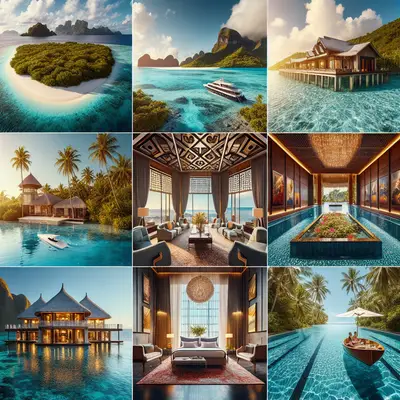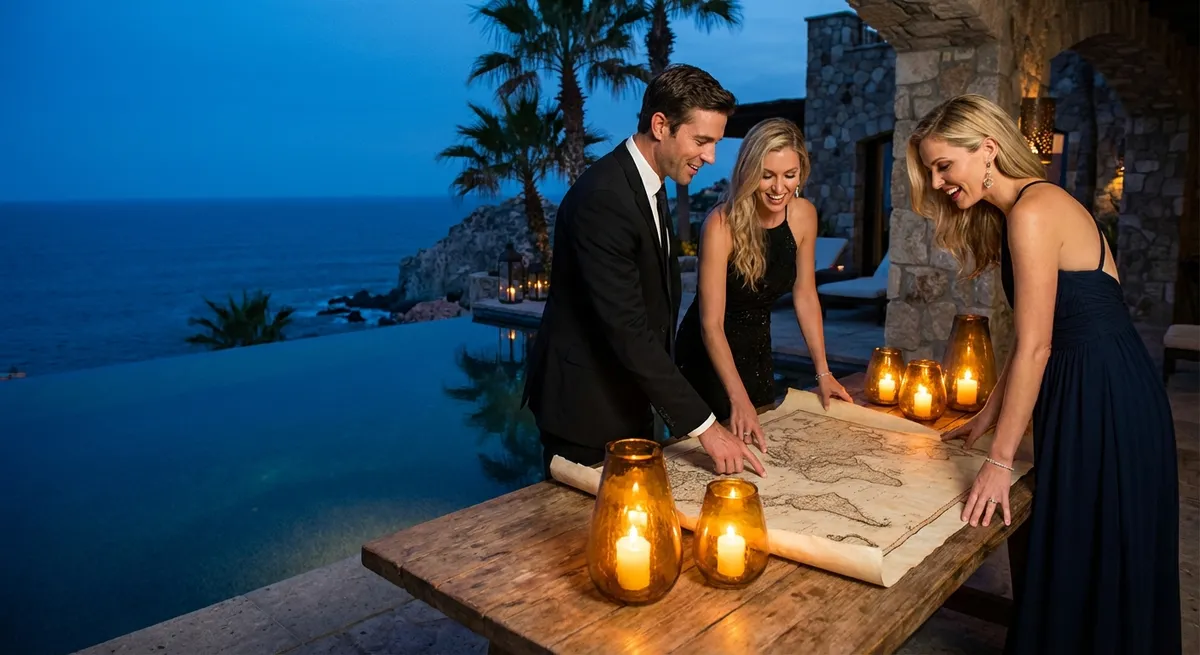
The most compelling exclusive resorts are not defined by room rates or infinity pools; they are defined by what never appears on a brochure. For the discerning traveler, luxury is not a spectacle but a calibration—of privacy, of pace, of anticipation executed with precision. Within this discreet echelon, every detail is edited, every interaction measured, and every experience designed to feel simultaneously inevitable and entirely your own. This is the world behind the glossy imagery: a private network of places and people where the journey is choreographed, but the choreography is never visible.
The Power of the Unlisted: Why the Best Resorts Aren’t Searchable
In the rarefied tier of hospitality, the most coveted properties often do not rely on public visibility. They exist in a parallel ecosystem of referral-only clubs, invitation-based villa portfolios, and low-profile estates known primarily to family offices, top-tier travel advisors, and private aviation networks.
These havens rarely advertise suites or amenities; instead, they cultivate long-term relationships with a deliberately small circle of guests. The experience begins long before arrival: a quiet exchange of dossiers between your advisor and the property, an understanding of your rhythms, your preferences, and your boundaries. The resort’s reward for its discretion is loyalty across generations. The guest’s reward is a level of personalization the open market cannot realistically sustain—wellness teams briefed on your sleep data, chefs who already know your dietary nuances, and staff who quietly remember that you prefer the terrace at 7:15, but only if the wind is below a certain speed.
In this realm, availability is not a calendar item but a form of curation. Declined requests are not failures of service; they are guardrails that preserve the equilibrium of the guest experience. Rooms are “unavailable” not because they are full, but because the curated guest mix—and therefore the atmosphere—has already reached its intended balance.
Invisible Infrastructure: How Exclusive Resorts Engineer Stillness
True exclusivity is not the absence of people; it is the absence of friction. What feels like effortless tranquility is, in reality, an intricate ecosystem of intelligent design, operational choreography, and data-informed foresight.
Arrival is a prime example. In elite properties, you rarely encounter queues, lobbies, or visible paperwork. Border formalities may be pre-coordinated; baggage vanishes at the aircraft steps and reappears already unpacked in your dressing room. Check-in is transformed from a transaction into an almost cinematic transition—one moment you are in transit, the next you are on your terrace with a perfectly calibrated drink in hand, your preferred glassware and garnish already anticipated.
Behind this lies a quiet technological backbone: systems that model flows of movement, staff rotations timed to guest preferences, and maintenance schedules designed to ensure you rarely encounter intrusive service activities. Guest-facing technology is often intentionally discreet: minimal apps, no intrusive notifications, and no reliance on guests to “self-manage” their experience. The highest tier of luxury now favors low-visibility tech—digital infrastructure that removes friction without demanding your attention, allowing your cognitive bandwidth to remain fully devoted to leisure, conversation, or simply stillness.
Culinary Privilege Redefined: From Menus to Micro-Expressions
In truly exclusive resorts, gastronomy is detached from the performative culture of waiting lists and “concept dining.” The luxury is not simply access to star chefs; it is the sense that the entire culinary infrastructure has quietly aligned itself around your tastes without ever needing to ask.
The most advanced properties maintain culinary profiles far beyond “allergies and preferences.” Over time, they observe how you actually dine: the pace at which you finish courses, what you leave untouched, how much you speak between bites, how often you shift from wine to tea, when you opt for lighter textures versus deeper, more complex flavors. This observational layer shapes your future dining—portions adjusted subtly, pacing refined, pairings suggested with an almost telepathic precision.
Menus are often treated as starting points rather than constraints. The true statement of exclusivity is the resort’s ability to conjure something that does not technically exist on the menu, sourced through private supply chains: a specific varietal of olive oil you favored on a previous stay, produce from a single hillside, or fish sourced through long-standing relationships with small-scale fisheries. The point is not conspicuous extravagance, but the quiet assurance that what appears on your table is not generic, but specifically and deliberately for you.
Privacy as Design Language, Not Policy
In mass luxury, privacy is communicated through policies, screens, and “Do Not Disturb” signs. In the more rarified realm of exclusive resorts, privacy is not a layer added on top of the experience; it is embedded in the architecture, the circulation patterns, and the service choreography.
Suites and villas are often oriented to create layered seclusion: not only are sight lines obscured, but sound paths and wind directions are considered to ensure voices, music, and even footsteps rarely overlap. Pathways are structured to create the illusion of solitude even at higher occupancy, with strategic staggering of activities so that guests rarely intersect unless they intend to.
Service follows a similar logic. Staff learn the topography of your preferences—when to be invisible, when to be present, and when to remain within peripheral vision. Knock patterns may be replaced with silent entry protocols synced to your movements; housekeeping teams track your routines to service spaces only when you are naturally elsewhere on the property. Privacy, in this context, is not just the absence of surveillance or intrusion; it is the cultivation of ease, the sensation that your personal sphere is both respected and intuitively understood without negotiation.
Time as the Ultimate Luxury: The Art of Unscripted Precision
For the most experienced travelers, the true scarce commodity is not space, but time—unfragmented, unhurried, and undemanding. Exclusive resorts that understand this do not simply offer “flexible schedules”; they master the almost paradoxical craft of creating unscripted days that nonetheless unfold with striking precision.
Instead of pre-packaged itineraries, you experience a form of real-time curation. Morning plans may shift with the weather, your energy, or your mood, without any visible reorganization. A sunrise excursion postponed by cloud cover seamlessly morphs into an in-villa breakfast exactly when you wake, complete with the particular newspaper or digital briefing format you favor. A postponed spa treatment reappears in your day precisely at the moment when you unconsciously begin to unwind after lunch.
This is not improvisation; it is anticipatory adjustment anchored by meticulous planning. Teams monitor not only logistics and environmental factors, but also your personal tempo—how quickly you transition between activities, when you naturally pause, when you seek solitude versus stimulation. The refinement lies in preserving the illusion of open, unstructured time while ensuring that every desire you have (and many you have not articulated) is already accounted for, with no visible strain.
Conclusion
The world of true exclusive resorts is not a theater of spectacle, but a discipline of restraint. It is defined less by what is shown, and more by what is quietly removed: lines, noise, redundancy, negotiation, and the subtle frictions that erode the experience of genuine leisure. For the traveler who has grown beyond the visible symbols of status, these properties offer something more enduring—a calibrated environment in which privacy, time, and attention are treated as precious resources and orchestrated with near-invisible precision.
In this rarefied space, luxury ceases to be an accumulation of features and becomes something far more elusive: a state of being in which everything surrounding you appears effortless, because the effort has been perfectly concealed.
Sources
- [Forbes Travel Guide – What Makes a Hotel Truly Luxurious?](https://www.forbestravelguide.com/about/ratings) - Outlines the standards and criteria used to evaluate high-end hotels and resorts, providing context for the elements of true luxury service.
- [Virtuoso – The Future of Luxury Travel](https://www.virtuoso.com/travel/articles/luxury-travel-trends) - Industry insights into evolving expectations of affluent travelers, including personalization, privacy, and experiential depth.
- [Condé Nast Traveler – Gold List: The World’s Best Hotels and Resorts](https://www.cntraveler.com/the-gold-list) - Curated examples of top-tier properties that illustrate how leading resorts implement design, service, and privacy at the highest level.
- [World Travel & Tourism Council (WTTC) – Luxury Travel Report](https://wttc.org/research/insights/luxury-traveller) - Research-driven perspective on behaviors and priorities of luxury travelers globally.
- [Harvard Business Review – The Power of Personalized Experiences](https://hbr.org/2015/11/how-marketers-can-personalize-at-scale) - Explores the strategic value and mechanics of personalization, a core element in exclusive resort experiences.
Key Takeaway
The most important thing to remember from this article is that this information can change how you think about Exclusive Resorts.