There was a time when the Northern Lights were the domain of backpackers and hardy photographers armed with tripods and thermoses. Today, as travel editors amplify personal accounts like the recently published “Best Places And Times To See The Northern Lights From My Own Experience,” aurora hunting has stepped decisively into the luxury conversation. High‑net‑worth travelers are no longer content to simply “see” the lights; they want to choreograph them into a perfectly curated, once‑in‑a‑lifetime tableau—complete with private chefs, design‑driven cabins, and cinematic silence.
As aurora season intensifies across the Nordic regions right now, the most discerning travelers are quietly booking experiences that go far beyond the usual glass‑roofed igloo. For those who view travel as an art form rather than an escape, the Northern Lights have become the world’s most elusive, naturally occurring “installation”—and the most sophisticated players are learning how to experience them properly.
Below, five exclusive insights shaping how luxury travelers are reimagining the aurora chase this season.
The New Status Itinerary: Latitude, Not Longitude
For years, the luxury travel map was drawn along longitude: Paris to Dubai, New York to St. Barths, London to the Maldives. But as aurora coverage surges across social media and first‑person accounts trend in real time, there is a quiet shift underway—status is increasingly measured by latitude. Destinations like Tromsø, Abisko, Senja, Svalbard, and remote corners of Finnish and Swedish Lapland are now appearing on the same spreadsheets as Courchevel, Capri, and Mykonos, especially among younger ultra‑wealthy travelers.
What distinguishes these Northern Lights itineraries is precision. The most interesting bookings this year are not simply “Lapland in winter,” but surgically timed arrivals aligned with solar activity forecasts and new moon dates, often informed by specialist outfitters who study geomagnetic conditions the way others analyze Burgundy vintages. A typical premium itinerary might include two or three distinct latitudes within a single trip—say, a design‑led cabin in Finnish Lapland, a remote lodge in northern Norway, and a final stop in Iceland—essentially hedging against cloud cover with tastefully orchestrated redundancy. In this world, a stamped passport page is no longer the flex; a carefully time‑stamped aurora photograph taken at 69° North is.
Private Skies: Bespoke Aurora Viewing as a New Luxury Standard
Luxury in 2025 is less about gold taps and more about controlled variables. Nowhere is that clearer than in how the top tier experiences the Northern Lights. Instead of group tours and shared minibuses idling on frozen lay‑bys, the expectation has shifted toward privately chartered experiences that eliminate noise—both literal and metaphorical.
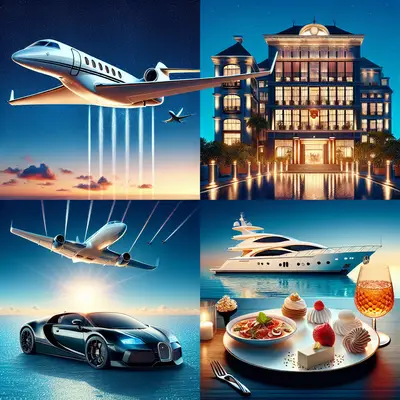
Right now, high‑end operators in Norway, Finland, and Iceland are seeing a marked uptick in fully private aurora safaris: heated glass‑roofed vehicles with reclining leather seats, sommeliers decanting small‑production Nordic wines, and Michelin‑adjacent chefs preparing late‑night tasting menus timed around solar forecasts. In the most rarefied cases, guests are incorporating short‑hop helicopter transfers and, increasingly, private jet segments that allow them to reposition overnight to where the aurora activity is strongest.
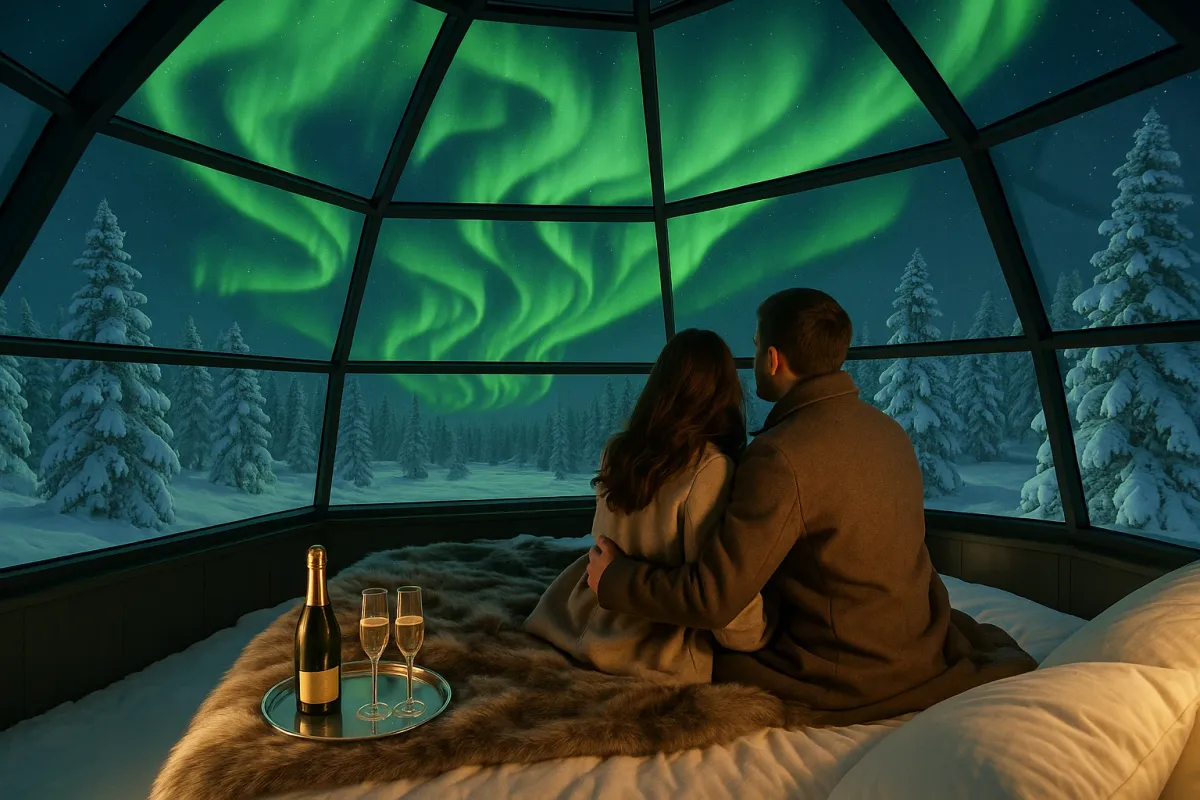
There is also a growing appetite for “silent” viewing: private islands, standalone cabins and arctic villas where you can watch the lights from your own terrace hot tub or indoor soaking pool, with sound reduced to crackling firewood and distant snow underfoot. The subtlety is the luxury—no idling engines, no tripod crowds, just you, the sky, and perhaps a glass of old Champagne contrasting sharply with the young, electric green above.
Design‑First Arctic Retreats: From Glass Igloos to Architectural Statements
The recent spike in aurora‑focused storytelling has made one thing abundantly clear: the era of the novelty glass igloo is nearing its end among the top tier. Sophisticated travelers, inspired by personal narratives about “where and how” to see the lights, are now seeking spaces that are architecturally and aesthetically compelling even when the sky stays dark.
Design‑forward retreats across Finland, Sweden, Norway, and Iceland are responding. Think minimal, timber‑and‑stone cabins cantilevered over snow‑draped valleys, with floor‑to‑ceiling glazing, warm brass accents, and museum‑grade lighting that can be dimmed to near invisibility at a moment’s notice. Interiors are increasingly curated rather than merely furnished: hand‑loomed Nordic textiles, ceramics from small‑batch local makers, sculptural fireplaces, even curated libraries of Arctic photography to deepen the sense of place.
Premium travelers are paying close attention to one detail in particular: sightlines. The best new builds are deliberately oriented toward northern vistas and low light pollution, integrating features like mirrored blackout panels and nearly invisible window mullions to preserve the cinematic feel of the sky. In these spaces, the aurora is no longer an add‑on activity; it is the central artwork, with architecture and interiors designed as an elegant, all‑season gallery around it.
Slow Luxury in Extreme Climates: Rituals, Not Checklists
The trending first‑person essays about “the best time and place” to see the Northern Lights tend to gloss over a crucial truth: much of aurora travel is waiting. For luxury travelers, the question is how that waiting is styled. The most refined experiences unfold when the night becomes a series of small, deliberate rituals rather than a test of patience.
High‑end properties are quietly excelling here. Instead of leaving guests to pace around in rental parkas, they’re curating slow‑burn evenings: a pre‑aurora tasting of Arctic char and roe, followed by a fireside reading with a local storyteller, then an outdoor sauna or onsen‑inspired soak beneath a sky being monitored, discreetly, by staff with an app in one hand and a thermal carafe in the other. Guests are given tailored layering systems—cashmere base layers, custom‑fitted down, beautifully designed boots—so that stepping outside at a moment’s notice feels elegant rather than cumbersome.
The most affluent travelers are embracing this rhythm. They are learning to measure a night’s success not solely by the intensity of the aurora activity, but by the quality of the hours framing it: the silence between snowflakes, the warmth of cedar in a private sauna, the taste of a rare whisky whose smokiness seems to echo the faint green haze forming in the distance. In this paradigm, the Northern Lights become both highlight and halo—one luminous chapter in an evening crafted with intention.
Discreet Sustainability: When Ethical Choices Become a Quiet Flex
As interest in aurora travel spikes—driven in part by viral personal accounts and social media reels—so does scrutiny of its environmental footprint. The most sophisticated travelers are acutely aware that the Arctic is both stage and stakeholder, and they are beginning to treat sustainable choices not as sacrifice, but as a new form of connoisseurship.
Right now, the most desirable Northern Lights experiences are increasingly defined by what sits behind the scenes: off‑grid power solutions, low‑impact building materials, restrained footprints, and partnerships with indigenous communities. Guests are requesting electric vehicles for their aurora chases, preferring lodges that publish transparent sustainability data, and asking for menus that highlight hyper‑local ingredients rather than flown‑in luxury staples. The quiet satisfaction comes from knowing the night’s indulgence is not at odds with the land that makes it possible.
Even in aviation, subtle shifts are emerging: some private jet clients are consolidating trips, choosing newer, more efficient aircraft, or pairing an Arctic leg with a carbon‑conscious stay in a rewilded European estate—an internal calculus of impact and intent. Among this echelon, being able to say, “We saw the lights and we left almost no trace” has become a discreet but unmistakable marker of taste.
Conclusion
As the latest aurora guides and first‑hand accounts make their rounds this season, the Northern Lights are evolving from a bucket‑list item into a refined canvas for premium travel. The story is no longer simply “I saw them,” but how, where, and under what conditions you chose to wait for the sky to move. For those designing their next exceptional journey, the question has become wonderfully nuanced: not just Will the aurora appear? but What kind of life will you be living in the hours around that glow?
In a world saturated with manufactured spectacle, few experiences remain as authentically rare as a night when the heavens quietly decide to perform. The luxury, now, is in being there—properly prepared, exquisitely housed, and deeply present—when they do.
Key Takeaway
The most important thing to remember from this article is that this information can change how you think about Premium Lifestyle.