For the globally mobile, fine dining is no longer a trophy reservation—it is a quiet litmus test for how a city thinks, creates, and receives its guests. The most compelling tables today are less about spectacle and more about precision: of service, of sourcing, of narrative. For luxury travelers, understanding this evolving language of the dining room unlocks a deeper tier of experience—one that is rarely advertised, but always available to those who know what to look for.
Below are five discreet yet powerful insights that transform a meal from “memorable” to “meticulous,” wherever your next landing strip happens to be.
1. Reading the Room: The Micro-Theater of Service
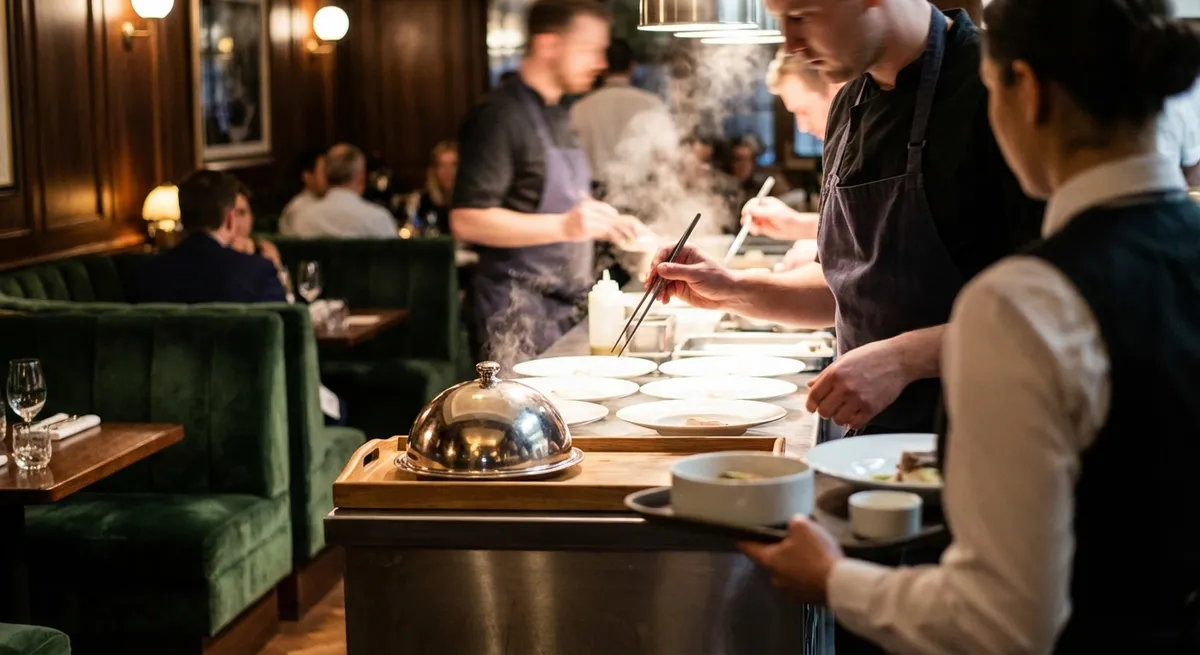
At the most accomplished restaurants, service has a tempo as calibrated as a flight plan. It begins the moment you enter: how quickly you are greeted, how seamlessly outerwear is handled, whether you are guided or merely pointed to the table. These first few seconds signal the restaurant’s priorities more clearly than any Michelin plaque on the wall.
Watch for how the team manages proximity. The finest service teams maintain an almost aerodynamic distance—close enough to intercept the slightest hand gesture, yet far enough that intimate conversations feel entirely private. Eye contact replaces interruption; silverware is adjusted between courses as if nothing at all has happened. Napkins are refolded during a brief absence without the faintest scrape of a chair.
For luxury travelers accustomed to premium cabins and private terminals, this quality of service should feel familiar: frictionless, anticipatory, and never performative. The true indicator is not ceremony, but silence—how much is accomplished around you with no visible effort. When you find a room where the staff seems to orbit invisibly around your comfort, you have located one of the city’s true dining institutions, regardless of how loudly it markets itself.
2. Provenance with Purpose: Beyond the Name of the Farm
“Locally sourced” has become the most overused phrase on the menu; discerning guests now look beyond the geography of ingredients to the intent behind their selection. The elite kitchens of the moment are not simply buying the rarest caviar; they are building long-term, almost collaborative relationships with purveyors, artisans, and even scientists.
A brief, well-informed conversation with your sommelier or host can be revealing. Ask about a single component—not the main protein, but the supporting elements: the particular oil, the variety of citrus, the grain used in a bread course. Strong programs will respond not just with provenance, but with rationale: why that varietal, that harvest, that mill. The explanation should feel like a design decision, not a marketing script.
In coastal destinations, you might hear about fishermen who work nocturnally to deliver at dawn; in alpine cities, farmers who grow heritage crops specifically for one kitchen. Increasingly, top-tier restaurants participate in research or sustainability initiatives, experimenting with regenerative agriculture or minimizing waste in ways that do not compromise luxury, but redefine it.
For the luxury traveler, aligning with these kitchens is akin to choosing an aircraft with a meticulously modernized fleet: it is a signal that excellence today means technical rigor, environmental intelligence, and aesthetic restraint—all at once.
3. The Architecture of a Menu: How to Navigate a Long Tasting
Extended tasting menus can feel like a test of endurance for the unprepared. For those who travel frequently, the cumulative impact of time zones, cabin air, and multiple restaurant reservations in a single city makes the ability to “read” a menu’s structure essential.
Observe how the progression is built. Thoughtful menus open with dishes that awaken rather than overwhelm—high-toned acidity, crisp textures, precise temperatures. Heavier elements appear in controlled waves, punctuated by palate-cleansing interludes that are quietly functional, not theatrical. Aesthetic excess early in the evening can be a warning sign: it suggests emphasis on first impressions rather than sustained pleasure.
Ask, discreetly, how flexible the journey is. The most confident kitchens will offer subtle calibrations: reduced course counts for late arrivals from long-haul flights, adjustments in portioning, or alternate pacing to accommodate an early departure the next morning. Saying, “We have an early departure; we’d love the full experience with a slightly more focused flow” is often sufficient to trigger an entirely re-mapped service behind the scenes.
This is the dining equivalent of a well-coordinated ground transfer: you still arrive at the same destination, but the transitions are smoothed, the waiting minimized, and your energy—rather than the restaurant’s script—dictates the rhythm.
4. Glass, Light, and Acoustics: The Quiet Luxury of Comfort
For seasoned travelers, comfort is never an accident; it is the result of engineered decisions. Fine dining is no different. Before the first bite, evaluate three elements that separate merely beautiful rooms from deeply civilized ones: glassware, lighting, and acoustics.
Stemware in serious restaurants is increasingly specialized: different shapes for specific grape varieties, separate glass profiles for sparkling wines or fortified pairings, and carefully selected weights that feel balanced in the hand. Look for consistency, but also intentional variation—a slim, reed-like flute for an opening aperitif, a broader bowl as the meal accumulates nuance. If your glassware remains generic throughout a complex pairing, the ambition of the cellar may not match the ambition of the kitchen.
Lighting should flatter both plate and person. The finest rooms use layered illumination: targeted spots for dishes, ambient pools for the table, and softened background light to preserve privacy. You should be able to read the menu without ever feeling interrogated by a spotlight; a well-lit dish against a dim, restful periphery is the contemporary hallmark of thoughtful design.
Acoustics may be the most underrated luxury. Elite travelers know that a dining room where you can speak at a natural volume and still feel the hum of the space is worth crossing a city for. Materials matter: upholstered surfaces, considered ceiling treatments, carpets that are more than decorative. In a world obsessed with visual drama, any restaurant willing to devote significant budget to the soundscape is signaling an investment in genuine, long-form comfort.
5. Discreet Customization: Unlocking the “Unlisted” Experience
At the top tier of hospitality, the most memorable gestures are rarely on the menu. They exist in a liminal space between formal offering and personal favor—accessible not through entitlement, but through clarity, politeness, and timing.
For frequent luxury travelers, the art lies in how you frame your preferences. Rather than dictating specifics, articulate parameters: “We prefer a lighter, vegetable-forward progression,” or “We’d love to explore more off-dry, aromatic wines this evening.” Strong teams respond by unlocking options that were never printed: off-menu courses, library bottles, alternative preparations of a particular seasonal ingredient.
If you are staying in a suite or private residence affiliated with the restaurant, connections can be woven even more tightly. Breakfasts built around last night’s favorite bread, a bottle from the same producer you enjoyed at dinner waiting in your room, or a personalized dish revisited on your return visit months later—these are not accidents, but the result of carefully maintained guest intelligence.
The most exclusive experiences are often simple: a kitchen that quietly extends its hours to accommodate a delayed arrival, a chef who prepares a stripped-back, jet-lag-friendly sequence instead of the full tasting, a pastry team that designs a one-time dessert to mark a milestone known only to your concierge. At this level, luxury is not about extravagance; it is about the feeling that an entire ecosystem is subtly rearranging itself around your preferences without ever making a spectacle of its efforts.
Conclusion
For the global traveler, fine dining at its highest expression is not a collection of rare ingredients or hard-to-get reservations. It is a series of invisible decisions—about service, sourcing, structure, comfort, and customization—that quietly converge into one coherent experience. When you learn to recognize these signals, you move beyond simply dining at acclaimed restaurants and begin to inhabit them fully, as a connoisseur rather than a spectator.
In a world where tables can be booked with a tap and menus can be previewed in high definition, the true advantage lies not in access, but in discernment. Those who cultivate it will find that, wherever they land, the most refined rooms have been waiting for them all along.
Sources
- [Michelin Guide – What Makes a Restaurant Michelin Star-Worthy?](https://guide.michelin.com/en/article/features/what-is-a-michelin-star) – Insider perspective on how excellence in service, consistency, and culinary craft is evaluated
- [The World’s 50 Best Restaurants – About the Voting and Selection Process](https://www.theworlds50best.com/stories/News/the-worlds-50-best-restaurants-2023-list-in-pictures.html) – Context on how leading restaurants are recognized globally and what characteristics define them
- [Harvard T.H. Chan School of Public Health – Sustainable Diets: Food and the Environment](https://www.hsph.harvard.edu/nutritionsource/sustainability) – Background on sustainability and sourcing practices increasingly adopted by top restaurants
- [Cornell University School of Hotel Administration – Restaurant Atmospherics and the Consumer Experience](https://scholarship.sha.cornell.edu/cgi/viewcontent.cgi?article=1076&context=articles) – Research on how lighting, acoustics, and design shape perceived quality in dining
- [Wine & Spirit Education Trust (WSET) – Guide to Wine Glassware](https://www.wsetglobal.com/magazine/all-about-glassware/) – Detailed explanation of how glass shape and design influence wine service and experience
Key Takeaway
The most important thing to remember from this article is that this information can change how you think about Fine Dining.