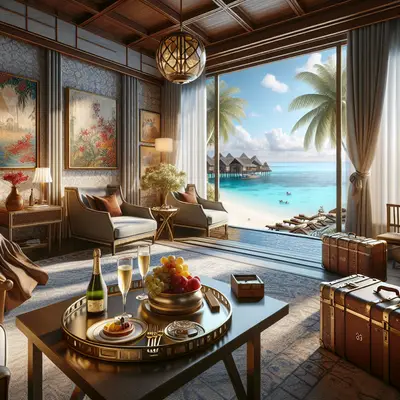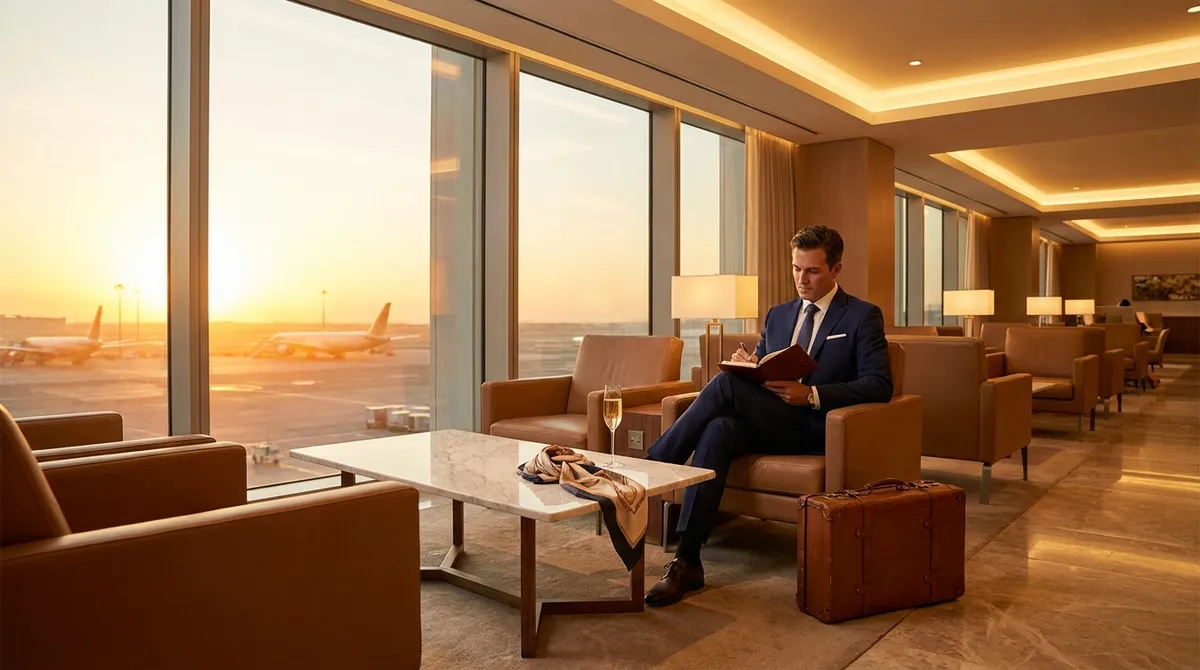
Luxury today is less a price point and more a point of view. For the global traveler, the true premium lifestyle is not defined by logos, room categories, or table reservations, but by the quiet choreography behind each movement: the way a schedule breathes, how light falls across a suite at 4 p.m., the certainty that every transition—airport to car, lobby to lounge, cabin to city—feels frictionless and considered.
This is the world Jet Ready speaks to: individuals for whom travel is not escape but continuation—of standards, of aesthetics, of personal rhythm. What follows are five exclusive, nuanced insights that define how the most discerning travelers are quietly re‑shaping what “premium” really means.
The New Metric: Time as the Ultimate Signature Luxury
For the serious traveler, time is no longer something to be simply “saved”; it is something to be curated.
The most elevated itineraries are structured not around how much can be done, but how beautifully each hour unfolds. A 90‑minute layover, for instance, is not dead time—it is an intentional interval chosen to allow a shower in a flagship lounge, a proper espresso in porcelain rather than paper, a call taken in a soundproof pod where background noise never intrudes.
High-net-worth travelers are increasingly demanding travel plans designed around personal time preferences: flights that align with natural circadian rhythms, arrivals calibrated to daylight for minimal fatigue, and transitions paced to avoid the cognitive drag of rushing. This thinking echoes aviation medicine findings that strategic timing of light exposure, sleep, and movement significantly improves recovery across time zones.
Premium today is an itinerary that feels unhurried—even when the schedule is objectively full. The quietest expression of status is the ability to move without scramble.
Curated Stillness: Designing Personal Quiet in Transit
The most coveted travel perk is no longer a larger suite or a more prominent table; it is controlled quiet—space where your inner tempo sets the tone.
Discerning travelers are now requesting not only specific room categories but specific acoustic conditions: corner suites away from service elevators, rooms on the “quiet side” of the property, suites oriented away from nightlife even in iconic urban centers. Inside aircraft, that same traveler is selecting rows that minimize traffic flow, cabins with fewer seats across, and airlines known for lower in‑flight ambient noise and calm cabin lighting.
The next tier of premium: creating portable rituals that turn anonymous spaces into personal sanctuaries. A compact cashmere throw that travels everywhere. A small, consistent set of scents—one for focus, one for sleep—used in every hotel room to signal the brain that this is “home enough.” A dedicated soundscape or noise profile tuned for working at 35,000 feet versus unwinding after a late arrival.
This is no indulgent quirk; neuroscientific research continues to confirm how deeply noise, light, and sensory continuity shape sleep quality, cognitive clarity, and decision-making. Luxury, at its most intelligent, now works with the nervous system rather than against it.
Precision Hospitality: Quiet Data, Perfectly Used
In the premium space, data has moved from invasive to invisible—when it is handled well.
Elite travelers are no longer impressed merely by recognition at check‑in; that is expected. What stands out is when preferences are remembered and reinterpreted without fanfare: the room automatically set to a cooler temperature on arrival because you have previously lowered the thermostat; sparkling water already chilled on the desk because you never touch still; blackout blinds scheduled to open gently 20 minutes before your usual wake-up time.
The line between intrusive and exquisite is discretion. The best properties and aviation services use guest data to relieve you of micro-decisions, not to sell you more. Your preferred pillow firmness is stored, but never announced aloud in a busy lobby. Your dietary restrictions shape the pre‑selected welcome amenity, yet the gesture arrives as though it were naturally obvious.
For those living a premium lifestyle, this is the most valuable form of luxury technology: predictive without presumption, deeply personalized while remaining almost entirely invisible.
Texture Over Spectacle: Choosing Materials That Travel Well
The visual language of luxury has become more restrained, but its tactile language has grown far more articulate.
Experienced travelers are thinking in terms of textures that age gracefully across continents: full‑grain leather carry-ons that improve with each scratch, tightly woven merino that resists cabin drafts and hotel air conditioning, and tailored silhouettes that hold their shape from lounge to late dinner. The aim is not to be noticed but to always be appropriately, comfortably composed.
This preference now extends to how they evaluate aircraft cabins and hotels. It is no longer only about square footage; it is about material integrity. Cabins accented with solid woods and soft-touch finishes that mute sound; bedding in breathable natural fibers; bathrooms with stone underfoot rather than slippery composites.
These details are not mere aesthetics. Sleep science and environmental psychology both affirm that tactile comfort—how sheets feel, how a chair supports the body, how a room absorbs or reflects sound—plays a measurable role in rest, stress reduction, and cognitive performance. The premium traveler reads this quality instantly, often unconsciously.
The subtle litmus test: does every surface invite exhale?
Seamless Continuity: One Life, Effortlessly Lived in Many Places
The most refined expression of a premium lifestyle is continuity: the ability to land anywhere and still feel in command of your own life.
This is more than having global status cards. It is the deliberate construction of a “travel operating system”—a considered set of tools, memberships, and personal standards that make cities interchangeable without feeling generic. A cloud-based workspace that is precisely the same in a Tokyo hotel as it is in a London flat. A fitness routine adapted to unfamiliar gyms but built on a familiar sequence. A short, disciplined nutrition pattern for flight days that keeps energy stable regardless of departure time.
Elite travelers are increasingly aligning with brands and services not for symbolism but for predictability. They favor airlines whose in‑flight Wi‑Fi is strong enough for live calls if needed, hotel groups whose mattresses and linen are consistent across continents, and global medical or security memberships that ensure any emergency is managed to the same standard they would insist on at home.
This is the quietest luxury of all: to move through the world without ever feeling like an away version of yourself.
Conclusion
The premium lifestyle, particularly for the global traveler, has shifted from visible markers to invisible mastery. Status is less about what can be seen from across the lobby and more about what can be felt in the calm of a well-paced itinerary, the softness of a familiar throw at midnight in a new city, the ease of never having to repeat your preferences twice.
For those who live much of their life between time zones, luxury is now defined by five quiet assurances: that your time is respected, your quiet is protected, your preferences are anticipated, your environment is sensorially intelligent, and your identity travels with you, intact.
In this new landscape, the most compelling form of privilege is not arrival—it is the way you move.
Sources
- [Centers for Disease Control and Prevention – Jet Lag and Sleep](https://www.cdc.gov/nceh/features/jetslag/index.html) - Overview of how time zones, light, and sleep patterns affect travelers and performance
- [Harvard Medical School – Noise, Health, and Wellbeing](https://www.health.harvard.edu/heart-health/how-noise-pollution-affects-your-heart-and-health) - Explores the impact of environmental noise on stress, sleep, and cardiovascular health
- [National Sleep Foundation – Sleep and Travel](https://www.thensf.org/how-to-sleep-well-while-traveling/) - Practical, research-informed guidance on improving sleep quality while traveling
- [Cornell University – The Psychology of Travel Experiences](https://www.johnson.cornell.edu/article/the-benefits-of-experiential-purchases/) - Academic perspective on why curated experiences often yield more satisfaction than material acquisitions
- [IATA – The Future of the Airline Cabin](https://www.iata.org/en/programs/passenger/future-airline-cabin) - Industry insights on evolving cabin design, comfort, and passenger experience in premium air travel
Key Takeaway
The most important thing to remember from this article is that this information can change how you think about Premium Lifestyle.