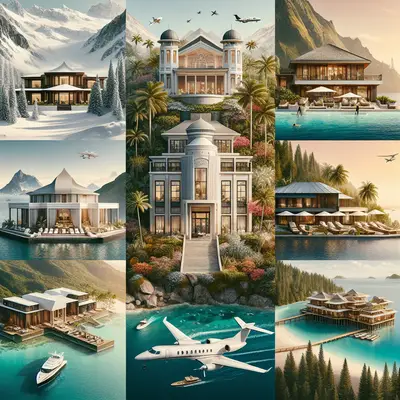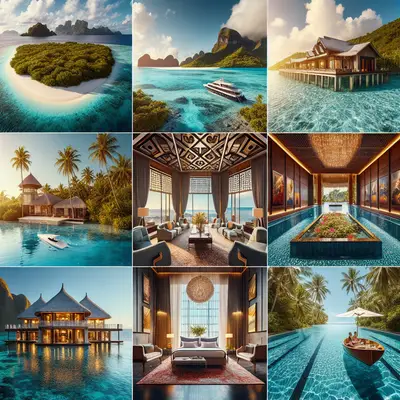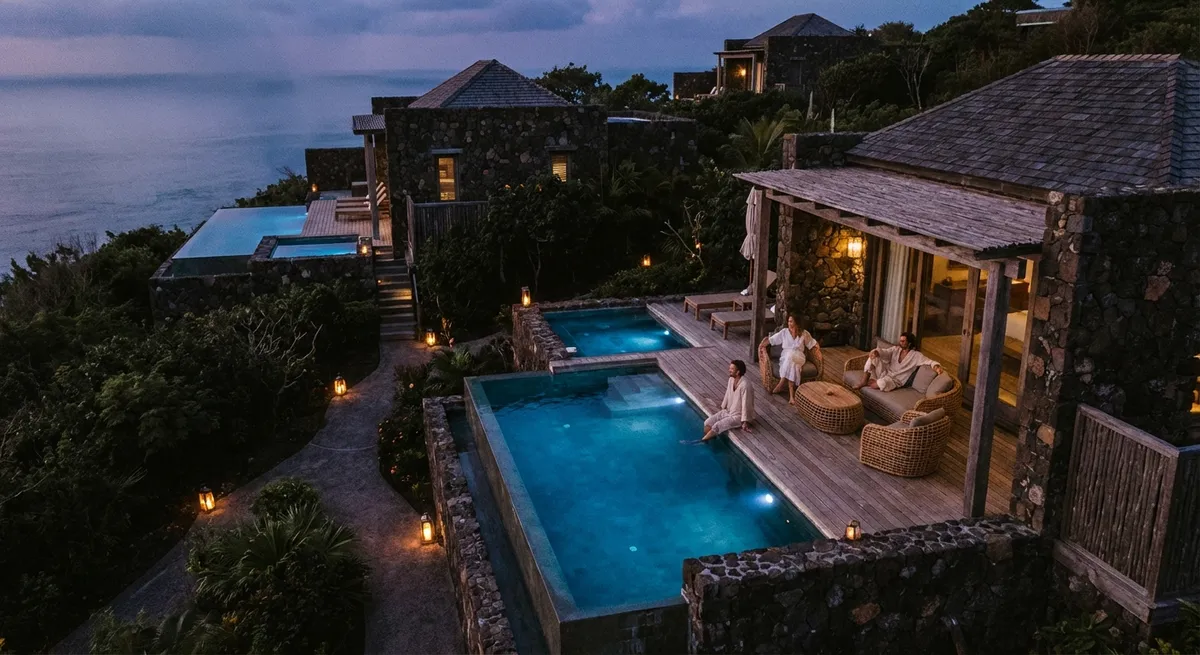
For the genuinely well-traveled, an exclusive resort is no longer defined by thread count, square footage, or a familiar roster of amenities. It is measured instead by orchestration: how seamlessly a stay anticipates your preferences, protects your privacy, and introduces you to a place in a way that feels both privileged and precise. At this level, luxury is not loud; it is calibrated. What follows is a closer look at how the world’s most discerning guests are quietly redefining what an “exclusive resort” must deliver—and the subtle cues insiders now look for before committing to a stay.
The Invisible Concierge: Precision Personalization Without Performance
At truly exclusive properties, personalization has moved beyond pre-arrival questionnaires and scripted greetings. The new benchmark is an experience that feels meticulously tailored yet never theatrical.
This begins long before check-in. Sophisticated resorts now build dynamic guest profiles—taste in wine, preferred level of interaction, even pacing of the day—based on previous stays across a portfolio and discreet conversations with private aviation providers, yacht brokers, or personal assistants (always with clear consent and data protection in place). Instead of asking whether you’d like a late check-out, the resort quietly aligns housekeeping, airport transfers, and restaurant bookings to your chronotype.
In-suite details become fluently specific: a minibar curated not by category but by label; a turn-down ritual adapted to whether you sleep to silence or sound; a pillow menu that arrives once, then evolves, rather than being re-offered every visit. For high-profile guests, this invisible concierge extends to social mapping—ensuring that spa appointments, pool cabanas, and private dining venues are staggered to avoid unwelcome proximity to other recognizable names.
For luxury travelers, the tell is energy, not extravagance: the stay feels almost eerily frictionless, but the staff presence never feels dense. You are known, but never narrated.
Exclusive Insight #1: The most sophisticated resorts now differentiate themselves by how little you need to ask for—and how rarely you are asked the same question twice.
Privacy as Design Language, Not Policy Statement
Genuine privacy at an exclusive resort is not a paragraph in the welcome booklet; it is embedded in the architecture, landscaping, and site planning. The most coveted addresses understand that discretion is spatial.
Suite and villa layouts prioritize indirect sightlines—no direct window-to-window views, no shared balconies, no public corridors that double as social corridors. Pathways are staggered and landscaped to ensure that even during peak occupancy, your movement feels unobserved. Pools and beaches are often zoned in layers: lively, social spaces at one end; progressively quieter terraces and coves at the other, never explicitly signposted, simply discoverable.
Technology, so often a privacy risk, becomes a shield when employed thoughtfully. Encrypted in-villa messaging replaces phone calls. Smart locks allow staff access windows tailored to your schedule, minimizing unexpected knocks. Camera-free zones (clearly identified) offer sanctuary from the default documentation of modern travel, a quiet nod to guests who may wish to be off-grid visually, if not digitally.
At this tier, “no photos, please” is understood before it is spoken. Properties that host high-profile guests frequently coordinate with security teams and pilots to choreograph arrivals and departures through private entrances and side docks, turning transfer logistics into a protective veil rather than a mere service.
Exclusive Insight #2: In the new lexicon of exclusive resorts, the most valuable amenity is not a butler—it is predictive privacy built into every angle, corridor, and key moment of your stay.
Time Sculpting: When Itineraries Become Bespoke Rhythms
For seasoned travelers, the true luxury is not the number of experiences on offer but the way time itself is shaped. Leading resorts increasingly act as “time ateliers,” crafting stays around cadence rather than checklists.
This begins with how they read your arrival. Late-evening landings might trigger an automatic “soft landing” protocol: no elaborate welcomes, no lengthy registrations, just a direct escort to your suite, a pared-back in-room supper, and a full orientation offered only the next morning. Daytime arrivals, by contrast, may be met with optional micro-experiences—a ten-minute stretch with a wellness coach after a long flight, or a brief sensory tasting to reset your palate to the local terroir.
The daily arc is equally curated. Instead of generic activity grids, select properties are designing “rhythm profiles”—quiet mornings followed by high-sensory afternoons; or active dawns offset by contemplative evenings—aligned with whether you are traveling for recovery, celebration, or strategic retreat. Even spa menus are being reframed as sequences across several days rather than isolated appointments, subtly training your nervous system to decelerate or sharpen, as desired.
For private groups, the most sophisticated resorts discreetly choreograph togetherness and separation, alternating shared experiences with built-in solo windows, minimizing the social fatigue that often shadows group travel.
Exclusive Insight #3: Savvy guests now evaluate resorts not by the breadth of their activity lists, but by how intelligently those experiences are arranged in time—with an eye toward energy, not just entertainment.
Depth Over Display: The Rise of Understated, Intelligent Indulgence
The visual grammar of exclusive resorts has shifted. Overly performative opulence—chandeliers in every corner, logo-saturated everything—has given way to what might be called “intelligent indulgence”: a quiet convergence of design, provenance, and place.
Interiors now lean into local artisanship without descending into cliché. You might encounter a handwoven textile from a single regional cooperative or ceramics produced by a studio you can actually visit, rather than anonymous, “inspired by” pieces. The luxury lies in traceability: being able to know the story behind the object, should you wish to ask, without being forced into a narrative tour.
Dining, too, has matured from spectacle to substance. The focus is on access rather than abundance: a vintner-led tasting of micro-production wines typically reserved for private allocations; a chef’s menu built around ingredients from one or two extraordinary suppliers instead of a global import parade. In this paradigm, a single perfect, just-caught fish—served three ways over the course of an evening—communicates more care than a 12-page menu.
Sustainability, once a footnote, is now a structural feature. Rainwater harvesting, renewable energy microgrids, and marine or wildlife conservation partnerships are folded seamlessly into the experience, not printed as moral signage. It is no longer enough for a resort to be beautiful; at the highest levels, it must also be intellectually coherent.
Exclusive Insight #4: The new mark of refinement is discreet depth—spaces and services that reward curiosity without demanding attention, allowing you to decide how far you wish to engage.
Membership of One: Hyper-Selective Access and Future-Facing Loyalty
Exclusive resorts are reimagining loyalty not as points and perks, but as quiet belonging. For frequent luxury travelers, the most interesting properties are those that behave less like hotels and more like private clubs—but without the rigid formality.
Instead of broad-brush VIP tiers, some portfolios are introducing what might be called “membership of one”: privileges calibrated not just to spend, but to style. If you are known to prefer last-minute planning, inventory is quietly held back for you; if you favor certainty, options are pre-blocked months in advance around major cultural or sporting events you typically attend. Invitations to limited-capacity experiences—an off-hours museum access, a closed-door tasting, a private atelier visit—are extended selectively, not blast-emailed.
For ultra-high-touch guests, loyalty may take the form of continuity. The same guest experience director may steward your stays across multiple properties and even multiple years, developing a granular sense of your evolving preferences: how your children’s interests are changing, how your wellness goals have shifted, how your appetite for social contact fluctuates with each trip’s purpose.
The horizon is quietly technological. Expect to see more behind-the-scenes use of privacy-conscious AI to reconcile complex preferences—coordinating multi-generational needs, syncing with your travel advisor’s calendar, or aligning with your jet operator’s scheduling—while keeping the interface resolutely human.
Exclusive Insight #5: Within the top tier of hospitality, loyalty is no longer about status levels; it is about longitudinal understanding—a relationship that grows more precise and less visible with every stay.
Conclusion
At the level where Jet Ready travelers operate, “exclusive resort” is no longer a synonym for isolation or spectacle. It is a shorthand for orchestration: invisible concierge work, architecture that protects your privacy without announcing it, days shaped with the same care once reserved for signature dinners, and indulgence that favors meaning over display. Most of all, it signals a relationship—between guest and place, guest and team, guest and time—that deepens with each return.
The next time you evaluate a potential resort, read between the lines of its promises. Look for evidence of predictive privacy, time sculpting, intelligent indulgence, and a loyalty ethos built around you rather than around tiers. The most exceptional properties will not simply host your journey; they will refine the very way you choose to move through the world.
Sources
- Condé Nast Traveler – What Makes a Resort Truly Luxurious - Industry perspective on evolving definitions of luxury in resort hospitality
- Forbes Travel Guide – The New Luxury: Personalization and Privacy - Insight into how personalization and privacy shape high-end travel experiences
- Virtuoso – Luxury Travel Trends and Consumer Preferences - Data-backed overview of current luxury traveler expectations
- Skift Research – The Future of Luxury Hospitality - Analysis of how top-tier hospitality brands are evolving their offerings
- Cornell University School of Hotel Administration - Academic research on hospitality, service design, and guest experience innovation
Key Takeaway
The most important thing to remember from this article is that this information can change how you think about Exclusive Resorts.