There is a moment, just before the first course arrives, when everything quiets: the murmur of the room softens, the linen breathes, the glassware catches the light. For the luxury traveler, fine dining is no longer about spectacle; it is about precision, intimacy, and the kind of orchestration that feels effortless because it is obsessively considered. At this level, dinner is not an event—it is a private language, spoken fluently by those who move easily between boarding gates and chef’s counters around the world.
The Architecture of the Room: Reading a Dining Space Like a Local
Long before the menu appears, the room tells you exactly what kind of experience you are about to have—if you know how to read it.
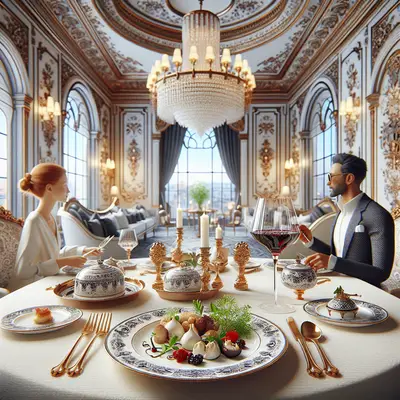
For a luxury traveler, the first assessment is spatial. Note the distance between tables: true high-end dining buys you breathing room. Tables positioned at a slight angle, rather than perfectly parallel, are a deliberate choice to shelter conversation. Ceiling height matters as well; lower ceilings in intimate rooms allow for hushed acoustics, while high, vaulted spaces require sophisticated sound management to feel genuinely serene.
Look at the light. Directional, warm lighting focused on the table and softened in the periphery suggests a service philosophy centered on the guest, not the room. When candlelight is used, observe whether it complements or competes with the primary lighting; in elite spaces, it will feel like a gentle accent, not a theatrical prop.
Finally, pay attention to the choreography around you. Are staff gliding rather than stopping abruptly? Are trolleys, if used, almost silent? The way a room moves is as important as how it looks. Luxury travelers quickly learn to trust their first two minutes in a dining room—they often reveal more than any review.
The Invisible Dialogue: Service as a Tailored Performance
At the highest echelon of fine dining, service operates as a refined, silent dialogue, revealing more about a restaurant’s philosophy than any mission statement.
Notice how the team calibrates presence and absence. In the most elevated dining rooms, your server will read the table within the first few interactions: business, celebration, quiet reunion, or solo decompression between flights. From that point on, the pace shifts almost imperceptibly. Courses may linger for an extra two minutes when your conversation deepens, or glide out more briskly when you are time-conscious.
The real mark of sophistication is what you’re spared from. You are not asked if you “like” every dish; instead, the staff watches plate returns, facial reactions, and the cadence of your questions. When something is off, the adjustment is proactive—an altered garnish, a revised pairing, a dish discretely replaced before you have to articulate discomfort.
For luxury travelers, this becomes an essential filter when choosing where to dine worldwide: seek rooms where service is not merely correct, but interpretive. In those spaces, you are not another booking; you are a narrative that the team is intent on understanding.
Provenance Without Performance: When Ingredients Tell the Story
Fine dining once leaned heavily on performance-driven provenance: elaborate tableside recitations of origin stories, producer names, and hyper-specific sourcing details. Luxury travelers today prefer subtlety—ingredients that are traceable, but not theatrically narrated.
The new benchmark is quiet transparency. Menus that list regions but not manifestos; sommeliers who can move effortlessly from Burgundy microclimates to lesser-known volcanic wines when they sense your curiosity; producers whose names are available on request, but not recited by rote at every course. The sophistication lies in the depth behind the menu, not in its verbosity.
Evaluating a restaurant’s ingredient philosophy can be as simple as asking one or two precise questions: “How often does this menu shift with the season?” or “How closely does the chef work with producers?” In truly elevated spaces, the answers will be specific, grounded in relationships and place, not marketing.
For frequent luxury travelers, this becomes a way to experience a city on a deeper level. A tasting menu in Copenhagen that traces the coastline, or a Tokyo counter that responds to the exact point in the tuna migration cycle, offers a form of immersion no city tour can replicate.
Exclusive Insight #1: In elite restaurants, provenance should feel accessible on demand, never imposed. The more a team can reveal when gently prompted—and the less they insist on performing that knowledge unsolicited—the more confident the kitchen usually is.
The Palette of Sound, Scent, and Texture: Multisensory Precision
Luxury travelers who dine frequently begin to notice that what distinguishes exceptional meals is rarely a single dish; it is the intelligent calibration of the entire sensory environment.
Sound is often the first overlooked detail. In a serious dining room, background music is chosen not only for mood but for its frequency range—tracks selected to sit behind conversation rather than compete with it. Well-insulated floors, fabric-covered walls, and thoughtfully placed banquettes are not aesthetic gestures; they are tools of acoustic engineering.
Scent is managed with equal care. There is no competing fragrance from candles, no intrusive floral arrangements with aggressive blooms. Even the route from kitchen to table is designed to limit the spill of cooking aromas into the dining room, allowing each course to introduce its own olfactory narrative the moment it lands.
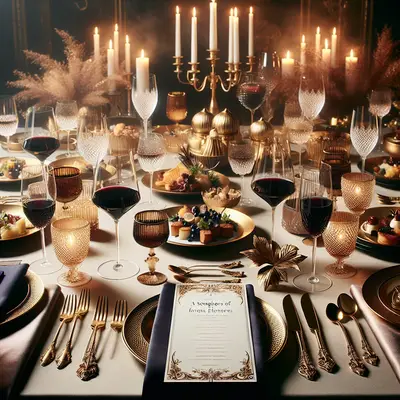
Texture, across everything you touch, is the quiet luxury: the crispness of the linen, the exact weight of the cutlery, the temperature and stem profile of the glassware. These are more than tactile pleasures—they anchor your perception of value and intention.
Exclusive Insight #2: When entering a restaurant, pause and inhale. If you can immediately identify a strong, singular smell (other than perhaps fresh bread in a bistro context), the sensory balance may be off. The finest dining rooms strive for a neutral, composed olfactory canvas until the plates arrive.
Five Exclusive Insights for the Luxury Traveler
These are the subtleties that frequent flyers and discerning diners learn to recognize—and quietly expect—around the world.
1. The True Luxury is Pacing, Not Length
It is a misconception that prestige equates to long meals. The highest level of fine dining is about custom pacing.
Teams at this level can compress or elongate a multi-course experience with almost no perceptible strain. A well-trained front-of-house will discreetly ask about your onward plans early in the meal (“Do you have a departure time we should be mindful of?”) and then recalibrate on the fly.
How to use this: When traveling, state your time window calmly and early. In serious establishments, this is treated as a design parameter, not an inconvenience. If the team hesitates or pushes back, you’ve learned something about their flexibility.
2. Off-Menu Is the Real Test of Talent
The polished set menu is what the restaurant wants you to see. The true measure of excellence is how the kitchen responds to gentle deviation.
Vegetarian, pescatarian, low-intervention wine, reduced sweetness—luxury travelers often have preferences that sit just outside the standard offering. The best houses respond not with resistance, but with curiosity: “Would you be open to a course built around…?” or “We have something not on the list that might suit your profile.”
Exclusive Insight #3: Consider a single, thoughtful request—perhaps a preference for lighter sauces or a desire to explore a specific region through wine. The subtlety and speed of the response tell you more about the kitchen’s depth than any published menu.
3. Champagne and Water Service Reveal the Standard
Two of the quietest indicators of a restaurant’s standards are found in the simplest pours: champagne and water.
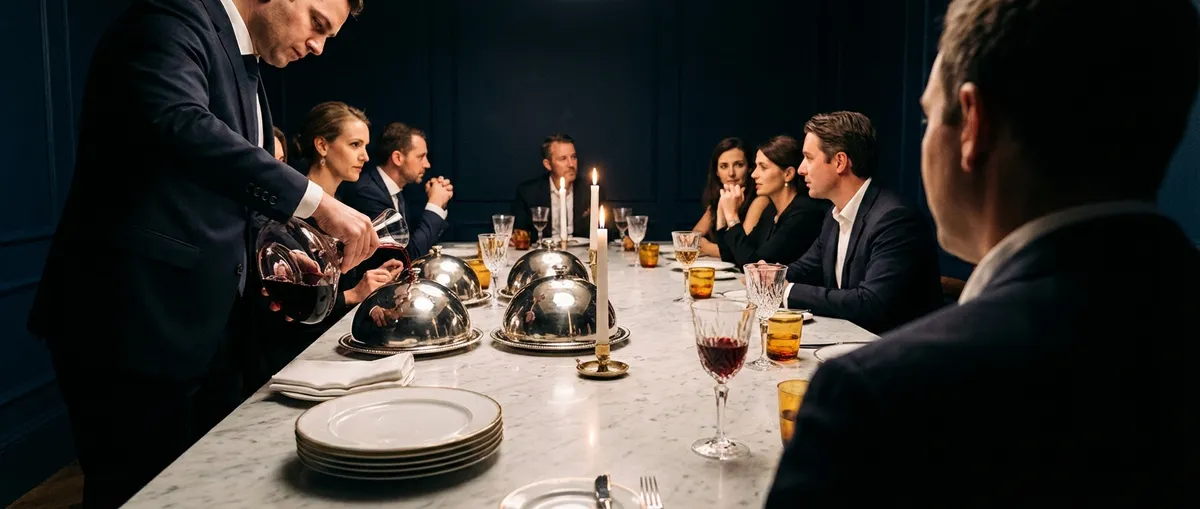
Observe the champagne ritual. In an elevated room, the bottle is presented with label visible, the cork released without sound, and the first pour measured and precise. The glass will be appropriately chilled, but never frosted; the wine is the focus, not the theatrics.
Water, meanwhile, is about attentiveness. Still and sparkling are offered without assumption, refills are timely but never intrusive, and the bottle is positioned where it is accessible yet discreet. Over-enthusiastic topping up, especially with wine, signals volume-focused training rather than guest-centric refinement.
Exclusive Insight #4: If a restaurant treats water and champagne service with quiet rigor, you can usually trust that the same discipline extends to every other aspect of the experience.
4. The Best Pairings Are Conversational, Not Didactic
For the frequently traveling guest, wine and beverage pairing should feel like a dialogue, not a lecture.
In premier dining rooms, the sommelier profiles your preferences within the first exchange: structure vs. fruit, Old World vs. New, exploratory vs. comfort. The pairing then becomes less about rigid pair-matching and more about curating a narrative that suits your mood and bandwidth for discovery.
Equally, non-alcoholic pairings have evolved dramatically. Look for programs built on infusions, ferments, and house-made distillations, not just juices and teas. These signal a kitchen and bar working in concert, rather than on parallel tracks.
Exclusive Insight #5: Ask one specific, high-signal question: “Is there a pairing you’re particularly proud of right now, and why?” The enthusiasm and clarity of the answer often reveal the depth of the beverage program more accurately than the size of the cellar.
5. Exit Rituals Matter More Than First Impressions
Many luxury travelers judge a restaurant on how it welcomes them; the truly experienced also pay close attention to how it lets them go.
A thoughtful restaurant tracks your arc through the evening and lands the final notes with intention. The pacing of the final beverage, the timing of the check in cultures where it is presented, the offer to arrange transport, the readiness of coats and personal items—all of these either extend the grace of the experience or dilute it.
If you are dining as a traveler, note whether the team proactively offers assistance—directions, local recommendations, or a card should you need to return. The farewell should feel unhurried, even if the room is full and your table is needed. That sense of unbroken composure is a signature of genuinely world-class operations.
Conclusion
For the luxury traveler, fine dining is less about collecting reservations and more about curating a personal lexicon of experiences—rooms where the air feels precisely tuned, service reads your intent without intrusion, and every sensory detail has been considered long before you arrive.
To move through the global dining landscape at this level is to appreciate the quiet hierarchies of attention: how a glass is held, how a course is timed, how a request is received. These are the details that separate a memorable evening from a truly refined one.
In the end, the most sophisticated luxury is not about excess but about exactness—the right gesture, at the right moment, executed so seamlessly it feels inevitable. Once you learn to see those nuances, every dining room in every city becomes legible—and the world, between departures, feels just a little more composed.
Sources
- [The World’s 50 Best Restaurants – About the Awards](https://www.theworlds50best.com/stories/News/the-worlds-50-best-restaurants-2023-list-in-full.html) - Overview of leading global fine dining establishments and trends
- [Michelin Guide – Inspectors’ Methodology](https://guide.michelin.com/en/article/about-michelin/what-is-the-michelin-guide) - Insight into how Michelin assesses service, ambiance, and food quality
- [Institute of Culinary Education – Fine Dining Service Standards](https://www.ice.edu/blog/fine-dining-service-standards) - Professional breakdown of high-end service practices and etiquette
- [Wine & Spirit Education Trust (WSET)](https://www.wsetglobal.com/news-events/wset-blog/how-to-pair-food-and-wine/) - Educational perspective on modern beverage and pairing philosophies
- [Harvard T.H. Chan School of Public Health – The Nutrition Source: Seafood Choices](https://www.hsph.harvard.edu/nutritionsource/food-features/fish/) - Background on seafood sourcing and sustainability, relevant to ingredient provenance in fine dining
Key Takeaway
The most important thing to remember from this article is that this information can change how you think about Fine Dining.