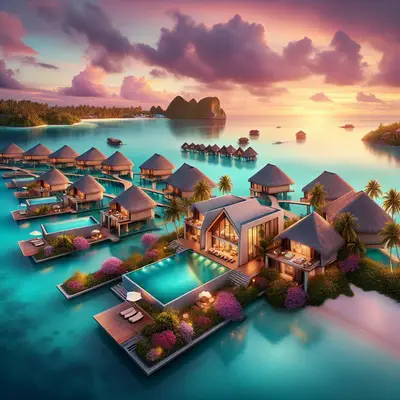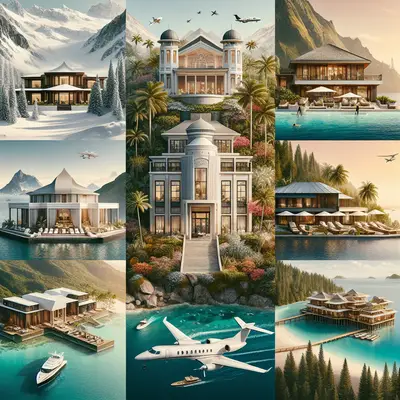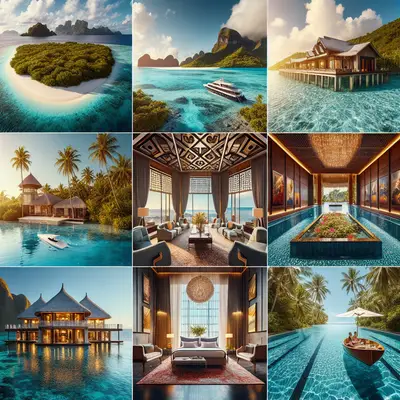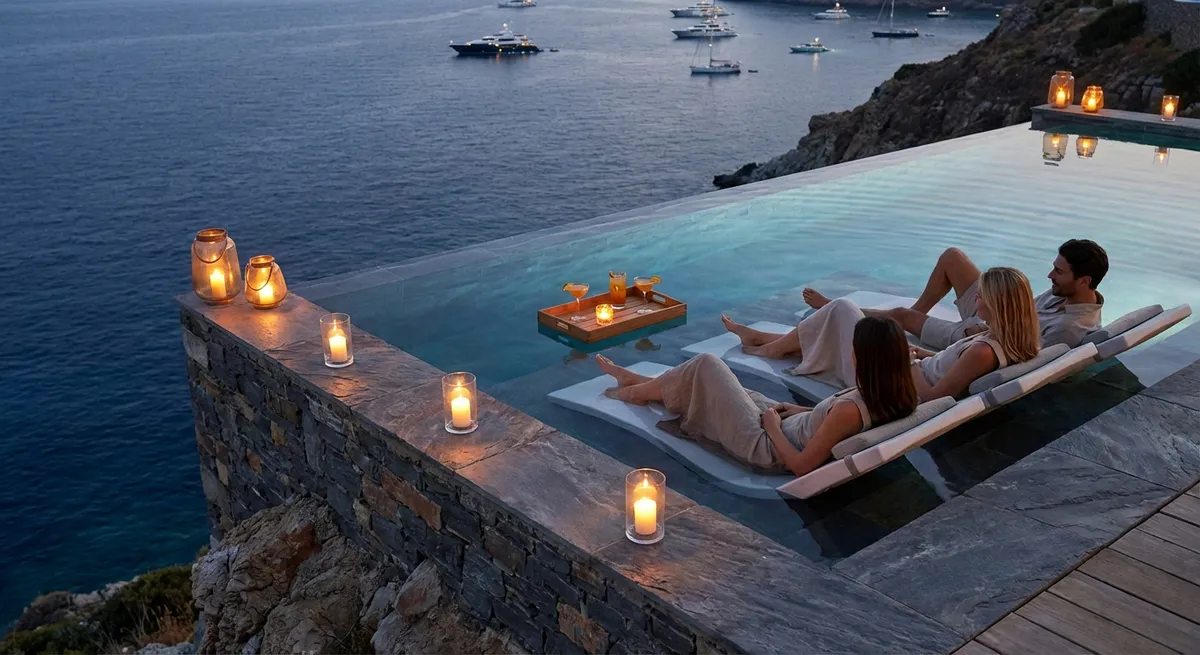
There is a tier of travel that does not announce itself in neon or marble. It reveals itself in the way a door is opened before you reach for the handle, in the way a villa is scented with the fragrance you prefer without ever having been asked twice. This is the quiet realm of exclusive resorts—private enclaves where space, service, and stillness converge into something more curated than a simple holiday. For the Jet Ready traveler, these sanctuaries are not about spectacle; they are about precision, privacy, and a sense that the entire property is moving in concert with your unspoken expectations.
Beyond “Five-Star”: Understanding the True Architecture of Exclusivity
The vocabulary of luxury has become crowded. “Five-star,” “boutique,” and “ultra-luxe” are now standard issue in marketing copy, applied as liberally as Wi-Fi. Exclusive resorts live in a different category altogether, defined less by adjectives and more by architecture—of both space and experience.
First, there is the question of scale. Many top-tier resorts operate with a guest-to-staff ratio that allows for near-invisible assistance: someone to anticipate chilled water by the pool as temperature rises, or to arrange a last-minute seaplane transfer as if it were a simple taxi call. Villas and suites tend to privilege volume over occupancy—a single couple might be given several thousand square feet not as an indulgence, but as a baseline.
Then there is the choreography of privacy. Arrival is often via private dock, helipad, or discreet side entrance, not simply to impress, but to protect the sense of arrival as a personal event rather than a public spectacle. The very design of these properties—separate pathways, layered landscaping, sound engineering—serves a single purpose: you may be sharing the resort with others, but you never feel as though you are.
Ultimately, what distinguishes an exclusive resort is the seamless alignment of physical space, service ethos, and guest discretion. The result is an environment where everything is available, yet nothing feels imposed.
Insight 1: The Subtle Power of Truly Personalized Service
At the uppermost end of hospitality, personalization is not a novelty; it is infrastructure. The finest resorts operate detailed guest profiles that go far beyond simple preferences for pillows or minibar contents. Over repeat visits—or even during a single extended stay—these profiles evolve into an almost telepathic understanding of your habits.
You may find that the turn-down team has adjusted the lighting to match your typical late-night reading routine. The sommelier remembers the exact vintage you favored at a different resort under the same brand. A preferred yoga instructor appears on your terrace at sunrise, not because you booked a class, but because the team noted that you watch the sun come up from that spot every morning.
This level of service is not performative. It is orchestrated through disciplined internal communication: a butler logging notes so that housekeeping, F&B, and wellness staff can create a unified experience without constant questioning. The most exclusive properties minimize the number of times you must say “no” or “actually, I prefer…” because the learning curve is fast and discreet.
For the discerning traveler, this is the real luxury: to feel completely known without ever feeling watched.
Insight 2: Privacy as a Designed Commodity, Not an Afterthought
Privacy at the highest echelon is not just a matter of tall hedges and “Do Not Disturb” signs. It is a deliberate, deeply engineered asset, often embedded at the earliest stages of a resort’s design and land acquisition.
Room orientations are chosen to ensure that terraces do not face each other. Soundscaping—natural and architectural—is used to mask ambient noise, allowing you to take a call poolside without sharing it with neighboring guests. Many exclusive resorts maintain strict policies regarding drones, photography, and press access, applied uniformly whether a guest is globally recognized or simply values their anonymity.
There is also a new dimension of digital privacy. High-end properties are increasingly implementing secure networks, limited data retention policies, and controlled access to guest information. Your travel dates, companions, and preferences are protected as carefully as your physical safety.
For those who measure value not by how much they are seen, but by how little they must be visible, this level of privacy engineering is as important as any suite upgrade.
Insight 3: Time as the Ultimate Luxury—And How Resorts Now Curate It
The rarest resource for many Jet Ready travelers is not money or even access—it is time. The finest exclusive resorts are responding by rethinking their entire operational logic around the optimization of a guest’s hours on property.
This manifests first in logistics. Immigration fast-tracking, private transfers, and carefully timed connections reduce transit friction to a minimum. The moment you arrive, the resort’s internal ecosystem is calibrated to your tempo: dining windows that flex to your jet lag, spa bookings that appear on your schedule without requiring a planning session, and activities that compress or expand to your energy level.
Some properties now assign a single point of contact—often a senior concierge or experience curator—to function less as a traditional butler and more as a time strategist. Their purpose is to remove decision fatigue while maintaining a sense of spontaneity. You do not receive a list of ten options; you receive two exquisitely tailored ones, with everything quietly pre-reserved yet easily altered.
The result is an environment where days feel both full and unhurried. Your time is not simply unstructured—it is refined.
Insight 4: Culinary Programs as Expressions of Place, Not Just Prestige
At serious exclusive resorts, the culinary program is evolving beyond the standard “fine dining plus casual outlet” formula into something more narrative and site-specific. Michelin stars and celebrity chefs still have their place, but the new marker of sophistication is how coherently a property’s food and beverage philosophy mirrors its environment.
This might mean a zero-kilometer tasting menu built almost entirely from the resort’s own gardens and nearby producers, with the chef acting as cultural interpreter rather than only as a virtuoso. It might be a wine list that privileges a niche, region-specific selection curated over years of direct relationships with vintners, rather than a greatest-hits compilation of global luxury labels.
Experiences are also shifting from spectacle to intimacy: a private omakase at a six-seat counter; a beachside grill helmed not by a showman but by a quiet master of technique; a chef’s table in the property’s research kitchen, where fermentation, aging, and local ingredients are treated with almost academic seriousness.
For the seasoned traveler who has sampled every marquee restaurant from New York to Tokyo, this terroir-driven, deeply contextual approach provides something far more enduring than another famous name on a menu.
Insight 5: Sustainability, Quietly Integrated Into the Luxury Equation
The paradigm at exclusive resorts has shifted from “eco-friendly as a marketing angle” to “sustainability as a non-negotiable operating principle.” Yet the most refined properties integrate this ethos with such understatement that many guests will simply perceive it as thoughtful design rather than overt messaging.
Architectural footprints are minimized or cleverly embedded into the natural topography. Energy systems may rely on solar fields or sophisticated waste-heat recovery, but the visible effect is simply that your villa feels naturally cool, quiet, and comfortable. Water is desalinated, filtered, and reused with scientific rigor while presenting to you as crystal-clear pools, immaculate showers, and lush landscaping.
Crucially, sustainability at this level extends to community engagement: employment and training for local staff, genuine partnerships with regional artisans, and conservation programs that benefit both environment and residents. Rather than themed “eco-tours,” you might encounter a marine biologist guiding a private snorkeling session, or a botanist explaining the reforestation underway around the property.
The most advanced exclusive resorts are proving that ethical rigor and hedonistic pleasure are not opposing forces. Instead, they are mutually reinforcing: the more carefully a place is protected and integrated into its surroundings, the more exquisite it is to inhabit, however briefly.
Conclusion
For the Jet Ready traveler, exclusive resorts are no longer defined solely by their room rates, views, or design statements. They are defined by a layered subtlety: the way service anticipates rather than reacts, how privacy is meticulously constructed, how time is curated, how cuisine reflects place, and how sustainability is woven into every unseen system.
These are not destinations for those who need to broadcast where they are. They are for those who value the rare alignment of comfort, discretion, and depth—a style of travel in which luxury is measured not by what is displayed, but by what is perfectly, almost invisibly, arranged on your behalf.
Sources
- Forbes Travel Guide – What Makes a Hotel Truly Luxurious? – Insight into the standards and operational details that differentiate top-tier luxury hospitality.
- Condé Nast Traveler – The Gold List – A curated overview of leading hotels and resorts worldwide, highlighting hallmarks of exclusivity and design.
- Aman Resorts – Official Website – An example of a global ultra-luxury resort brand, illustrating concepts of privacy, service, and sense of place.
- U.S. Green Building Council – LEED in Hospitality – Framework for sustainability practices increasingly adopted by high-end resorts.
- Cornell University School of Hotel Administration – Research Publications – Academic perspectives on service personalization, guest experience, and luxury operations.
Key Takeaway
The most important thing to remember from this article is that this information can change how you think about Exclusive Resorts.