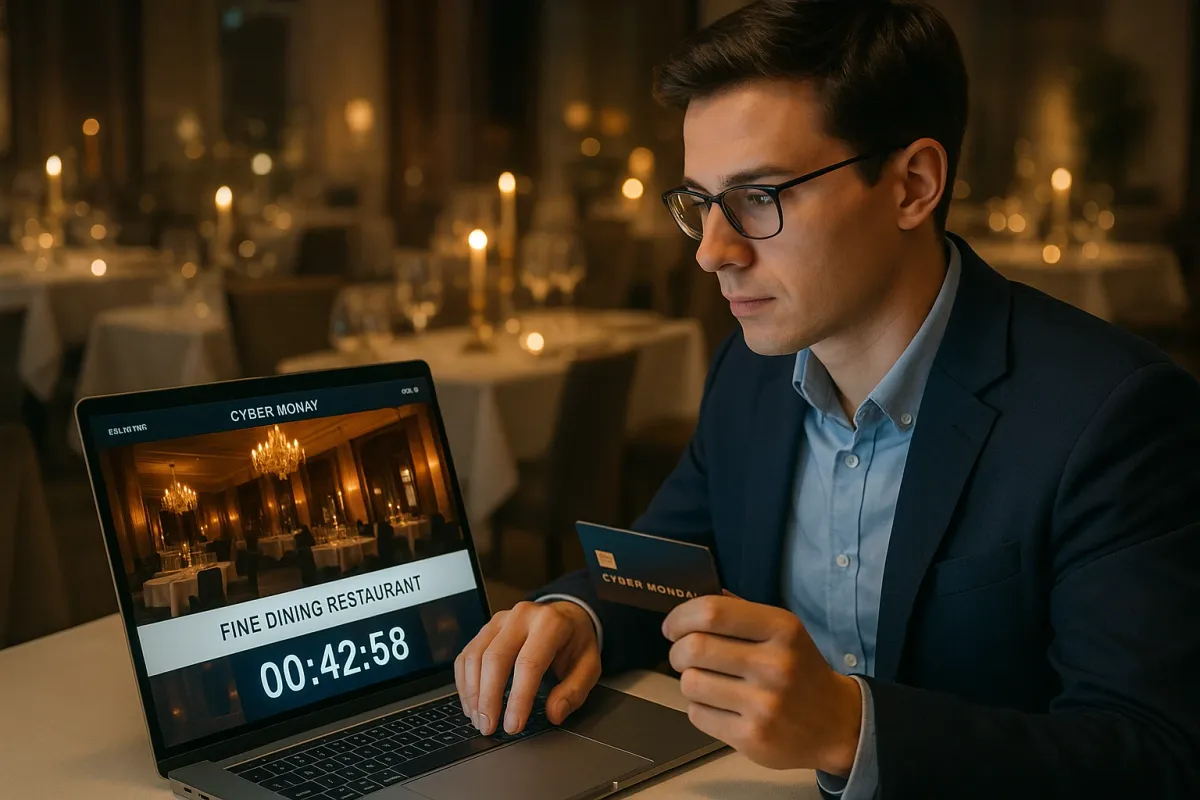
Cyber Monday was once the day you bulk‑ordered gadgets and airline points. This year, it has quietly evolved into something far more rarefied: a back‑channel into the world’s most coveted tables, chef’s counters, and members‑only dining rooms. As tech retailers flood feeds with flash sales, a quieter tier of offers is emerging—discreet, invite‑only dining experiences, often bundled with luxury travel and hospitality perks.
Anchored by the same digital momentum that’s driving “19 Cyber Monday Tech Deals So Good, Your Bank Account Might Actually Forgive You”, high‑net‑worth travelers are treating this shopping window less as a discount frenzy and more as a strategic moment to secure their next year of extraordinary meals. From three‑Michelin‑star kitchens to private jet‑linked supper clubs, Cyber Monday 2025 is revealing how the ultra‑connected now access the ultra‑exclusive.
Below, five insights shaping how luxury travelers are using this week’s online frenzy to curate the most coveted fine dining experiences on earth.
1. The Quiet Rise of “Encrypted” Reservations
This Cyber Monday, the true luxury isn’t a cheaper tasting menu—it’s guaranteed access. As mainstream consumers chase tech deals, a more discreet tier of offers is circulating via private WhatsApp lists, concierge apps, and invitation‑only booking links reserved for top‑tier cardholders and ultra‑luxury travel members.
Select hotel groups and private aviation providers are quietly testing encrypted reservation drops: book a suite or a jet card online this week and unlock priority reservations at partner restaurants—think chef’s tables at venues like Copenhagen’s Alchemist, hidden omakase counters in Tokyo, or after‑hours experiences at London’s hardest‑to‑book dining rooms. These links never appear on public websites; they arrive as ephemeral codes, often with a strict redemption window, and vanish once a small allocation is claimed.
For luxury travelers, the strategy is clear: Cyber Monday is no longer only about material upgrades but time and access arbitrage. Securing a digital key now can mean bypassing six‑month waitlists later—a trade any serious gastronome is glad to make.
2. Tech Deals as Gateways to Culinary Privilege
Those Cyber Monday tech headlines aren’t just about televisions and tablets. The most interesting devices for discerning diners this year are quietly bundled with ultra‑curated food access. Think: premium smartwatches that sync with elite wellness retreats and their plant‑forward tasting menus, or next‑gen cameras co‑promoted with tasting‑menu “content seats” designed for creators at high‑profile restaurants.
Select premium credit cards and digital wallets are leveraging the shopping surge to offer limited‑time upgrades that unlock dining programs: automatic elite status with hotel groups known for world‑class restaurants, or access to members‑only reservation platforms that prioritize top spenders for high‑demand experiences. A Cyber Monday “tech” upgrade can now function as infrastructure for a year of better eating—priority access to collaborations, pop‑ups, cellar dinners, and winemaker‑in‑residence weekends.
Savvy luxury travelers are reading between the product lines: the TV is nice, but the bundled concierge access to a Parisian palace hotel’s two‑star dining room is the real acquisition.
3. Pop‑Up Gastronomy Becomes the New Collectible
The Cyber Monday mentality of “limited inventory, move now” is transforming how fine dining experiences are conceptualized and sold. Rather than discounting, many high‑end restaurants and chef‑driven brands are using this week as a launchpad for ephemeral, collectible experiences that cannot be repeated.
Multi‑course dinners served in defunct bank vaults, tasting menus aboard restored vintage aircraft, collaborations between fashion houses and Michelin‑starred chefs—these are being pre‑sold online in slender allocations, often with luxury travel pre‑baked into the package: first‑class rail transfers, chauffeur service from the airport, or room blocks at design‑forward boutique hotels. Once the allotments are gone, the experience disappears, becoming a story, not a SKU.
For those accustomed to permanent tasting rooms and multi‑year restaurant rankings, this pop‑up model offers something distinctly 2025: dining as a collectible, acquired in a single digital moment, lived once, and never replicated at any price.
4. Cyber Monday as a Test Lab for AI‑Curated Tasting Itineraries
The same energy fueling Cyber Monday tech deals is quietly powering a new frontier in gastronomic planning: AI‑curated itineraries tailored to how, not just where, you like to eat. Luxury travel advisors and concierge platforms are using this week’s traffic spike as a real‑time test environment for AI engines that design entire journeys around fine dining preferences.
Input your data—whether discreetly through your private banking concierge or via a high‑end travel service—and the system cross‑references your past reservations, wine orders, dietary inclinations, and even your social posting patterns to construct an elegantly layered itinerary. A long weekend in Tokyo might pair a minimalist kaiseki counter with a sub‑20‑seat natural wine bar; a week along the Amalfi Coast might balance cliffside hotel dining with a boat‑only access dinner on a private cove.
This Cyber Monday, select platforms are offering early access to these AI engines as an “exclusive feature upgrade” rather than a visible product. For ultra‑high‑net‑worth travelers, it’s less about being recommended the hottest restaurant and more about receiving a dining progression that feels personally inevitable—like the city was redesigned around their palate.
5. The Discreet Shift from “Deals” to Culinary Patronage
In the mass market, Cyber Monday is synonymous with getting more for less. At the very top of the market, the emerging narrative is almost the opposite: paying more, more thoughtfully, to sustain the kind of culinary ecosystems that make travel worth undertaking at all.
You’ll see it this week in how some elite hotels, private clubs, and destination restaurants structure their “offers.” Instead of price cuts, there are early‑access pre‑purchases of future seasons, members‑only kitchen counter subscriptions, or bundled stays that guarantee recurring visits to the same restaurant over several years. The underlying message: you’re not bargain‑hunting, you’re becoming a patron of a specific chef, a particular wine region, a carefully nurtured team.
This quieter form of spend is often mediated through Cyber Monday–timed launch windows—digital, trackable, and frictionless. But the impact on the ground is deeply analog: restaurants can plan bolder menus, secure rare ingredients, and retain talent, knowing they have a base of committed global diners arriving by design, not by chance.
Conclusion
As mainstream shoppers chase “19 Cyber Monday Tech Deals So Good…” the most seasoned luxury travelers are using the same digital moment to orchestrate a year of unforgettable meals. The true Cyber Monday advantage at the high end is not about discount; it’s about choreography—of access, of time, and of memory.
For those who live to travel and travel to dine, this week has become an annual ritual of quiet acquisition: encrypted reservation links, AI‑shaped itineraries, ephemeral pop‑ups, and long‑term culinary patronage, all set in motion with a few precisely chosen clicks. The next time Cyber Monday trends across your screen, consider what it might really be offering: not another device, but the table—and the journey—you’ll be talking about long after the last course.
Key Takeaway
The most important thing to remember from this article is that this information can change how you think about Fine Dining.