Fine dining, at its most considered, is no longer about being impressed; it is about being understood. For the luxury traveler, the most memorable tables are not the loudest, the most photographed, or the hardest to book. They are the rooms where the choreography between guest, chef, and service team becomes a quiet, tailored collaboration—where a menu is not a script but a starting point. In these spaces, refinement is measured not only in Michelin stars or rare vintages, but in how precisely the experience aligns with your private preferences, rhythms, and expectations.
Below are five exclusive, often unspoken dimensions of contemporary fine dining that sophisticated travelers can both recognize and gently influence. They are less about conspicuous display and more about calibration—of timing, temperature, light, sound, and trust.
1. The Pre-Dinner Conversation That Redefines the Meal
For truly elevated dining rooms, the experience begins long before you sit down. The most thoughtful restaurants treat the reservation process as an informal interview, quietly gathering the details that will later make the evening feel eerily well-tailored: preferred pacing, dietary nuances, sensitivities to spice or strong scents, even whether you prefer to converse across the table or savor a more introspective service.
Luxury travelers can treat this moment as an opportunity rather than a formality. A brief, precise email in advance—indicating your ideal dinner length, your stance on wine pairings, and any restrictions that are preference rather than allergy—lets a serious kitchen plan with intent. The result is a service cadence that feels unhurried yet never idle, dishes that avoid obvious “safe” compromises, and a sense, however subtle, that the room adjusted to receive you. In certain properties, especially those associated with elite hotel brands or members-only dining rooms, this pre-dinner exchange becomes part of your profile, refining future visits anywhere in the group’s portfolio.
2. Reading the Room: Acoustics, Light, and the Architecture of Privacy
Discerning travelers know that luxury is not only on the plate; it’s in the acoustics, the angle of a chair, the way a table is shielded from the door. High-end dining rooms increasingly approach space like a performance venue rather than a traditional restaurant. Attention to sound absorption, sight lines, and pathways allows guests to converse in confidence without the oppressive hush of an empty-feeling room.
Noticing these architectural choices—and requesting accordingly—can transform a meal. A corner table away from primary traffic lines, a banquette that provides a natural acoustic barrier, or a table with indirect rather than overhead lighting all shift the experience from public spectacle to private engagement. Many premier properties track guest seating preferences over time; a single, thoughtfully worded request (“We prefer low light, minimal foot traffic, and no draft from doors or vents”) can ensure that subsequent evenings, even in other cities within the same group, feel instantly calibrated to your comfort.
3. The Unwritten Menu: Trust, Constraint, and the Power of Parameters
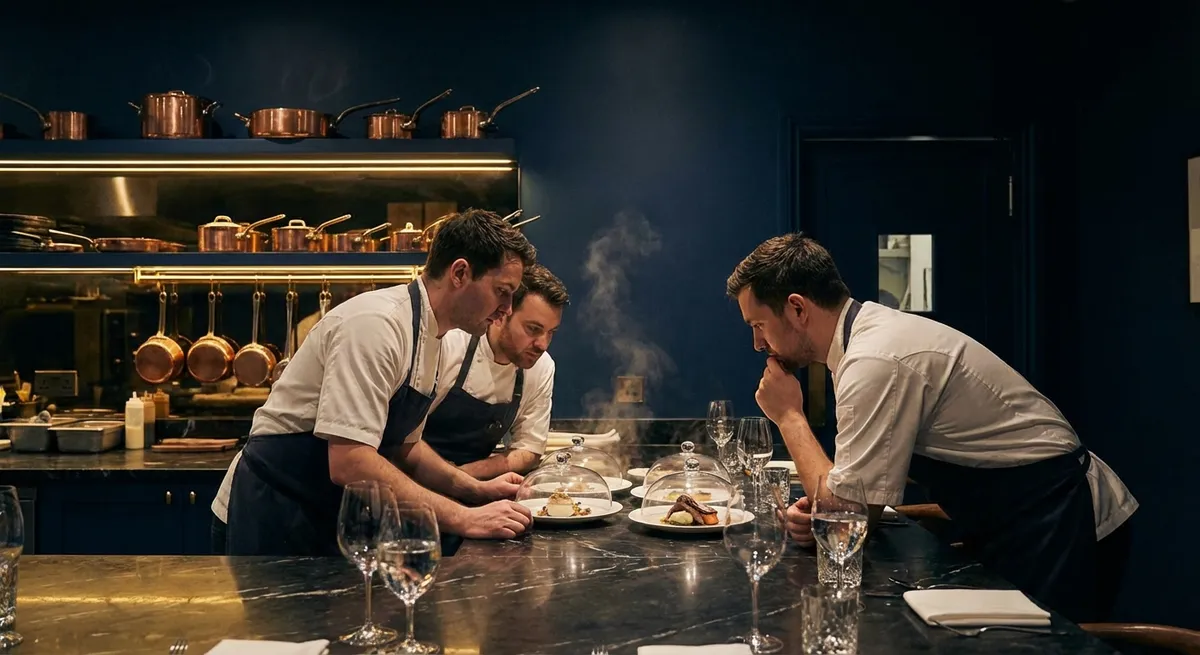
Behind every official tasting menu lies an unofficial one: the off-menu compositions, variations, and one-night dishes that only emerge when there is both trust and clarity between guest and kitchen. For chefs at the highest level, constraints become a creative catalyst—“no raw shellfish, no heavy cream, but a willingness to explore bitterness, acidity, and temperature contrasts” is often more stimulating than unlimited choice.
Luxury travelers who understand this dynamic know how to offer the right level of guidance. Rather than asking for “whatever the chef wants,” consider setting precise but open parameters: a preference for vegetable-forward dishes, an interest in local shoreline ingredients, or a desire to see how a chef interprets a particular technique such as aging, smoking, or fermentation. When conveyed with discretion and respect—ideally before the evening begins—these guidelines invite the kitchen into a dialogue. The resulting menu feels neither generic nor performatively bespoke, but naturally, almost effortlessly, aligned with your palate.
4. Wine as a Narrative, Not an Inventory
In refined dining, the most sophisticated wine programs have shifted away from merely displaying depth and rarity. Instead, they function as narrative and context: a way of expressing geography, history, and the chef’s philosophy in parallel to the food. Rather than focusing on labels as trophies, top-tier sommeliers now build pairings that trace lines through lesser-known appellations, unconventional vintages, and carefully cellared bottles that show a region in an unfamiliar light.
The discerning traveler can draw far more from this by approaching the sommelier as a curator instead of a gatekeeper. Framing your preferences in terms of structure and mood—“lean and mineral, not opulent,” “textural whites rather than overtly aromatic,” or “reds that remain transparent with age”—invites a more thoughtful selection than naming familiar prestige regions. Especially in destinations with strong local identities, the most rewarding path is often to request a progression that illustrates a place rather than a brand. When done well, the pairings become a quiet education: a series of glasses that you might never have selected from the list, but that, in hindsight, feel inevitable.
5. Timing the Evening: The Quiet Luxury of Perfect Pacing
For the frequent traveler, time is the most finite currency, and fine dining can either respect it or consume it. The true luxury is not in a shorter or longer meal, but in an evening whose pacing matches your intention: an unhurried, multi-hour immersion on a weekend escape, or an impeccably orchestrated two-hour progression between meetings or flights.
The most advanced dining rooms can adjust their rhythm without visible strain. Courses appear neither rushed nor delayed, transitions between wine pours are invisible, and check presentation is handled with almost surgical discretion—often signaled in advance if you must depart by a particular hour. Communicating this early (“We would value a full tasting, finished within two and a half hours, with no sense of rush”) gives the team a framework for service design. When it works, the experience feels paradoxical: expansive yet efficient, indulgent yet precise. You leave with the sense that the evening inhabited its own, perfectly measured pocket of time.
Conclusion
For luxury travelers, the most resonant fine dining experiences are less about spectacle and more about calibration. They unfold as a discreet collaboration between guest and house—one that begins before the reservation is even confirmed and extends long after the final course. By engaging intentionally with the pre-dinner dialogue, the architecture of the room, the parameters you set for the kitchen, the way you approach wine, and the pacing you request, you shape an experience that feels unmistakably your own.
In an era where access is increasingly democratized and the same celebrated names appear on every must-visit list, what remains rare is not the restaurant itself, but the alignment between its capabilities and your personal sensibilities. That alignment, when achieved, is the quietest yet most enduring form of luxury at the table.
Sources
- [Michelin Guide – How to Recognize a Truly Exceptional Restaurant](https://guide.michelin.com/en/article/features/what-makes-a-restaurant-michelin-worthy) – Insight into the standards and nuances that define top-level dining experiences
- [World’s 50 Best Restaurants – Trends in Global Fine Dining](https://www.theworlds50best.com/stories/News.html) – Coverage of evolving culinary and service trends at elite restaurants worldwide
- [Harvard T.H. Chan School of Public Health – The Nutrition Source: Healthy Eating Plate & Dining Out](https://www.hsph.harvard.edu/nutritionsource/healthy-eating-plate/dining-out/) – Context on thoughtful menu composition and balance, relevant to how refined kitchens design courses
- [Institute of Acoustics – Acoustics in Restaurants and Bars](https://www.ioa.org.uk/sites/default/files/Acoustics%20of%20restaurants%20and%20bars.pdf) – Technical overview of how sound design and room layout shape the dining experience
- [Court of Master Sommeliers Americas – Service Standards](https://www.mastersommeliers.org/resources/service-standards) – Professional guidelines on wine service and guest interaction that underpin world-class beverage programs
Key Takeaway
The most important thing to remember from this article is that this information can change how you think about Fine Dining.