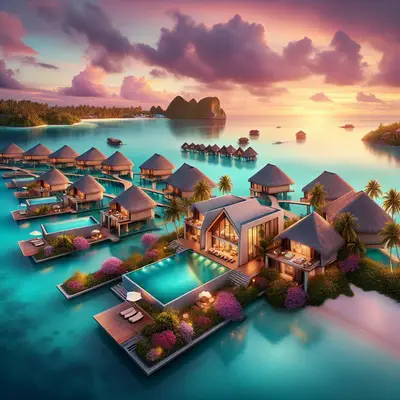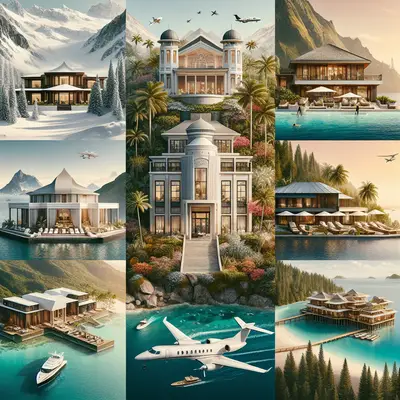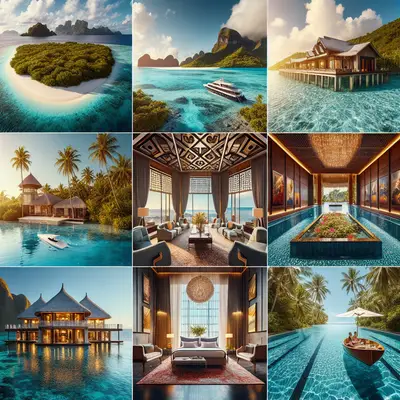
Luxury travelers are no longer impressed by square footage and thread count alone. The most coveted resorts now offer something more elusive: an almost invisible calibration of comfort, discretion, and access that cannot be photographed, only experienced. These are the properties that anticipate preferences before they are articulated, choreograph privacy without austerity, and turn each stay into a quiet statement of intent.
This is the world of exclusive resorts at the very top of the market—private enclaves where design, service, and locality are tuned to a finer frequency. Below, five exclusive insights reveal how to distinguish the merely expensive from the truly exceptional.
The Architecture of Privacy: How Space is Quietly Engineered
At the highest tier of hospitality, privacy is not a feature; it is a blueprint. The best exclusive resorts are designed from the ground up to separate you from the friction of the outside world without severing your sense of place.
Thoughtful architecture reveals itself in the distance between villas, the angle of a terrace that captures the sea but not the neighboring pool, and discreet service corridors that keep movement out of view. Instead of grand, echoing lobbies, you might arrive via a private drive that leads directly to your residence, with check-in conducted over a glass of something cold at your own dining table.
Landscape is used as insulation: dense greenery to soften sightlines, water features that provide a subtle acoustic veil, and elevation changes that create natural thresholds between public and private zones.
For the discerning guest, one question becomes central: how does this resort protect my time, my conversations, and my capacity to be unobserved—without making the environment feel sterile or over-securitized? Properties that excel here tend to be those where privacy feels organic, not enforced; where the architecture does the work so staff do not need to.
The New Lexicon of Service: Data, Discretion, and True Personalization
True personalization at exclusive resorts has moved far beyond remembering your preferred pillow. At the ultra-luxury level, the most compelling service model is quietly data-informed, but never data-forward.
Leading properties now blend reservation histories, pre-arrival questionnaires, and subtle in-stay observations to construct an evolving profile of your preferences. Your villa’s mini-bar is not merely stocked with “premium beverages,” but with the Champagne house you gravitate toward, the non-alcoholic options you chose at dinner, and the single-origin coffee that appeared on your social media a month before arrival.
Yet the real differentiator is restraint. The most sophisticated service teams know when not to act on this information—skipping overly familiar remarks, avoiding performative recognition, and letting the experience feel naturally intuitive rather than algorithmically curated.
For high-net-worth travelers accustomed to being observed, this restraint is the true luxury. Your name is remembered, but your presence is never announced. Your preferences are understood, but not showcased. Upselling is replaced with quiet orchestration: a boat transfer timed to the sunset you casually mentioned, a late checkout adjusted automatically when your outbound flight is delayed.
Beyond the Resort Walls: Access as a Form of Currency
A resort’s real value now extends well beyond its boundaries. The most coveted properties operate less like static destinations and more like private gateways into a region’s most difficult-to-access experiences.
This might mean private, after-hours entry to a historic site normally overrun with visitors; a curated introduction to a local winemaker whose allocations never reach public lists; or a morning on the water with a marine biologist instead of a typical group snorkeling excursion. In urban-adjacent settings, it could be closed-door gallery previews, behind-the-scenes restaurant access, or immersive workshops with designers and artisans, far from the usual tourist circuit.
The difference lies in intent and exclusivity: not simply “activities,” but experiences that are otherwise unavailable without the resort’s network, reputation, and long-cultivated relationships. These are not marketed heavily; they are suggested quietly, often in direct response to your interests rather than broadcast as packages.
For the seasoned traveler, this is where a property proves its caliber: Can it expand your access to a destination in a meaningful, intelligent way, without ever feeling like a tour?
The Taste of Place: Culinary Programs as Cultural Translation
The most interesting exclusive resorts now treat cuisine as a form of cultural translation rather than mere indulgence. The objective is not to overwhelm with richness, but to express restraint, seasonality, and locality with precision.
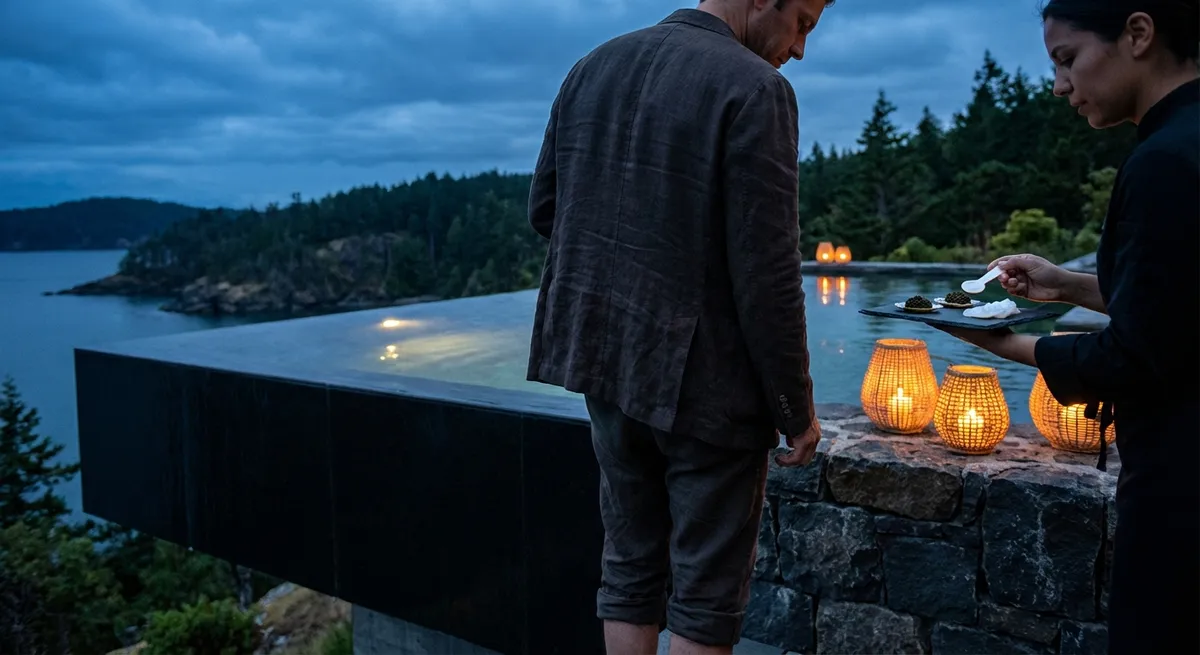
Menus are increasingly structured around thoughtfully sourced, often regenerative or organic ingredients, with a hyper-local focus that might see seafood landed before dawn appearing on your plate at lunch, or produce drawn entirely from the resort’s own gardens and regional farms. Instead of a single “signature restaurant,” you may find evolving concepts: a barefoot shoreline dinner one evening, a chef’s counter the next, and a quietly theatrical tasting menu that unfolds in a tucked-away private room.
Wine and beverage programs are equally considered—cellars that juxtapose blue-chip labels with niche, low-intervention producers; non-alcoholic pairings that are crafted, not improvised; sake, teas, and infusions treated with the same reverence as grand cru vintages.
For those who travel often, repetition is the enemy. The finest resorts understand this, designing culinary journeys that shift seamlessly over the course of a stay, ensuring each meal feels like a continuation of a narrative rather than a simple change of venue.
Sustainability as Silent Luxury, Not Marketing
At the apex of exclusive travel, sustainability is no longer a brochure headline; it is a quiet operating principle. Guests do not need to be told a property is responsible—they should sense it in the details.
Materials are locally sourced and built to endure, not to be replaced. Energy is generated on-site where possible, with solar arrays and advanced systems tucked out of sight. Water is treated, filtered, and reused through carefully engineered infrastructure. Waste is managed through elimination first, then thoughtful recycling and composting, long before it becomes a visible concern for guests.
Crucially, this approach extends to people and place: fair employment practices, local hiring and leadership, meaningful investment in nearby communities, and partnerships with regional conservation and cultural initiatives. Rather than a framed certificate on the wall, sustainability appears in the way the resort’s footprint feels almost impossibly light relative to its level of comfort.
For luxury travelers increasingly attentive to impact, the most compelling properties are those where indulgence and responsibility are not in conflict. The experience remains effortlessly premium; the ethics are simply embedded, not advertised.
Conclusion
In the rarefied world of exclusive resorts, the most valuable qualities are often the least visible: privacy shaped by design rather than policy, personalization that respects boundaries, access that meaningfully opens a destination, gastronomy that interprets rather than imitates, and sustainability practiced with quiet conviction.
For the discerning traveler, choosing the right resort is less about star ratings and more about these subtleties. The true benchmark is simple: does the property elevate not only how you stay, but how you move through the world—more privately, more thoughtfully, and with a deeper sense of connection to the places you’ve chosen to enter?
Sources
- Virtuoso: The Future of Luxury Travel - Insights from a leading luxury travel network on evolving high-end traveler expectations
- Forbes Travel Guide – What Defines a Luxury Hotel - Criteria and philosophy behind five-star-level service and design
- Aman Resorts Official Site - Example of ultra-luxury resort standards in privacy, design, and service
- Six Senses Sustainability & Wellness - Illustrates how top-tier resorts embed sustainability and community engagement
- Condé Nast Traveler – The New Language of Luxury Travel - Explores how modern luxury is defined by experience, access, and personalization
Key Takeaway
The most important thing to remember from this article is that this information can change how you think about Exclusive Resorts.