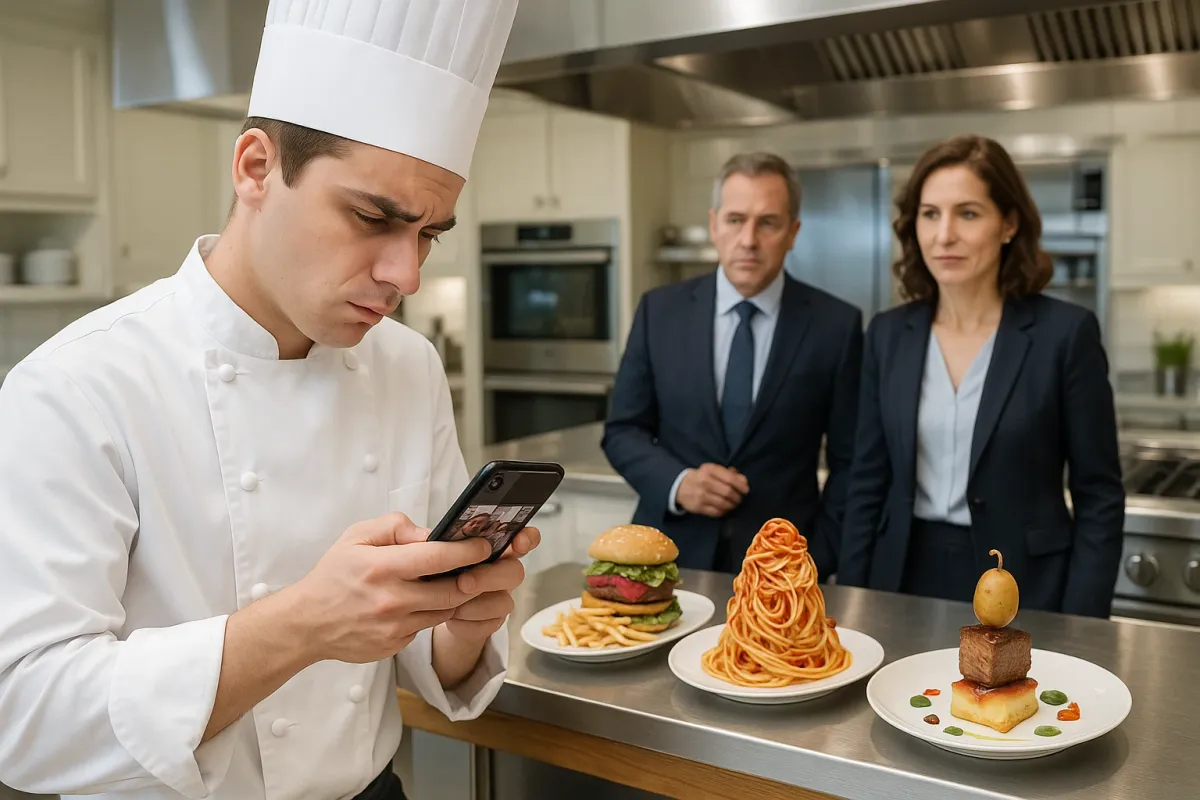
The world’s most rarefied dining rooms are having a private joke with the internet—and it’s not an accident. As “26 Chef Memes That Describe What Working In A Kitchen Is Really Like” trends across feeds, the once-invisible pressure cooker of professional kitchens has gone hyper–public. Screens everywhere are filled with sauté‑pan meltdowns, ticket‑rail chaos, and the gallows humor chefs use to survive service. For most viewers, it’s entertainment. For those who actually dine at the top of the pyramid, it’s something else entirely: a sudden, unfiltered look behind the pass.
Luxury travelers are watching closely. The meme‑ification of back‑of‑house life, amplified by TikTok chef confessionals and Instagram Stories from line cooks, is quietly rewriting what “fine dining” feels like at the very top. The most interesting restaurants right now aren’t pretending the chaos doesn’t exist—they’re choreographing it, softening it, and in some cases, inviting you into it.
Below, five discreet shifts informed by today’s very public kitchen culture—insights that matter if you care less about the table photo and more about what really happens three doors beyond it.
The New Luxury: Dining Where the Brigade Isn’t Breaking
The viral chef memes paint a familiar picture: twelve‑hour shifts, shouted tickets, “Yes, Chef” culture pushed to the brink. Luxury travelers, increasingly attuned to wellness and workplace conditions, are starting to read that reality into their reservations. When a destination restaurant boasts a three‑month waitlist and a 20‑course tasting menu, the unspoken question is now: at whose expense?
Forward‑looking fine dining rooms—from Copenhagen to Mexico City—are responding by making “sane kitchens” a quiet selling point. Spain’s Asador Etxebarri and Mexico’s Pujol, for example, are often cited by industry insiders for their more measured approach to service and team culture, and their dining rooms radiate that calm. You feel it in the pacing between courses, the measured volume of the room, the absence of panic in a server’s eyes when you ask to revisit a pairing. For luxury travelers, the new status marker isn’t just the chef’s name; it’s the sense that no one had to be broken to bring the dish to the table.
The Chef’s Counter Becomes the Most Honest Seat in the House
In a world where kitchen life is trending via memes and behind‑the‑scenes videos, the most coveted luxury seat is shifting: not the corner banquette with the skyline view, but the chef’s counter with an unobstructed view of the line. What used to be a novelty—“watch them plate your food”—has become a form of live fact‑checking. Does the reality match the performance?
At destinations like Atomix in New York, Maaemo in Oslo, and Alinea’s Kitchen Table in Chicago, counter experiences are being recalibrated for guests who arrive already fluent in the language of expo rails, mise en place, and “in the weeds.” Service is still meticulously choreographed, but the veneer is thinner by design; you see the sous tasting sauces, the quiet hand signals, even the occasional reset when something isn’t perfect. For luxury travelers, that proximity is no longer merely theatrical. It’s reassurance—a subtle signal that the precision on the plate is a function of discipline, not tyranny.
Hospitality as Emotional Temperature Control
Those kitchen memes that go viral—burned arms, dropped pans, passive‑aggressive ticket notes—are ultimately about emotional volatility. The more guests see that online, the more they subconsciously scan for temperature in a room: Is this dining room tightly wound, or quietly confident? Luxury properties are responding by elevating a different kind of craft: emotional regulation as a core hospitality skill.
In the most accomplished Michelin‑starred rooms, from The Ledbury in London to SingleThread in California, there is a new emphasis on what you never witness. A manager intercepts a testy interaction before it reaches the table. A sommelier absorbs the disappointment of a sold‑out vintage and turns it into a discovery moment rather than an apology. Teams rehearse not only the steps of service, but the alternate routes when something goes wrong. The effect for the guest is subtle but profound: you feel held, even when the unexpected happens. In an era when guests arrive primed to expect back‑of‑house volatility, this invisible buffering has become one of fine dining’s most exquisite luxuries.
From “Yes, Chef” to “Your Pace, Not Ours”
One of the running jokes in contemporary chef memes is the tyranny of the ticket machine: once the orders start, the night owns you. Traditionally, tasting menus extended that same logic to the guest—everyone eating in lockstep, dishes landing on rails of time, the kitchen’s cadence dictating the evening. Post‑pandemic and post‑meme, the high end is quietly loosening its grip.
Elite travelers are gravitating toward restaurants that can maintain technical precision while bending to individual rhythms. At restaurants like Frantzén in Stockholm or Sorn in Bangkok, there is a new flexibility in how the experience can be paced—slight pauses for conversation, an extra few minutes to revisit a course in detail, a willingness to slow the wine pairing so a guest stays lucid through the final savory. The most advanced rooms now see timing as a bespoke element, not a fixed choreography. For guests used to private aviation, tailor‑made itineraries, and late checkouts, the ability to move through a meal at a personally comfortable speed feels more luxurious than another amuse‑bouche ever could.
The Quiet Art of Making the Kitchen Disappear
As chef culture goes viral, some luxury travelers are discovering that what they want most from a rarefied dining room is the exact opposite: the sense that the kitchen has disappeared entirely. Not because it doesn’t matter, but because the labor, tension, and choreography have been so exquisitely managed that all you perceive is ease.
This is where top hotels and resorts are currently outpacing many standalone restaurants. At properties like Aman Tokyo, The Langham’s fine dining rooms, or discreet palace hotels in Paris and Rome, the culinary experience is seamlessly integrated with the rest of the stay. A tasting menu arrives without fanfare in a private suite, with courses timed to your jet‑lag and calls. A late‑reservation dinner, impossible elsewhere, appears as a multi‑course “light supper” on your terrace, each dish traveling effortlessly through a back‑of‑house system you never see. Post‑service memes might show cooks collapsing after the last table; as a guest, the luxury is that you never once felt the strain.
Conclusion
As social media circulates the hardest truths and sharpest jokes about professional kitchens, fine dining’s mythology is being rewritten in real time. The chef is no longer an unknowable figure in a closed room, and the brigade is no longer an abstraction. For luxury travelers, that transparency has sharpened the definition of what genuinely feels refined.
The most compelling dining rooms of the moment are not those that pretend the chaos doesn’t exist, nor the ones that perform it for spectacle. They are the places that have absorbed the realities exposed by today’s viral memes—and quietly engineered something softer, saner, and more precise on the other side. In a world that now understands exactly how hard service can be, the highest expression of luxury may simply be this: a meal that feels weightless, in a room where no one looks like they had to suffer for your pleasure.
Key Takeaway
The most important thing to remember from this article is that this information can change how you think about Fine Dining.