Travel at the highest level is not about accumulation, but calibration—of time, space, and attention. For the serious luxury traveler, an “exclusive resort” is no longer defined by marble lobbies and logoed amenities. It is defined by discretion, consistency, and the quiet confidence that every hour on property has been considered in advance.
What follows is a refined framework for understanding exclusive resorts through a more exacting lens—five discreet, insider perspectives that rarely make it onto glossy brochures, but quietly separate the truly exceptional from the merely expensive.
The Geometry of Privacy: Reading a Property’s Spatial Intelligence
For the discerning traveler, privacy is not simply a matter of high walls and private pools; it is the spatial intelligence of a resort—how it directs movement, shields sightlines, and choreographs proximity. A thoughtfully designed property anticipates where you do not want to be seen as precisely as where you do.
The best exclusive resorts use topography, landscaping, and layout to create natural layers of seclusion. Cliffside villas that step away from central amenities, pathways that curve rather than run straight, and suites positioned to avoid direct balcony-to-balcony views all signal an architect and developer who understand true discretion.
You will recognize this in the details: the distance between neighboring terraces; whether staff can approach without intruding on line-of-sight; whether sound travels between pool decks. Noise mapping and wind patterns are increasingly considered in ultra-luxury design, quieting public spaces without resorting to overt “quiet zones.”
When assessing a property, look beyond the promotional photography. Study resort maps, satellite views, and site plans where available. Note how guest circulation is structured: can you move between your suite, spa, and dining without traversing heavily trafficked areas? Properties with a clear hierarchy of public, semi-private, and fully private zones tend to deliver a far more composed stay.
In the rarest tier of resorts, spatial intelligence extends to operational corridors as well—service routes that keep staff omnipresent but invisible, maintaining the illusion of effortlessness without compromising response time. That is the geometry of privacy at its most refined.
Operational Discipline: The Invisible Signature of True Exclusivity
A resort’s visual identity may sell the dream; its operations prove whether the dream can be sustained. At this level of travel, consistency is the first true luxury—your expectations met not by chance, but by disciplined internal systems that you will never see but always feel.
Behind the scenes, the best exclusive resorts operate almost like boutique private clubs. There is a meticulous guest ledger—preferences, allergies, arrival patterns, room temperature habits, even preferred pacing between courses at dinner—updated not just stay by stay, but often daily. This is far more sophisticated than a generic “guest profile”; it is a dynamic document that informs everything from housekeeping schedules to turndown rituals.
Service excellence here is structured, not improvised. Staff-to-suite ratios are kept deliberately high, but more importantly, teams are cross-trained with clear accountability: the same person who greets you at breakfast may quietly ensure your chosen wine is already chilled by sunset. Exceptional properties rehearse scenarios—late-night medical requests, sudden itinerary changes, last-minute arrivals—so that crisis management feels indistinguishable from routine hospitality.
Luxury travelers should look for subtle indicators of operational discipline: how quickly pre-arrival questionnaires are acknowledged, whether the resort proactively clarifies transfers and special requirements, and how precisely time commitments are honored on property. Responses that are scripted but slow reveal a marketing-first operation; responses that are concise, anticipatory, and documented suggest a culture built around guest continuity.
Ultimately, true exclusivity is less about access to what others cannot have, and more about the assurance that what you have been promised will be quietly delivered every time.
Curated Stillness: The New Measure of On-Property Experience
The affluent traveler’s most scarce commodity is no longer status or even access—it is undisturbed mental space. In response, the most sophisticated exclusive resorts are shifting their focus from endless activity menus to meticulously designed stillness: environments where you can think, sleep, reset, and re-enter your life with greater clarity.
This does not mean an absence of experiences; it means a deliberate curation of pace. Instead of cramming the day with excursions and events, top-tier properties engineer “white space” into your stay: mornings without scheduled pressure, mid-afternoon sanctuaries free from background music, and evenings designed around conversation rather than spectacle.
Acoustics, lighting, and material choices play a surprisingly central role. Resorts that favor natural materials, soft sound-absorbing textiles, and indirect lighting create a calmer visual and auditory field. Wellness programs at this level move beyond generic spa menus into integrated rest strategies—circadian-aware lighting in rooms, sleep-conducive bedding and room temperatures, and nutrition that supports recovery from jet lag rather than fights it.
Sophisticated travelers should evaluate how a resort articulates its on-property rhythm. If the emphasis is predominantly on “endless options” and constant entertainment, the experience will likely skew performative. If the language centers on restoration, considered experiences, and intentional downtime, you are more likely to find the kind of curated stillness that genuinely resets your internal clock.
The most memorable exclusive stays often feel, in retrospect, not like a blur of activity, but like a carefully held pause in an otherwise accelerated life.
Beyond the Room: How Serious Travelers Assess Value at the Top End
At the luxury level, nightly rate alone is a crude metric. Serious travelers assess value through a more nuanced lens: the total ecosystem of what is included, what is quietly upgraded, and what intangible benefits accrue from choosing one resort over another.
First, understand the pricing philosophy. Some high-end resorts offer near-comprehensive inclusions—transfers, daily breakfast, selected experiences, even laundry—simplifying the stay and reducing transactional friction. Others operate à la carte, with comparatively lower nightly rates but substantial additional spend once you arrive. Neither model is inherently superior; the question is which approach better aligns with how you actually travel.
Value at this tier also lives in time efficiency and friction removal. A resort that handles arrival formalities in-suite rather than at a front desk, pre-completes necessary documentation, or coordinates private security screenings where applicable might command a higher price—but it can return hours of your time, reduce fatigue, and create a far smoother transit arc.
Look also at the resort’s external network. Does the property unlock privileged access to local galleries, private tastings, after-hours cultural visits, or priority restaurant bookings that would otherwise be difficult to secure? These experiences, often arranged through well-connected concierges and local partners, can transform a destination from familiar to quietly privileged.
Finally, serious travelers increasingly weigh ethical and environmental performance as part of value—energy practices, local employment, conservation commitments, and engagement with the surrounding community. At the highest levels of spend, the knowledge that your stay contributes meaningfully rather than extracts mindlessly has become part of the luxury equation.
Value, in this sense, is measured not only in square footage and amenities, but in how intelligently a property stewards your time, your privacy, and your footprint.
The Discreet Art of the Pre-Arrival: Securing a Seamless Stay
What happens before you arrive often determines how exceptional your stay will feel. The most experienced luxury travelers treat the pre-arrival phase as an essential part of the experience, not an administrative chore—and the best exclusive resorts respond in kind.
A refined pre-arrival process goes far beyond confirming dates and airport transfers. It is an elegant exchange of preferences and expectations: room orientation, pillow types, minibar philosophy (stocked, minimal, or empty), preferred coffee ritual, fitness habits, and dietary requirements that go deeper than simple labels. This is also the right moment to share how you like your days to flow—structured, unplanned, or a balance of both.
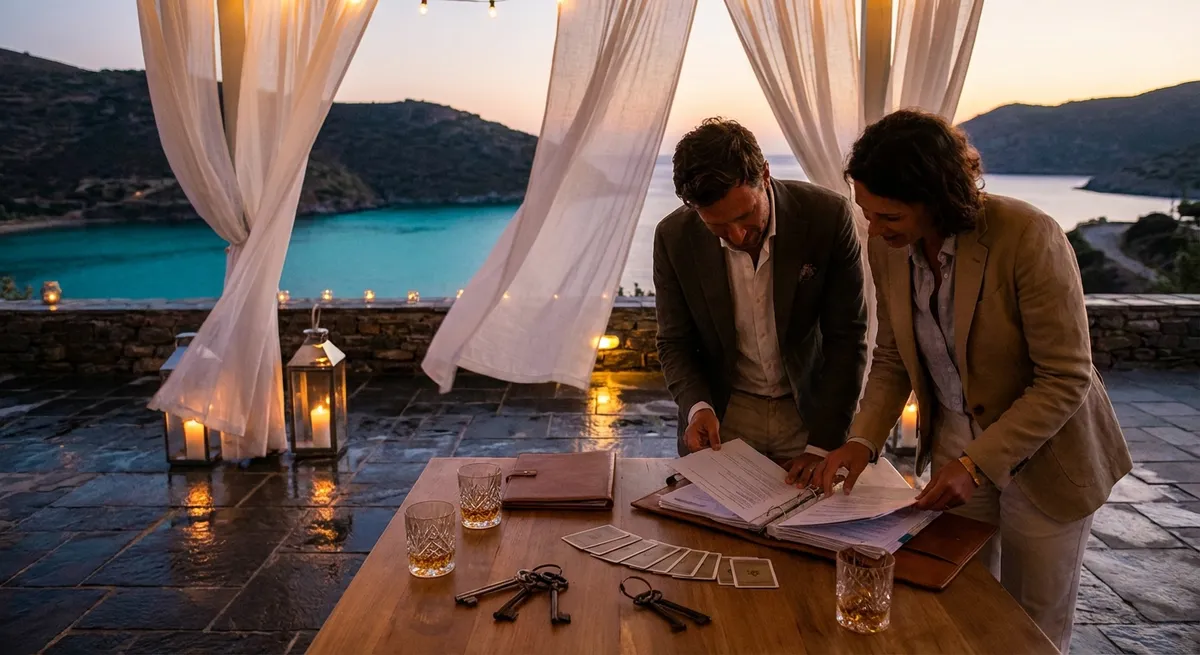
Elite properties will often send a discreet digital form or schedule a brief conversation with a dedicated host or butler before your stay. Pay attention to how your answers are treated: are they acknowledged specifically, with follow-up questions that signal genuine interest, or do they vanish into silence? The former indicates a property that understands the art of personalized hospitality, not just the language of it.
For complex itineraries—multi-generational travel, celebrations, or stays that bridge work and leisure—the pre-arrival phase is where the real tailoring happens. Floor plans may be shared; connecting options discussed; meeting spaces quietly reserved; childcare, private guides, or security arrangements organized without fanfare.
From your side, offering clarity without excess is key. Outline non-negotiables, share any relevant constraints, and then allow the resort to design around them. The most accomplished teams will respond with a proposed stay “architecture”—not a rigid schedule, but a suggested framework that respects your time zones, energy patterns, and reasons for traveling.
When pre-arrival is treated as a collaboration rather than a transaction, the result is a stay that feels uncannily precise from the moment you step onto the property—as if the resort has been quietly preparing for you, not just your booking.
Conclusion
At the uppermost levels of travel, exclusive resorts are less about conspicuous display and more about refined control: of ambiance, of privacy, of time, of narrative. The experienced luxury traveler evaluates properties not by their most photogenic moments, but by the invisible systems and subtle design decisions that shape each hour on site.
By examining spatial intelligence, operational discipline, curated stillness, the true calculus of value, and the art of pre-arrival, you begin to see exclusive resorts not as interchangeable backdrops, but as uniquely engineered ecosystems. In that shift—from surface impressions to structural understanding—lies the difference between simply staying somewhere beautiful and inhabiting a place that has been designed, quietly and precisely, for the way you prefer to live.
Sources
- UN World Tourism Organization – Global Report on Luxury Tourism – Overview of trends, consumer expectations, and structural shifts in the luxury travel sector
- Cornell University School of Hotel Administration – Hospitality Research – Academic insights into hotel operations, service design, and guest experience management
- International WELL Building Institute – WELL Building Standard – Framework on how building design influences wellness, rest, and environmental quality in hospitality spaces
- Global Sustainable Tourism Council (GSTC) Criteria – International standards for sustainable and responsible tourism practices at high-end properties
- Forbes Travel Guide – Star Rating Standards – Detailed criteria used to evaluate luxury hotels and resorts, particularly in service and operational excellence
Key Takeaway
The most important thing to remember from this article is that this information can change how you think about Exclusive Resorts.