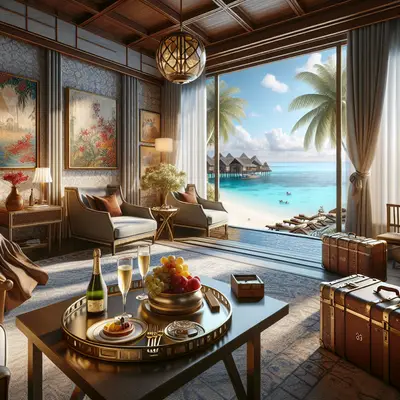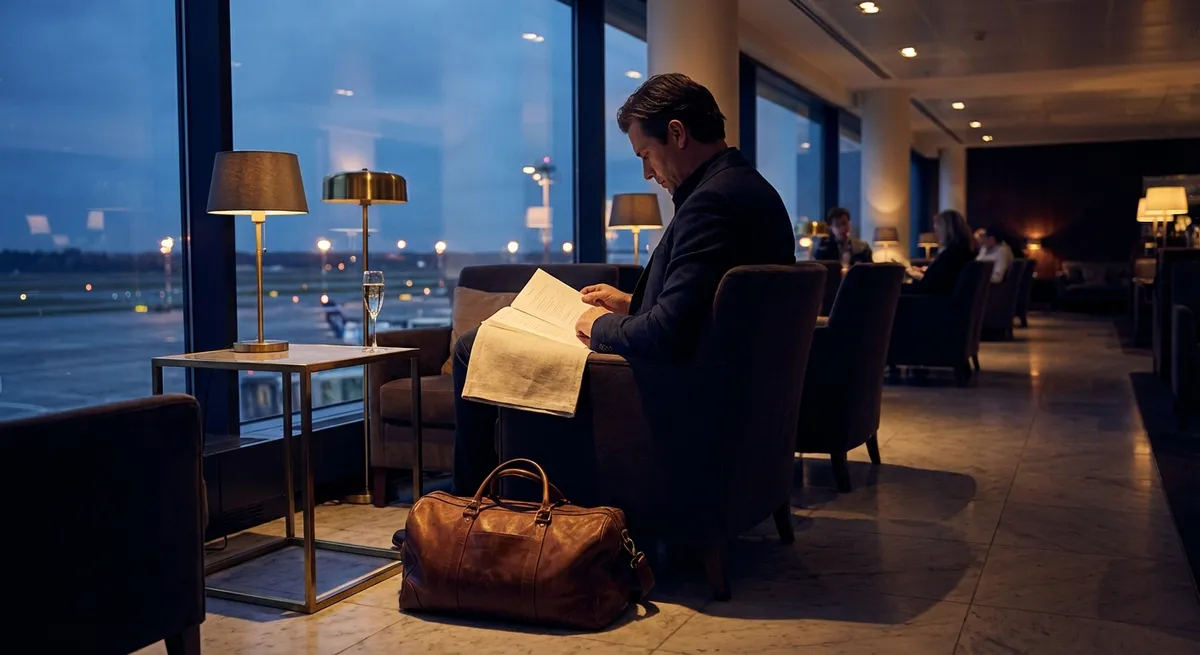
For the genuinely global traveler, luxury is no longer a matter of thread count or square footage. It is a choreography—of time, privacy, sensory nuance, and quiet competence unfolding in the background. The most discerning guests are no longer impressed by what is obvious; they are moved by what is nearly imperceptible yet flawlessly executed. This is the realm of invisible itineraries, where every detail has been considered, but few need to be announced.
Below, five exclusive insights shaping how the world’s most refined travelers are now experiencing movement, place, and privilege.
1. Time as the Ultimate Bespoke Amenity
For the sophisticated traveler, the most coveted luxury is not an object but a reclaimed hour.
Discerning guests increasingly evaluate a journey not by its distance but by its temporal friction: how many points of decision, how many interruptions, how much cognitive drag. An exceptional experience feels seamless because the architecture of time has been engineered on their behalf—private terminals to compress airport formalities, pre-cleared immigration where possible, and coordinated ground transfers that remove any sense of interstitial chaos.
But beyond logistics, there is a more nuanced art: creating “reservoirs of unassigned time” within an itinerary. A polished travel curator will deliberately leave calibrated pockets of emptiness—afternoons without agenda in a city known for its galleries, late-morning starts in destinations where the light is best at noon, arrivals planned for the golden hour. The itinerary supports the traveler’s rhythm rather than demands obedience to a schedule.
The result is a subtle recalibration of expectation: the guest no longer experiences travel as a sequence of obligations, but as an elegantly edited progression of moments, each granted enough time to be fully inhabited.
2. Multi-Sensory Environments as a Signature of True Discretion
The most refined journeys now borrow their grammar from perfumery, sound design, and light architecture.
Where conventional hospitality might rely on visual spectacle, elevated environments lean into the quieter layers of perception. The first impression of a residence or suite is often not what one sees, but the air itself: a barely-there scent, calibrated to the location and time of day. Think mineral notes in a coastal villa, resinous depth in an alpine lodge, or subtle florals that shift as evening approaches.
Sound is equally curated. In the most thoughtful spaces, the noise floor is deliberately controlled: ventilation softened, door closures dampened, low-frequency disturbances minimized. Ambient soundscapes—if any—are locationally and temporally appropriate: the murmur of a courtyard fountain, distant church bells in an old quarter, the almost-inaudible echo of waves in a clifftop hideaway.
Light becomes a kind of silent concierge. Tunable lighting that follows circadian patterns, blackout systems that truly darken a room, and layered illumination that allows guests to move between “contemplative,” “social,” and “restorative” modes without a single harsh overhead glare. For travelers constantly crossing time zones, this sensory intelligence is not a novelty; it is an understated form of care.
This is the new discretion: environments that speak in whispers to the senses rather than shouting in design statements.
3. The Private Infrastructure Behind Seamless Movement
Behind every apparently effortless journey lies a hidden apparatus of relationships, permissions, and protocols. The most sophisticated travelers understand—and quietly value—the infrastructure they never see.
This may include private aviation solutions integrated with commercial-first itineraries, allowing a traveler to use major carriers for intercontinental legs while relying on discreet air mobility for shorter segments. It might involve airport partnerships that ensure expedited security and immigration, or advance coordination with local authorities where regulations permit.
On the ground, the finest experiences now extend beyond merely chauffeured vehicles. They tap into a city’s operational backbone: off-peak access to venues normally constrained by crowds, after-hours entries made possible by relationships cultivated over years, and logistical planning that anticipates local complexities such as road closures, seasonal limitations, or evolving security protocols.
What distinguishes a truly premium experience is not opulence at the surface level, but the presence of contingency beneath it. Alternative routes already prepared, backup aircraft options identified, medical resources mapped in advance of remote expeditions. The traveler might never be told that a potential disruption was avoided; they simply experience travel as tranquil continuity.
4. Hyper-Contextual Experiences Instead of Generic Exclusivity
The era of interchangeable “luxury” rooms and copy-paste experiences is fading for the refined traveler. What now resonates is hyper-contextuality: experiences that could only exist in one specific place, at one specific moment.
Rather than generic “private tours,” the new benchmark involves encounters constructed with a scholar’s depth and a host’s intimacy. This might manifest as a morning spent with a conservator inside a museum’s restoration studio, a tasting guided by a winemaker who brings out unlabeled experimental vintages, or a walk through a historic neighborhood with an architect who has restored several of its buildings.
The experience is not about access for its own sake; it is about perspective. The most compelling moments feel less like performances and more like being temporarily invited into the working life of a place. The traveler becomes a participant in an ongoing story, not a spectator to a staged scene.
Crucially, these moments are edited with restraint. Not every hour needs to be heightened; the most sophisticated itineraries intersperse these exceptional vignettes with quiet, unstructured time in cafés, markets, and parks. It is in these unscripted intervals that a city’s texture becomes truly legible.
5. The Shift from Visible Consumption to Quiet Stewardship
Among the most discerning travelers, “premium” is increasingly defined not by how much can be consumed, but by how gracefully one can move through the world with minimal disturbance.
This is not the performative sustainability of slogans and stickers, but a quieter stewardship integrated into the journey’s design. Choice of properties that are architecturally sensitive to their environment and culturally appropriate to their context; routes planned to avoid overburdened sites at peak hours; partnerships with local organizations that ensure economic benefit remains within the community.
The refined traveler is also paying closer attention to health and wellbeing as part of this stewardship—of self as much as place. Jet lag mitigation through thoughtful scheduling, access to credible medical resources when needed, and environments that support genuine recovery rather than just display wellness aesthetics.
In many ways, the new premium lifestyle in travel is defined by restraint: fewer but better trips, longer stays instead of rapid sampling, deeper engagement rather than hurried conquest of checklists. The emphasis shifts from acquisition of experiences to cultivation of discernment.
The true marker of sophistication is not what is displayed on social media, but what is preserved: one’s energy, one’s privacy, and the integrity of the places visited.
Conclusion
For the modern connoisseur of movement, luxury is no longer confined to marble lobbies or tasting menus. It is found in the unhurried passage through an airport, the near-silent closing of a suite door, the way morning light is allowed to enter a room at precisely the right angle. It resides in infrastructures that remain unseen, in experiences so context-rich they could never be replicated elsewhere, and in a new ethic of stewardship that privileges depth over display.
Invisible itineraries are not about doing more; they are about needing to think less, rush less, and prove nothing. In that quiet space, the world reveals itself with greater clarity—and travel becomes, once again, an art form rather than an obligation.
Sources
- [World Tourism Organization (UNWTO) – Global tourism trends](https://www.unwto.org/tourism-data) - Data and analysis on evolving travel patterns, including premium and long-stay segments
- [McKinsey & Company – The state of travel and hospitality](https://www.mckinsey.com/industries/travel-logistics-and-infrastructure/our-insights) - Insights into shifting traveler expectations, personalization, and premium services
- [Harvard Business Review – The Growing Importance of Experience in Luxury](https://hbr.org/2019/01/why-luxury-brands-are-expanding-into-experiences) - Examination of how luxury is moving from products to experiences
- [International Air Transport Association (IATA) – Passenger experience & facilitation](https://www.iata.org/en/programs/passenger/passenger-experience/) - Information on innovations in seamless travel, biometrics, and airport processes
- [Cornell University School of Hotel Administration – Hospitality research](https://sha.cornell.edu/faculty-research/centers-institutes/chr/research/) - Research on high-end hospitality, service design, and guest experience dynamics
Key Takeaway
The most important thing to remember from this article is that this information can change how you think about Premium Lifestyle.