Luxury travel is no longer a louder version of premium economy with better champagne. It has become a quiet discipline—an edited, intentional way of moving through the world where time, privacy, and cultural fluency matter more than square footage or logo density. The true luxury now lies in how seamlessly an experience unfolds, and how little of it needs to be posted, announced, or explained.
For the discerning traveler, the question is no longer where to go, but how to inhabit a place. Below are five exclusive, under-the-radar insights shaping how sophisticated travelers are designing their journeys today.
The New First Class Is a Private Timeline
For the genuinely high-end traveler, luxury begins before the first boarding call. It is expressed in the choreography of time: who is waiting for whom, and where.
Today’s most elevated itineraries are built around temporal insulation. Think: departure slots selected not for price but for avoidance of peak transit windows; private security and immigration channels that reduce exposure to crowds; and transfer plans that feel more like a continuous environment than disconnected segments.
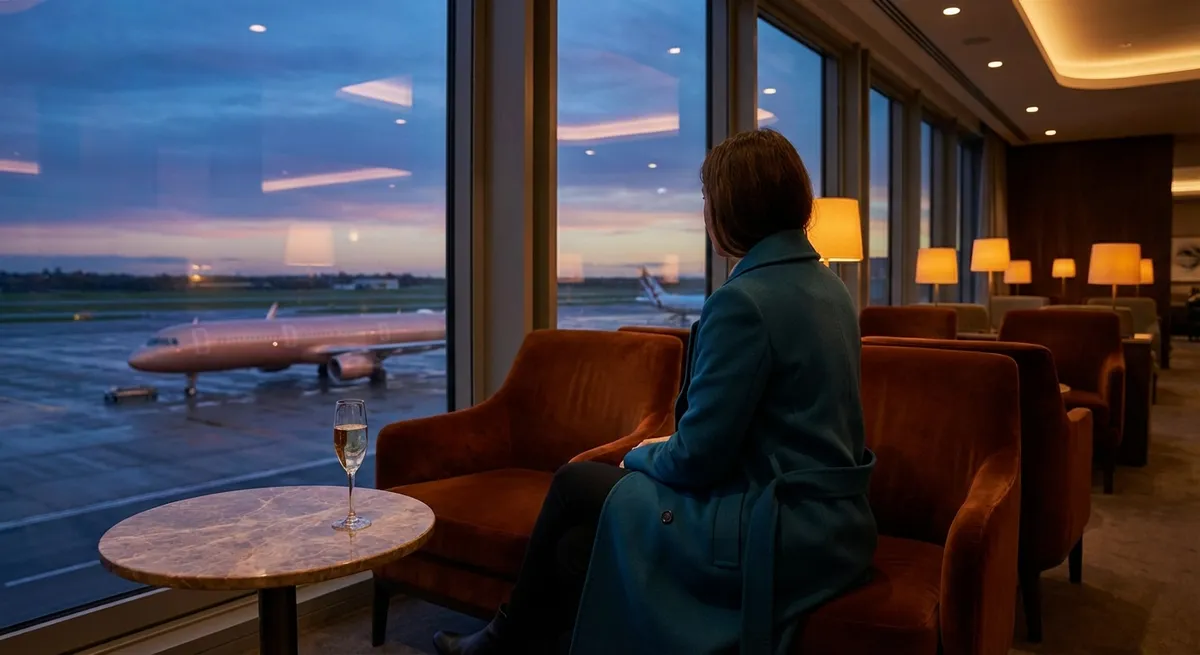
Private suites and front-of-cabin seating certainly still matter, but they are now just one component of a broader time-architecture: car-to-lounge transfers that take seconds instead of minutes, arrivals curated to bypass terminal chaos, and in some cases, bespoke off-schedule arrangements with smaller regional carriers or FBOs when commercial timing clashes with a traveler’s preferred rhythm.
The modern luxury traveler is not merely buying a better seat; they are purchasing a protected chronology. What feels opulent is not the glassware—it is the absence of waiting rooms, the near-invisibility of logistics, and the sense that the world has subtly rearranged itself around your preferred clock speed.
Destination Design: Curating Context, Not Just a Hotel
The days of simply “booking a five-star” are waning at the top of the market. Sophisticated travelers are now designing context, not just accommodations: balancing geography, architecture, cultural depth, and access in a single coherent decision.
A coastal villa with cinematic views may be rejected in favor of a less dramatic property that offers direct access to a serious art scene, a private members’ club, or a chef whose tasting menu would be at home in Paris or Tokyo. Mansion-like suites are becoming less compelling than finely edited spaces with exceptional light, considered acoustics, and thoughtful proximity to the city’s most compelling layers—often hidden behind unmarked doors and membership-only policies.
Increasingly, destination choices are made using criteria closer to those of a collector than a tourist:
- Does this place offer a chapter in my ongoing relationship with a region?
- Does the hotel’s design language align with my own aesthetic and values?
- Is there access to people—gallerists, winemakers, local designers, cultural custodians—who can interpret the destination intelligently?
In this mindset, the property is no longer the entire experience; it is the anchor for a curated ecosystem of encounters, each chosen with the precision of a sommelier building a cellar.
The Quiet Network: Human Gateways Over Public Guides
At the highest level of travel, information itself becomes stratified. Public guides, even when beautifully produced, serve more as background context than navigational tools. The real itineraries are shaped by human gateways—individuals who open doors that were never meant to be advertised.
This is where ultra-specialized travel advisors, private office teams, and on-the-ground fixers come into play. They do not simply “book”; they mediate between the traveler’s sensibilities and a city’s underexposed dimensions. A closed gallery opens for a one-on-one viewing. A vineyard that never appears in glossy magazines hosts a candlelit vertical tasting with the winemaker. A historic home that belongs to a private family becomes the setting for a small concert.
For the luxury traveler, the value lies partly in unpublished access—experiences that exist beyond the algorithmic surface of the destination and cannot be recreated with a search bar. These relationships require time to cultivate and are often built quietly over years, which is precisely why they are prized.
The most refined itineraries are now less about “VIP treatment” and more about intelligently filtered intimacy: the right doors opening, for the right people, at the right time, without fanfare.
Material Calm: The Sensory Code of High-End Transit
As cabins, lounges, and villas race to outdo one another visually, luxury travelers are increasingly attentive to something subtler: sensory regulation. The true premium today is not maximalist decor; it is a carefully tuned environment that allows the body and mind to recalibrate in motion.
Details that once felt secondary are now quietly defining quality:
- Acoustic treatment that reduces harsh frequencies rather than just decibels
- Lighting programs that respect circadian rhythms, not just aesthetics
- Linen and upholstery choices that breathe, flex, and age gracefully
- Scent used sparingly—and with restraint—to avoid olfactory fatigue
In aircraft, this shows up as cabins engineered around air quality, humidity, and light temperature as much as seat pitch. On the ground, it’s the difference between a “designed” room and an inhabitable one: windows that open (even partially) in a top-tier suite, tactile materials that feel substantial rather than performative, and spaces where technology recedes into the background rather than constantly asserting its presence.
The emerging code is simple: environments should accommodate the nervous system, not overwhelm it. For the sophisticated traveler, the highest compliment is not “spectacular,” but “effortless.”
Intentional Rarity: Choosing Fewer Journeys, More Deeply
One of the most striking shifts among seasoned luxury travelers is a movement away from constant motion toward intentional rarity. The passport may be full, but the calendar is less so. The value now lies in depth and coherence rather than sheer quantity.
Instead of six fragmented weekends scattered across continents, many are opting for one or two extended, highly considered journeys where the narrative arc matters as much as the individual highlights. A multi-week immersion across one region—with language lessons, recurring local hosts, and a return to the same café each morning—can feel far more opulent than a frenetic round-the-world sprint.
This approach also intersects with a more conscious view of impact. High-end travelers are quietly prioritizing properties with credible sustainability practices, low-density footprints, and measurable community engagement—not as a marketing hook, but as a baseline expectation. A truly luxurious journey should not feel extractive; it should feel symbiotic.
The result is a new kind of rarity: fewer countries per year, but richer relationships with the ones that are chosen. Travelers emerge not just with photographs, but with ongoing correspondences, returning reservations, and a sense of belonging that outlasts the boarding pass.
Conclusion
Luxury travel today is defined less by spectacle and more by composition: how time is structured, how context is curated, which doors are opened, how the senses are treated, and how often we choose to depart at all. For those operating at the top tier, the most coveted experience is one that feels tailored yet unforced—logistically seamless, culturally literate, and emotionally precise.
In this new landscape, the question is not simply, “Where should I go next?” but “What kind of traveler do I intend to be—and what architecture of experience will support that identity with elegance and discretion?”
Sources
- [Forbes Travel Guide](https://www.forbestravelguide.com/) - Provides professional ratings and insights into luxury hotels, restaurants, and spas worldwide, reflecting evolving standards in high-end travel
- [Virtuoso – Luxury Travel Trends](https://www.virtuoso.com/travel/articles/luxury-travel-trends) - Covers current trends and preferences among upscale travelers and the advisors who serve them
- [Condé Nast Traveler – Future of Luxury Travel](https://www.cntraveler.com/story/the-future-of-luxury-travel) - Examines how notions of luxury, access, and exclusivity are shifting in global travel
- [Skift Research – Global Travel Trends](https://skift.com/research/) - Offers data-driven analysis on changes in traveler behavior, premium demand, and experiential expectations
- [World Travel & Tourism Council (WTTC)](https://wttc.org/research/insights) - Provides reports on industry-wide shifts, including sustainability and high-end travel patterns
Key Takeaway
The most important thing to remember from this article is that this information can change how you think about Luxury Travel.