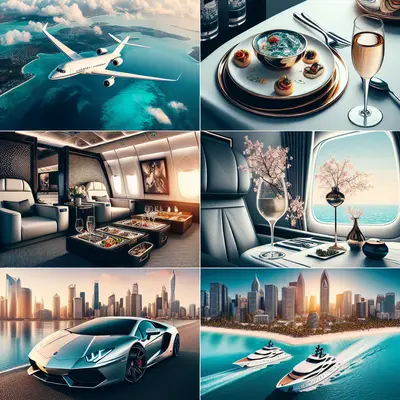
Luxury travel today is less about opulence on display and more about precision: the right table held for you in a city that doesn’t know your name yet, the flight timed to catch a particular sunset, the room scent calibrated to your sleep patterns. It is a quiet orchestration of details that allows you to move through the world as if it has been gently rearranged in anticipation of your arrival. For the discerning traveler, the true indulgence is not excess—it is intention.
Below, five exclusive insights that speak to how serious travelers are quietly reshaping what it means to journey well.
1. Curating Time Zones, Not Just Destinations
For the sophisticated traveler, itineraries now start with circadian rhythm rather than airport codes. Instead of asking “Where shall we go?” the question becomes “How do we want to feel when we arrive?” Routes are curated to minimize physiological friction—jet lag, sleep disruption, and performance dips—so that arrival feels like a continuation of life, not an interruption.
This begins with flight selection that respects your body clock. Savvy travelers coordinate departures that allow them to sleep at appropriate times, choose east–west or west–east routes based on their sensitivity to time changes, and use strategic stopovers as recalibration intervals rather than mere transfers. Suites or first-class cabins are no longer only about space and champagne; they are sleep laboratories in the sky—full-flat beds, noise attenuation, humidity controls, and light temperature tuned to circadian phases.
On the ground, hotel choices favor properties with thoughtful wellness infrastructure: blackout systems that truly darken, temperature-precise bedding, in-room circadian lighting, and fitness spaces designed for travel-worn bodies rather than local gym-goers. The result is a journey that feels less like conquering distance and more like aligning yourself with it.
2. The New Cartography: Traveling by Interests, Not Borders
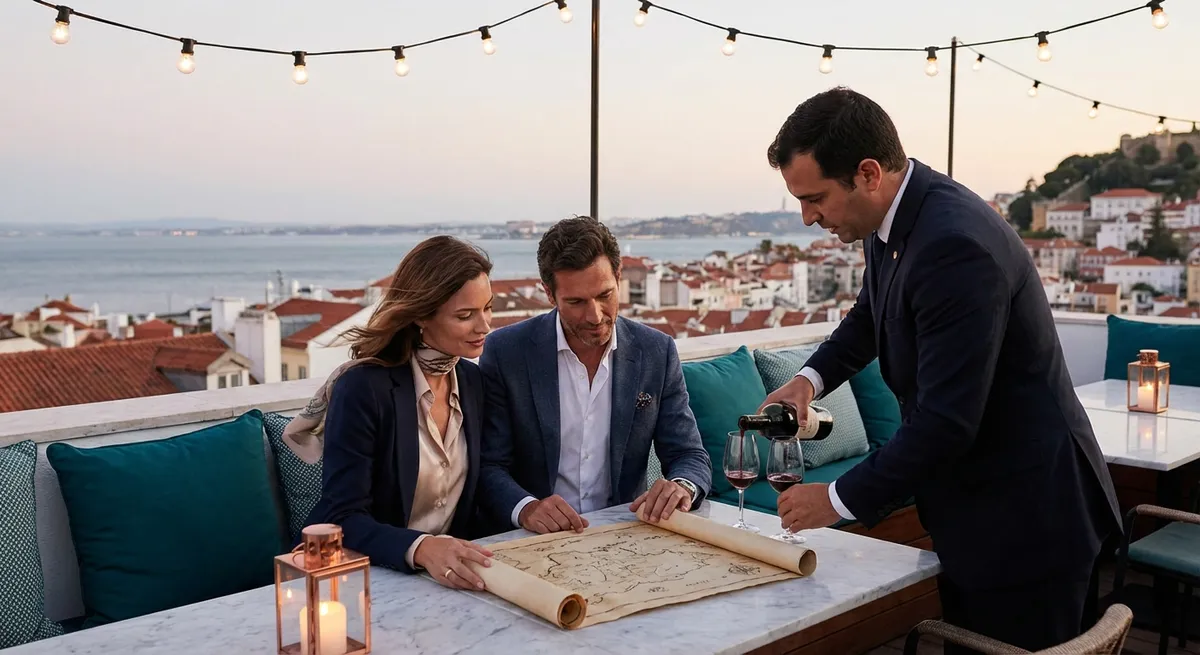
The most interesting itineraries are no longer defined by countries but by constellations of passions. A serious gastronome might trace the quiet lineage of a single chef’s protégés across three continents; an architecture devotee might move through a sequence of cities united by one movement or studio. The map becomes a private pattern only you can see.
This approach transforms research into an art form. Instead of searching “best hotels in X,” the refined traveler starts with a theme—Japanese craftsmanship, contemporary dance, natural wine, modernist design—and then weaves locations around that thread. Local fixers, cultural institutions, and niche communities (artisans, collectors, winemakers, conservators) become anchors, creating access that guidebooks cannot anticipate.
You begin to travel “through” subjects rather than “to” places. A week might involve a vineyard project in Europe, a conservation initiative in Africa, and a private atelier visit in Asia, all linked by your quiet obsession with, say, sustainable materials or ancient fermentation techniques. Each destination becomes a chapter in a single, coherent narrative of your interests.
3. Invisible Infrastructure: Building a Personal Travel Ecosystem
The most powerful luxury in modern travel is not the suite you see, but the invisible network that precedes you. Serious travelers cultivate their own micro-infrastructure: a constellation of trusted aviation advisors, on-the-ground concierges, local specialists, and digital tools that work in concert to make movement effortless.
This ecosystem is built intentionally over years. A particular travel advisor who understands the cadence of your life and anticipates your preferences. A private driver in a key city who knows your preferred routes, your tolerance for conversation, and your security sensitivities. A favorite local guide who can open museum doors at atypical hours, secure last-minute tables at fully reserved dining rooms, or arrange access to closed archives or restoration workshops.
Technology underpins this with quiet sophistication. Encrypted communication channels for sharing documents and preferences. Airline and hotel loyalty programs carefully optimized not just for points, but for intangible benefits: protection against disruptions, priority waitlisting, flexible re-routing when weather or geopolitics intervene. When it works well, you never see the machinery—only the sense that doors open at the right moment, and obstacles melt away before they appear.
4. Texture Over Spectacle: Seeking Depth in Every Stay
For the refined traveler, luxury is increasingly measured in texture rather than scale. A room is not merely “beautiful” but acoustically soft, olfactorily calm, and functionally intuitive. A meal is not impressive because it is elaborate, but because each element feels necessary, precise, and considered.
This sensibility extends beyond hotel lobbies and Michelin-starred dining rooms into the granular details of a stay. The way a particular coastal property manages light at sunrise and sunset. The mineral profile of the water in your shower and how it affects your skin. The subtle choreography between housekeeping, room service, and spa scheduling so that the day flows without interruption or repetition.
Experiences are chosen for their nuance: an early-access museum visit with a curator who can speak to the conservation challenges behind the works, a private performance in a historic space where you feel the acoustics as much as you hear them, a guided walk through a market that focuses on supply chains and producers rather than simply “local color.” These are not Instagram moments; they are tactile, sensory, and personal. The journey becomes less about being seen in luxurious places and more about being deeply present in extraordinary ones.
5. Ethical Precision: Aligning Indulgence With Responsibility
A meaningful evolution in high-end travel is the refusal to separate pleasure from consequence. The sophisticated traveler understands that every journey has a footprint—environmental, cultural, social—and seeks to refine, rather than ignore, that impact. The result is not austerity, but conscientious abundance.
This often begins with aviation. Route choices, aircraft types, and class of service are weighed alongside the use of verified carbon offset or removal programs and, increasingly, sustainable aviation fuel initiatives where available. On the ground, hospitality partners are selected not only for design and service but for traceable sustainability practices: energy use, water management, staffing policies, supply chain transparency.
Cultural engagement is approached with precision. Instead of generic “local experiences,” travelers favor collaborations that channel money and visibility into community-led projects: heritage restoration, marine conservation, artisan cooperatives, culinary preservation. Philanthropic travel—combining leisure with site visits to supported initiatives or quietly funding specific conservation or educational efforts—turns the journey into a form of stewardship. Indulgence, in this frame, becomes more profound when it contributes to the longevity of the very places that make travel worthwhile.
Conclusion
For those who take travel seriously, luxury is no longer a static category defined by thread counts and car fleets. It is a dynamic practice: of curating time zones with intention, mapping your life by interests rather than borders, building an invisible network that travels ahead of you, seeking depth over spectacle, and aligning indulgence with responsibility.
In this emerging landscape, the most exquisite journeys are not the loudest or the most ostentatious. They are the ones in which every element—flight, room, table, encounter—is tuned precisely to who you are, how you move through the world, and what you wish to leave behind after you depart.
Sources
- [Centers for Disease Control and Prevention – Jet Lag: Sleep and Travel](https://wwwnc.cdc.gov/travel/page/jet-lag) – Overview of circadian rhythm disruption and strategies to reduce jet lag during air travel
- [Harvard Medical School – Sleep and Health: Circadian Rhythms](https://www.health.harvard.edu/staying-healthy/blue-light-has-a-dark-side) – Explains the role of light and timing in circadian regulation, relevant to optimizing flight times and hotel environments
- [International Air Transport Association (IATA) – Sustainable Aviation Fuel](https://www.iata.org/en/programs/environment/sustainable-aviation-fuels/) – Details on sustainable aviation fuel initiatives and their role in reducing the environmental impact of premium air travel
- [United Nations World Tourism Organization (UNWTO) – Tourism for Sustainable Development](https://www.unwto.org/sustainable-development) – Framework and principles for integrating sustainability and community benefit into high-end travel experiences
- [World Travel & Tourism Council (WTTC) – Environmental and Social Research](https://wttc.org/research/insights) – Research and insights on the environmental, social, and economic impact of global travel, informing responsible luxury travel choices
Key Takeaway
The most important thing to remember from this article is that this information can change how you think about Luxury Travel.