Luxury travel is no longer defined by thread count, loyalty tiers, or the square footage of a suite. For the genuinely discerning, it has evolved into something quieter and more complex: an exercise in intention. It is about how time is held, how privacy is negotiated, and how a destination reveals itself when you refuse the obvious. At this level, a trip is not consumed; it is curated—almost composed—like a private performance in which every element has purpose.
Below are five exclusive insights that shape how the most attentive travelers are now designing their journeys—subtle levers that transform an itinerary into something far more enduring.
1. The Power of the “Unseen Hand” Concierge
At the highest end of travel, the most valuable services are often the least visible. The elite traveler increasingly relies on a new kind of concierge: not simply the hotel’s on-property liaison, but a quiet ecosystem of fixers, travel designers, and on-call specialists who operate in the background, orchestrating frictionless movement.
These professionals understand that discretion is currency. They anticipate needs without announcing themselves—adjusting airport transfers as a jet’s ETA shifts, ensuring rooms are prepared to precise climate preferences, or quietly rearranging a dinner reservation when a meeting runs over. For the traveler, the experience feels organic, almost coincidental, yet every moment has been engineered.
What differentiates this caliber of service is not access alone, but calibration. It’s not just about booking the “best” table—it’s securing the one table that suits your mood that night, with a server who understands your pace and a wine list already mapped to your preferences. The unseen hand concierge edits, refines, and removes noise, allowing the traveler to inhabit the trip fully rather than manage it.
2. Designing Transit as a Sanctuary, Not an Interruption
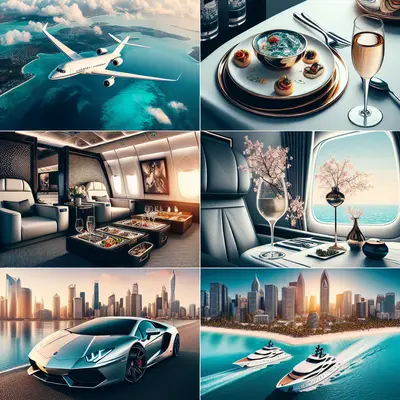
For most, transit is the tax one pays to reach beauty. For the sophisticated traveler, it becomes part of the aesthetic of the journey itself. The hours in the air, on rails, or at sea are no longer accepted as dead time; they are meticulously designed as sanctuary.
Private and semi-private aviation, premium rail cabins, and discreet airport suites are leveraged not just for speed, but for their ability to protect mental bandwidth. Cabin configuration, air quality, noise insulation, and even circadian lighting are chosen with the same scrutiny applied to a residence. Workflows are pre-planned: a three-hour flight divided into a focused work block, a curated meal, and a deliberate rest window, all supported by connectivity and quiet.
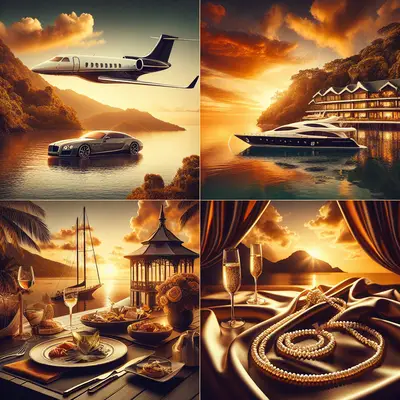
On the ground, transfers are elevated from simple logistics to extensions of the journey’s narrative. A chauffeured drive becomes an opportunity for quiet observation with tinted windows and a stocked cabin chosen for its specific ambience. For some, a short sea transfer at dusk replaces a helicopter ride—not because it is faster, but because the changing light across the water is part of the arrival ritual. Transit stops being something to endure and becomes a carefully orchestrated interlude between chapters.
3. Curating Access Over Opulence
The new pinnacle of luxury is not excess, but access. As destinations become more saturated and “exclusive” experiences more widely marketed, the truly affluent traveler prizes the kind of entry that cannot be purchased with a single click or credit card: doors that open not just to spaces, but to context.
This might mean a private viewing in a museum while the city sleeps, not for the social capital of being alone with a masterpiece, but for the rare ability to stand in absolute quiet before it. It may involve time with a local architect walking through a neighborhood before it becomes a headline, or a vintner opening unlisted vintages because he understands that the guest values lineage, not labels.
Access like this requires time, relationship, and reputation. It is often facilitated by specialized travel advisors, cultural institutions, or trusted intermediaries who vouch for the traveler as a respectful guest rather than a transient consumer. The result is an experience marked less by spectacle and more by depth: a sense of having been briefly woven into the fabric of a place, rather than merely having passed through it.
4. Quiet Sustainability as a Baseline, Not a Slogan
Among the most refined travelers, sustainability has shifted from a marketing feature to an invisible baseline expectation. It is not something to be announced with earnest placards; it is an assumption baked into the very architecture and operations of a stay.
These guests scrutinize flight choices through the lens of efficiency and necessary frequency, not guilt messaging. They favor properties that have invested meaningfully in energy systems, water management, and local sourcing—not because it’s “on trend,” but because it reflects intelligent, long-term thinking. A lavish villa powered by discreet solar arrays, a resort with its own on-site wastewater treatment and re-use systems, or a yacht that prioritizes advanced fuel technologies: these are perceived less as virtues and more as signs of operational competence.
Crucially, sustainability at this level is designed to be felt, not preached. Cooling that responds seamlessly to occupancy, materials that age beautifully rather than needing constant replacement, menus that draw from regional producers with minimal explanation needed—each element signals a mindset that aligns with the traveler’s own long view. The experience is still indulgent, but calibrated to a world in which resources and attention are both treated as finite.
5. The Art of Temporal Layering: Returning Without Repeating
One of the subtler luxuries in modern travel is the ability to return to a place without repeating it. The experienced traveler understands that destinations are not static; they are layered, shifting organisms that reveal different dimensions depending on how and when you approach them.
Temporal layering is the practice of revisiting, but with intention. A city first experienced in the frenzy of a major event may be rediscovered in its off-season quiet, when its galleries and cafés revert to local rhythms. An island known for its high season festivities might be revisited for a winter residency focused entirely on writing, painting, or simply recalibrating sleep and routine.
This approach requires more than just a good memory—it demands careful record-keeping of not just where you stayed, but who you met, which streets felt compelling, which hours of the day seemed to belong to you. On subsequent visits, an advisor or on-the-ground contact can design an entirely new lens through which to see the same place: a different neighborhood as home base, a shift from restaurants to private kitchens, from public tours to academic-led walks.
Over time, each return adds a stratum of understanding. The traveler is no longer a visitor in the conventional sense; they become a recurring character in the destination’s evolving narrative. That accumulated intimacy is, in many ways, the most luxurious souvenir of all.
Conclusion
At its most refined, luxury travel is less about the visible signals of status and more about the invisible architecture of experience: who is orchestrating in the background, how transit supports rather than fragments your days, what kind of access is unlocked, how quietly sustainability is embedded, and how time itself is layered across places you come to know intimately.
The travelers operating at this level are not chasing destinations; they are curating a personal atlas of meaning. Each journey is deliberate, each return calibrated, each moment protected from unnecessary noise. It is in this careful edit—the things removed as much as the things included—that the true sophistication of contemporary luxury travel now resides.
Sources
- [Virtuoso – 2024 Luxe Report](https://www.virtuoso.com/travel/articles/virtuoso-2024-luxe-report) - Industry insights into evolving behaviors and expectations of luxury travelers
- [Condé Nast Traveler – Future of Luxury Travel](https://www.cntraveler.com/story/how-luxury-travel-is-changing) - Explores shifts from traditional opulence to experience-, access-, and meaning-driven travel
- [Skift Research – The State of Luxury Travel](https://research.skift.com/report/the-state-of-luxury-travel-2023/) - Data-driven analysis of high-end travel trends, including personalization and sustainability
- [World Travel & Tourism Council – Sustainability in Travel & Tourism](https://wttc.org/Initiatives/Sustainability) - Frameworks and reports on integrating sustainability into premium travel offerings
- [International Air Transport Association (IATA) – Sustainable Aviation Fuel](https://www.iata.org/en/programs/environment/sustainable-aviation-fuels/) - Authoritative source on aviation sustainability developments relevant to high-end air travel
Key Takeaway
The most important thing to remember from this article is that this information can change how you think about Luxury Travel.