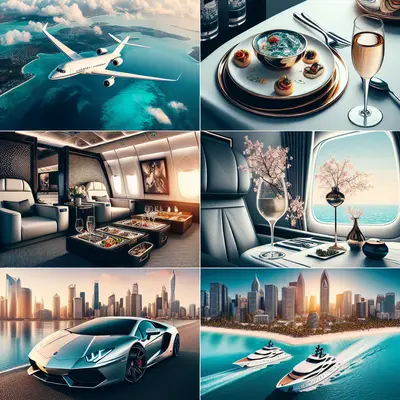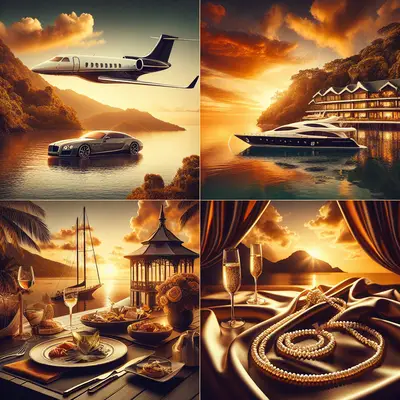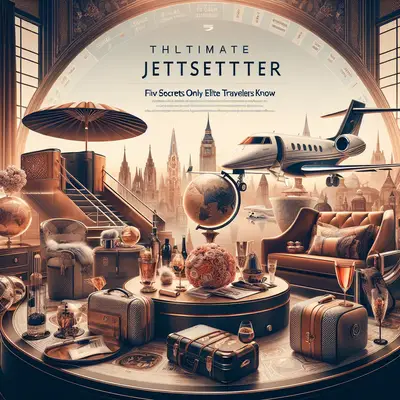
Luxury travel no longer announces itself with logos and spectacle; it reveals itself in calibration, in the quiet exactness of experiences that feel as though they exist only for you. For the Jet Ready traveler, the journey is less about where and more about how—how time is shaped, how access is arranged, how privacy and presence are choreographed with precision.
What follows is a refined lens on contemporary luxury travel: five exclusive insights that aren’t about price points, but about design, intentionality, and the rare pleasure of feeling the world reconfigured to your measure.
The Rise of Temporal Luxury: Owning the Clock, Not the Suite
In elite travel circles, time has become the ultimate currency—and the most discreet status symbol. The most coveted itineraries are no longer the longest or most elaborate; they are the most efficiently exquisite. A 36‑hour stopover, precisely orchestrated between transcontinental obligations, can deliver more satisfaction than a languid two-week escape that lacks intention.
True temporal luxury means seamless transitions: private aviation or top-tier commercial cabins that enable genuine rest and productivity; airport transfers that feel invisible rather than impressive; check-in processes that are completed before you even arrive. It is the art of ensuring that no moment is wasted on logistics, uncertainty, or friction. The goal is not to rush, but to remove drag—the waiting, queuing, and coordinating that erode the quality of experience.
Today’s sophisticated traveler values itineraries that operate with the rhythm of their life, not in opposition to it. This might manifest as an ultra-early museum opening, arranged solely for your party, allowing you to stand alone before a masterpiece before the city awakens. Or a late-night, chef’s-counter tasting aligned to a landing time, so that transit, dining, and sleep converge in a single, graceful sequence.
For the Jet Ready client, the real luxury is not merely acquiring more time, but inhabiting it more beautifully.
Private Access as Quiet Influence, Not Loud Exclusivity
There is a crucial distinction between being in the “VIP section” and having the sense that a place has bent subtly to receive you. Modern luxury travelers increasingly prefer the latter: experiences that signal influence through ease, not spectacle.
Private access now expresses itself through intimacy, not rope lines. Think after-hours entry to a historic property where lighting, music, and pacing have been thoughtfully curated to your tastes; a guided walk through a UNESCO-recognized site with a conservator rather than a tour guide; or a studio visit with an emerging artist whose work is not yet widely known outside of serious collectors’ circles.
The affluent traveler is also redefining what counts as “exclusive.” Instead of chasing what is hardest to book, they are seeking what is hardest to replicate. It might be a sunrise coffee ceremony with a family who has farmed the same hillside for generations, arranged by a trusted local curator. Or a private tasting with a winemaker who pulls unlabeled bottles from trial barrels that may never go to market.
Access, in this context, is less about exclusion and more about connection—doors opening not just to spaces, but to knowledge, tradition, and people who do not ordinarily operate in the tourism economy. The finest journeys now feel less like privileges granted and more like confidences shared.
The New Cartography of Comfort: Micro-Details That Matter
The most discerning travelers judge an experience not by its brochure-ready highlights, but by its micro-details—the ones that rarely appear on a website but define how a stay actually feels. A suite’s aesthetic is notable; its sensory intelligence is unforgettable.
Temperature, water pressure, and acoustics have emerged as quiet differentiators. The best properties now understand that sophisticated guests notice whether the blackout shades truly darken; whether the shower achieves perfect pressure and warmth in seconds; whether room acoustics allow for both undisturbed sleep and discreet calls without echo.
Material choices have similarly evolved. High thread count is no longer enough; educated travelers ask about fiber sources, weave types, and even laundering methods, because they know these impact not just softness but sleep quality. Amenities are moving away from generic “luxury” branding toward partnerships with niche, high-performance fragrance houses, wellness labs, and heritage artisans whose reputations are anchored in excellence, not just recognition.
Comfort has also become contextual and anticipatory. A truly elevated property will adapt minibar selections to your arrival city and season; adjust pillow options based on your usual sleep time and travel direction; and calibrate in-room lighting to reduce jet lag and support circadian rhythms. The new luxury is not simply plush; it is precisely attuned to how you live and recover on the move.
Crafting a Personal Cultural Footprint, Not a Checklist of Capitals
Among the globally mobile, the era of capital-city collecting is giving way to something more nuanced: the cultivation of a personal cultural footprint. The question is no longer “How many countries have you visited?” but “Where, specifically, do you return—and why?”
Luxury travelers are increasingly curating a constellation of “anchor locales”: a particular coastal village where they know the fishermen by name; a quiet wine valley where they maintain an ongoing relationship with a single estate; a design-forward city neighborhood where they stay in the same building, on the same floor, every year. Over time, these places evolve from destinations into extensions of identity.
This approach reconfigures how itineraries are built. Rather than sweeping multi-stop journeys that skim a region, the sophisticated traveler might deliberately revisit the same city in different seasons, tracing its shifting character—attending a winter performance at a world-class opera house one year, then returning in late spring for a contemporary art fair that draws an entirely different crowd and energy.
A cultivated cultural footprint has another advantage: it enables depth without performance. When you cease chasing what the world deems “must-see” and instead refine what is personally resonant—be it architecture, avant-garde cuisine, traditional textiles, or contemporary dance—you transition from consumer to connoisseur. Your travels become less publicly impressive, perhaps, but infinitely more privately meaningful.
Discreet Sustainability: Environmental Intelligence as a New Status Code
In the rarefied tier of travel, sustainability has moved beyond marketing language into a quietly powerful status code. The most informed travelers now look for properties and experiences that demonstrate environmental intelligence—not just token gestures, but thoughtful integration of climate, community, and conservation into the fabric of the stay.
This may appear in subtle but telling ways: buildings oriented to maximize natural light and reduce energy draw; culinary programs built on hyper-local, seasonal ingredients that minimize transport; discreet water management systems in regions where scarcity is a lived reality rather than an abstract concern. It is the visible absence of waste that speaks volumes: no unnecessary laundering, no gratuitous plastics, no poorly conceived “green” initiatives that add complexity without benefit.
At the high end, guests are also engaging with impact on a more intentional level. Instead of generic “offsets,” some travelers seek verifiable connections to marine restoration efforts, rewilding projects, or cultural preservation initiatives that they can visit, understand, and support over time. The most sophisticated itineraries weave these elements in organically—perhaps a morning spent on a research vessel accompanying marine biologists, followed by a dinner where the menu reflects the same ecosystem’s constraints and possibilities.
Sustainability in this sphere is not about self-denial; it is about alignment. Travelers with the means to go anywhere are increasingly choosing places that demonstrate long-term thinking, because that perspective mirrors their own approach to legacy, investment, and continuity. In an age when excess is easy, restraint—well-executed, well-reasoned restraint—has become its own form of luxury.
Conclusion
The new blueprint of luxury travel is defined less by visible opulence and more by invisible orchestration. It is the ability to own your time, to move through the world with quiet access and meaningful connection, to inhabit spaces that are sensitively designed to your rhythms, to cultivate a personal map of significance, and to align your journeys with a considered ethical stance.
For the Jet Ready traveler, these five dimensions are not trends to be sampled but lenses through which every itinerary is evaluated. The destination remains important—but the true luxury lies in how every moment between departure and return is composed, refined, and ultimately, made entirely your own.
Sources
- [World Tourism Organization (UNWTO) – Tourism in the 2030 Agenda](https://www.unwto.org/tourism-in-2030-agenda) - Provides context on how tourism is evolving, including sustainability and high-end travel trends
- [Virtuoso – 2024 Luxe Report](https://www.virtuoso.com/travel-advisors/luxe-report) - Insight from a leading luxury travel network on current preferences of affluent travelers
- [Condé Nast Traveler – How Luxury Hotels Are Redefining Sustainability](https://www.cntraveler.com/story/how-luxury-hotels-are-redefining-sustainability) - Explores the shift toward environmentally intelligent luxury properties
- [Forbes – The Future of Luxury Travel](https://www.forbes.com/sites/forbesbusinesscouncil/2023/06/29/the-future-of-luxury-travel-what-the-modern-traveler-wants/) - Analysis of changing expectations among modern high-end travelers
- [Harvard Business Review – The New Science of Customer Emotions](https://hbr.org/2015/11/the-new-science-of-customer-emotions) - Explains emotional drivers of premium experiences, relevant to understanding high-end travel design
Key Takeaway
The most important thing to remember from this article is that this information can change how you think about Luxury Travel.