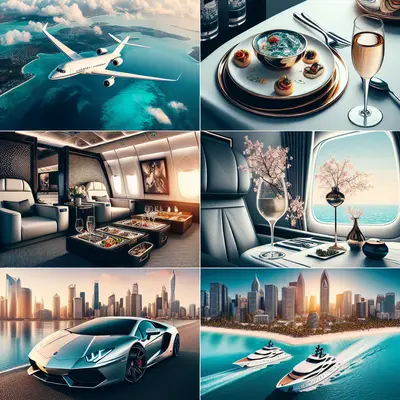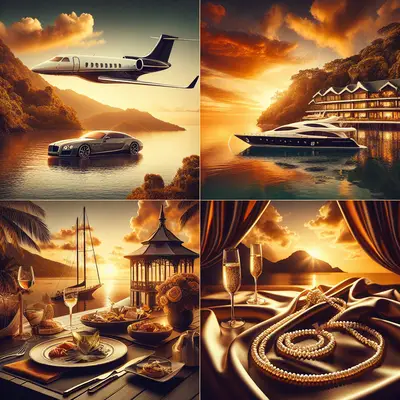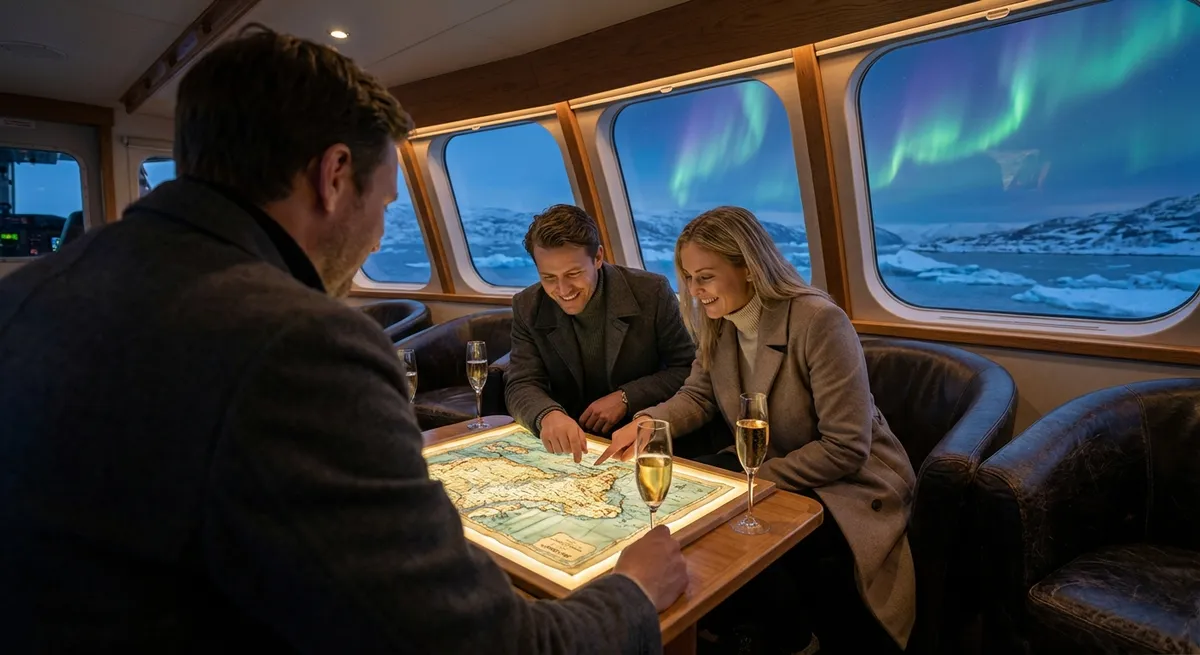
Luxury travel is no longer defined by thread counts, champagne on arrival, or the square footage of a suite. Today’s most discerning travelers are mapping their journeys according to something far more nuanced: privacy, intention, curation, and the kind of access that never appears on an itinerary. The new luxury is less about being seen, and more about quietly orchestrating how a place reveals itself—on your terms, in your time.
This is the emerging latitude of privilege: a way of moving through the world that is subtle, intensely personal, and meticulously designed. Below, five exclusive insights shaping how the most sophisticated travelers are approaching their next escape.
1. The Rise of “Invisible Itineraries”
The most coveted journeys now are those whose structure you never feel.
Instead of pre-printed daily schedules, ultra-high-end travelers are gravitating toward “invisible itineraries”: frameworks so thoughtfully engineered that the day feels spontaneous, yet every detail is pre-resolved. A sunrise hike that somehow coincides with an empty trail. A gallery visit where the doors open early, and everyone else is still at breakfast. A yacht anchored not simply in a beautiful bay, but in the one where the wind, light, and sound create a specific mood you didn’t know you wanted.
Behind this apparent effortlessness is a quiet choreography: on-the-ground fixers, local cultural advisors, and concierges who know the unofficial rhythms of a city or island as intimately as its geography. The result is freedom without friction—the sense that the day is unfolding naturally, while the scaffolding of logistics remains completely invisible.
For the luxury traveler, the question has shifted from “What will I do?” to “What can be lifted from my shoulders so I can truly notice where I am?”
2. Hyper-Local Luxury Without the Performance
“Local” has been a marketing word for a decade. But true hyper-local luxury has become something very different: less theatrical, more quietly precise.
Instead of staged “authentic” experiences, the most refined journeys focus on unbranded immersion. A winemaker who opens an unmarked side door to taste from barrels not yet released. A chef who cooks a single off-menu course at the pass that references ingredients from your previous destinations. A private textile atelier visit in a courtyard that doesn’t exist on Google Maps.
What defines this new layer of luxury is not simply exclusivity, but discretion. The connection to place is genuine, but it never becomes a performance for social media. The most meaningful stories often cannot be photographed—either out of respect for the people involved, or because the moment is too ephemeral to capture well.
For travelers accustomed to polished global sameness, these encounters become anchors: subtle, distinct, and often remembered longer than any skyline or suite.
3. Time as the Ultimate Luxury Currency
The contemporary luxury traveler is not merely buying flights and suites—they are purchasing the right to experience time differently.
This appears in two divergent but equally intentional ways. One is compressive: reducing all possible friction between key moments. Private aviation that turns multi-leg ordeals into a seamless arc of movement. VIP airport services that erase queues and corridors. Seamless transfers where your luggage appears in your villa as if by thought, not by logistics.
The other is expansive: actively building “unassigned” hours into the architecture of a trip. Days designed with only one fixed point—a lunch, a tasting, a sail—with everything else left purposefully unbooked. Spaces where boredom never arrives, because your environment has been so carefully chosen that even unscripted time feels dense with possibility.
At the uppermost tier of travel, the real question is no longer “How far can I go?” but “How do I want my time to feel while I’m there?” The most sophisticated itineraries place equal value on what you do and on what you are allowed not to do.
4. Multi-Sensory Design as a Signature of Place
The next chapter of luxury is being written not in marble and metal, but in the sensory language of each destination.
In the past, “high-end” often meant a global aesthetic: similar finishes, familiar layouts, a recognizable palette of stone, glass, and polished wood. Today, the truly elevated properties and experiences are distinguished by a multi-sensory identity that could exist nowhere else. The acoustics of a coastal suite tuned so you hear the sea but not the street. A custom scent in a city penthouse that references native botanicals from the surrounding region. Lighting that tracks the sun’s natural arc, coaxing you gently across time zones instead of jolting you.
For the frequent flyer who moves between continents in a single week, such details are not indulgences; they are stabilizing. The strategic use of circadian lighting, soundscaping, and material textures can soften jet lag, improve sleep quality, and deepen your perception of place, turning a trip from a series of locations into a coherent, embodied experience.
In this realm, design is no longer a backdrop—it is a form of hospitality in itself.
5. The Quiet Integration of Sustainability and Stewardship
The most discerning luxury travelers no longer separate their comfort from their conscience. They expect both to be honored simultaneously—discreetly, without moralizing or compromise.
What distinguishes elevated sustainable travel now is sophistication rather than spectacle. Not a plaque in the lobby announcing green credentials, but transparent sourcing of ingredients, minimized waste in your suite, intelligent building systems that you never see, and partnerships with local conservation projects folded seamlessly into your stay. Your yacht is powered by cleaner technology. Your lodge funds ecosystem preservation instead of simply existing within it. Your private expedition is guided by scientists as often as by traditional guides.
There is also a subtler layer: the ethics of access. Highly curated experiences that respect cultural boundaries, ensure local communities are genuinely benefiting, and avoid transforming fragile places into stages. For the truly premium traveler, the absence of recklessness—overtourism, cultural exploitation, environmental disregard—is part of what makes a journey feel refined.
In this new landscape, the most privileged itineraries are often the least extractive. Luxury becomes not only what you experience, but what you choose not to damage along the way.
Conclusion
Luxury travel is evolving from a language of visible abundance to one of invisible intention. The focus has shifted from accumulation—of amenities, of checklists, of destinations—to calibration: of time, access, sensory experience, and ethical footprint.
For those attuned to these refinements, the world opens in a different way. Journeys are no longer judged by how dramatic they appear from the outside, but by how precisely they fit the inner life of the traveler. That is the new cartography of privilege: routes drawn not merely across maps, but across moments, moods, and meanings that linger long after the luggage is unpacked.
Sources
- [Virtuoso: 2024 Luxe Report](https://www.virtuoso.com/travel/articles/virtuoso-2024-luxe-report) - Industry insights into evolving luxury traveler preferences and emerging trends
- [American Express Travel 2023 Global Travel Trends Report](https://www.americanexpress.com/en-us/travel/discover/get-inspired/global-travel-trends/) - Data on premium travelers’ expectations around personalization, sustainability, and experience design
- [Condé Nast Traveler – The Future of Luxury Travel](https://www.cntraveler.com/story/the-future-of-luxury-travel) - Editorial perspective on how luxury is shifting toward experience, privacy, and authenticity
- [Skift Research: The Rise of Conscious Luxury Travel](https://research.skift.com/report/the-rise-of-conscious-luxury-travel/) - Analysis of sustainability, ethics, and high-end travel behavior
- [Harvard Business Review – The New Science of Customer Emotions](https://hbr.org/2015/11/the-new-science-of-customer-emotions) - Explores how emotional drivers shape premium consumer choices, relevant to designing elevated travel experiences
Key Takeaway
The most important thing to remember from this article is that this information can change how you think about Luxury Travel.