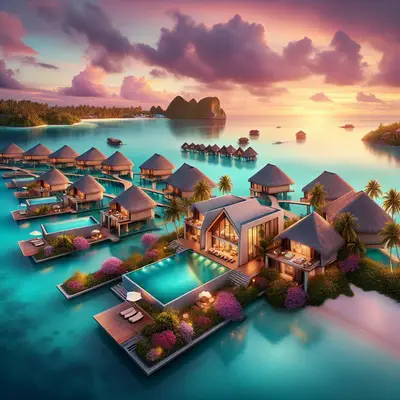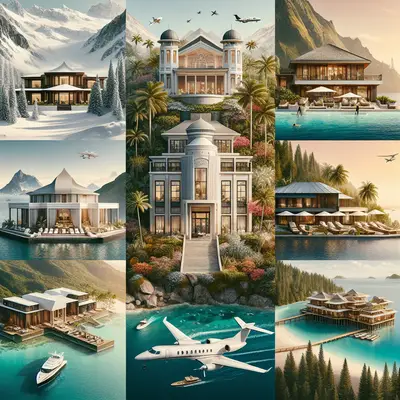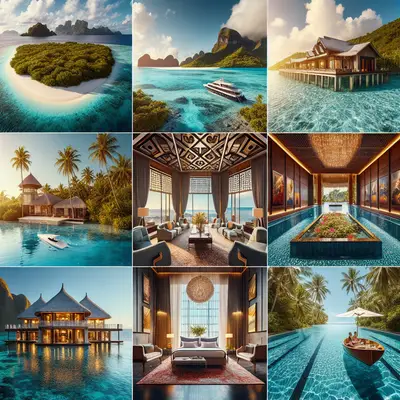
For the true luxury traveler, an exclusive resort is no longer defined by thread count, floor-to-ceiling glass, or the size of the infinity pool. It is measured in choreography: how seamlessly a place anticipates your needs, protects your time, and edits out anything that feels like effort. At this level, experiences are not booked—they are composed. This is the quiet latitude of privilege: the freedom to move through the world with everything important within reach, and everything irrelevant gently kept at a distance.
The Private Perimeter: How Top Resorts Engineer True Seclusion
Elite resorts are increasingly designed around a refined perimeter: the invisible line that keeps the outside world out and your privacy intact, without ever feeling confined. This is not about remoteness for its own sake, but about controlled access—private roadways, discreet arrivals, and guest-only zones that minimize chance encounters and maximize ease.
Architecture supports this perimeter in subtle ways: villas angled to avoid direct sightlines, landscaped buffers that absorb sound, and circulation paths that separate staff movement from guest flow. Helicopter or seaplane transfers not only add drama to arrival, but also tighten the resort’s “bubble,” limiting casual visitors and preserving an almost club-like atmosphere.
Elite properties also design their digital perimeter with equal care. Guest information is handled with near-boutique-level discretion: private check-in in-suite, pre-arrival preference capture, and secure communication channels that reduce the need for front-desk interactions. The effect is a kind of spatial and social insulation—your world, curated precisely, with nothing extraneous leaking in.
Orchestrated Stillness: Designing Time Instead of Activities
The most exclusive resorts are no longer selling “things to do”; they are designing time itself. The real luxury is not a schedule. It is the absence of one. Poolside service is quietly paced to your rhythm, not the other way around: a second espresso appears when your first is half-finished, cold towels arrive just as the midday sun peaks, and turndown coincides with the moment you naturally step out for dinner.
This choreography extends into how days unfold. Rather than suggesting a stacked itinerary, top-tier concierges analyze your preferences—sleep patterns, energy levels, appetite—and build a gentle narrative arc for your stay. A late-morning yacht departure instead of an early call time, a spa ritual after a long-haul flight that resets your internal clock, a sunset tasting that replaces the traditional cocktail hour.
Crucially, this is done without visible effort. Staff teams use internal communication systems and guest profiles so that you rarely need to repeat a preference twice. The outcome is that your hours feel longer, your days less cluttered, and your stay somehow expansive, even if brief. You leave with the sense that nothing was rushed, and nothing was wasted.
Bespoke Beyond the Obvious: Personalization That Feels Intuitive, Not Performed
Basic personalization—name recognition, favorite drink, pillow choice—is the starting line, not the finish. At elite resorts, customization is elevated into something almost intuitive. Your villa terrace might be set for alfresco breakfast if you consistently choose outdoor tables; your fitness gear could be pre-stocked in your size, based on pre-arrival information; your in-room minibar is edited to align with your actual habits, not generic assumptions.
The most refined personalization focuses on subtle friction points. If you fly frequently, staff may align housekeeping with your calls home, ensuring privacy during important conversations. If you’re traveling with children, the resort may adjust dining pacing so younger guests are served first, with activities quietly arranged when attention spans wane. For wellness-focused travelers, menus may arrive with low-sugar or plant-forward suggestions highlighted discreetly, rather than offered as a separate, performative “healthy” menu.
The true test: personalization that feels discovered, not staged. You notice that the music in your villa mirrors the tempo of the playlists you listened to en route, or that the lighting presets match what you gravitate toward in the evening. It feels as if the resort understands you without ever making a spectacle of that understanding.
Culinary Domains: When the Resort Becomes a Private Dining Landscape
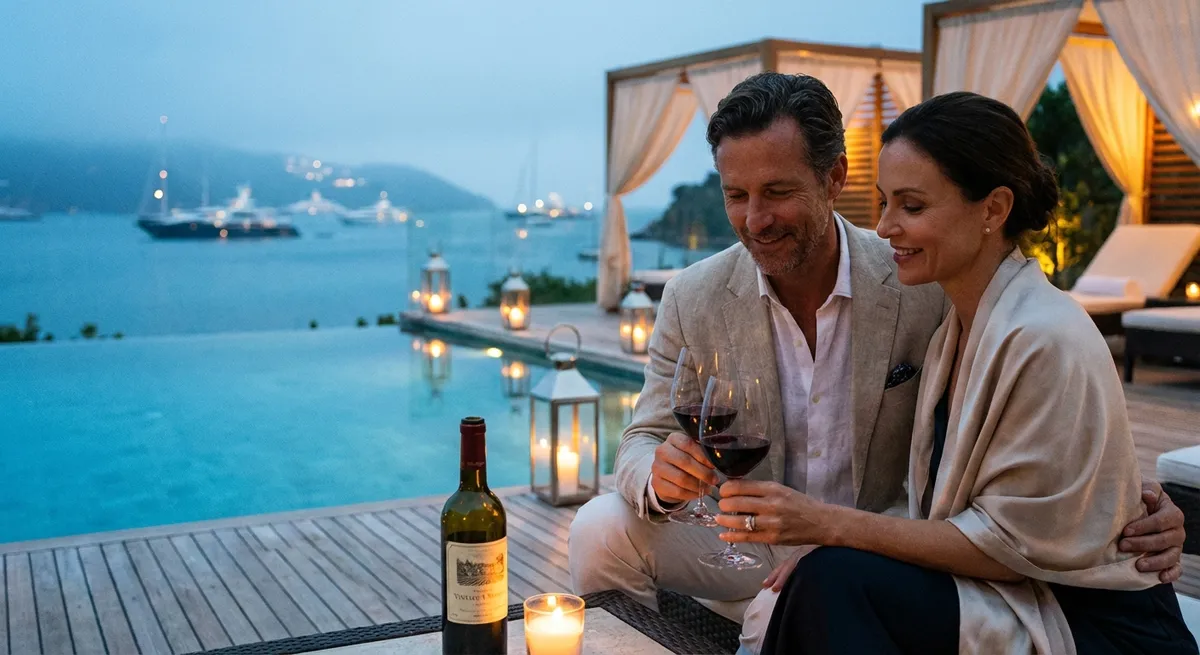
In the realm of exclusive resorts, dining is no longer confined to restaurants; the entire property becomes a potential table. The most sophisticated experiences blur the line between venue and menu—beachfront fire pits turning into tasting counters, jetty ends transforming into single-table settings, a chef’s garden doubling as a candlelit dining room at dusk.
Menus at this level do not simply showcase local ingredients; they interpret them at your pace and comfort level. For some, that may mean a chef-led exploration of rare regional produce; for others, it might be familiar dishes elevated with precise sourcing and technique. Dietary needs are woven in from the start, not treated as constraints but as creative prompts. Your preferred style of dining—progressive tasting, family-style, grazing—guides the structure of each meal more than rigid courses.
The real privilege lies in access. Access to off-menu dishes that become “your” staples during the stay. Access to producers—fishermen, winemakers, foragers—through intimate experiences that feel like introductions, not tours. And access to time itself: lingering without the subtle pressure of table turnover, knowing that, for this evening, the resort’s culinary infrastructure has been quietly calibrated around you.
Expanded Footprints: Resorts as Gateways to Private Worlds
The new benchmark of exclusivity extends beyond the resort’s physical boundaries. The most coveted properties function as gateways to entire private worlds—archipelagos, protected marine reserves, or vast landscapes where access is tightly controlled. Instead of simply facing the ocean, you might have entry to a private lagoon system, hidden coves only reachable by the resort’s own vessels, or helicopter-access-only viewpoints.
These expanded footprints unlock experiences that would be logistically complex—or entirely impossible—to coordinate independently. Think sunrise access to usually restricted archaeological sites, after-hours entry to cultural institutions, or conservation-led wildlife encounters capped at a handful of guests per season. The resort’s value lies in its relationships: with local authorities, scientists, artisans, and communities.
For the traveler, this translates into ease and authenticity. No online bookings, no permits to chase, no questionable operators. Instead, each off-property experience feels as meticulously composed as your in-villa arrival: transfers timed to light and tides, guides selected for both expertise and discretion, and a seamless return to your base where the next chapter is already quietly prepared.
Conclusion
At the highest tier, an exclusive resort is not defined by spectacle but by precision. Privacy is engineered, not improvised. Time is shaped, not scheduled. Personalization is felt, not advertised. Dining escapes the confines of walls, and the property itself becomes a passport to worlds most travelers never see.
For those who move frequently through the global network of premium addresses, these five dimensions—perimeter, time, personalization, culinary landscape, and extended footprint—form the new criteria of discernment. The true question is no longer, “How beautiful is the resort?” but rather, “How intelligently has it arranged the world around me?”
Sources
- Virtuoso – 2024 Luxury Travel Trends - Industry insight into evolving expectations of high-net-worth travelers and what defines luxury today
- Forbes Travel Guide – What Makes a Five-Star Hotel - Outlines service and design standards used to evaluate top-tier hospitality
- Condé Nast Traveler – The Future of Luxury Travel - Explores shifts toward personalization, privacy, and experiential depth in luxury stays
- Aman – Brand Philosophy - Illustrates how a leading ultra-luxury resort brand conceptualizes seclusion, design, and guest experience
- World Tourism Organization (UNWTO) – Global Report on Luxury Tourism - Research-based overview of luxury tourism trends, motivations, and market evolution
Key Takeaway
The most important thing to remember from this article is that this information can change how you think about Exclusive Resorts.