There is a quiet evolution unfolding in the world of high-end travel. The most coveted escapes are no longer defined by marble lobbies and ostentatious suites, but by the rare precision with which they anticipate who you are, how you move through the world, and what you would never think to request. In this new realm of bespoke retreats, “exclusive” is not about exclusion; it is about meticulous calibration—designing environments that feel less like a stay and more like a seamless extension of your private life.
Below, five exclusive insights that are quietly reshaping how discerning travelers approach resorts—and how the most forward-thinking properties are responding.
1. From Room Category to Personal Cartography
Traditional luxury organizes guests by room type. Contemporary exclusive resorts map stays around the individual instead.
Rather than beginning with inventory—suites, villas, or residences—leading properties increasingly start with a conversation. Not a perfunctory preference sheet, but an in-depth profile: daily rituals, sleep habits, dietary nuances, preferred light levels, even the way you like to work when you’re technically “off.” For returning guests, this becomes a living dossier, updated with every stay.
The result is a kind of personal cartography. The most adept resorts marry this data with property intelligence—microclimate patterns, traffic flows, sun angles, and soundscapes—to place you precisely where you will feel most at ease. A family with young children may be oriented near shaded pools and quiet early-dining venues; a couple seeking discretion may be routed to villas with concealed pathways and late-afternoon light.
In the most elevated expressions, this extends beyond accommodation. Your arrival timing is synchronized with staff rotations and kitchen rhythms to avoid peak movement. Housekeeping schedules trace your natural routines, not the resort’s operational grid. The underlying intention: to replace the sense of “checking in” with the feeling that the property has been quietly configured around you.
2. The New Signature: Orchestrated Stillness
For years, luxury resorts competed on spectacle—larger pools, grander lobbies, ever more elaborate amenities. Today’s connoisseur traveler is looking instead for something more elusive: curated stillness.
The finest properties now treat silence, space, and time as their most valuable amenities. This does not mean emptiness. It means carefully edited environments where every sound, scent, and visual line has been considered for its impact on your nervous system. Landscape design is used to disperse crowds, break sightlines, and create pockets of interim calm between active spaces.
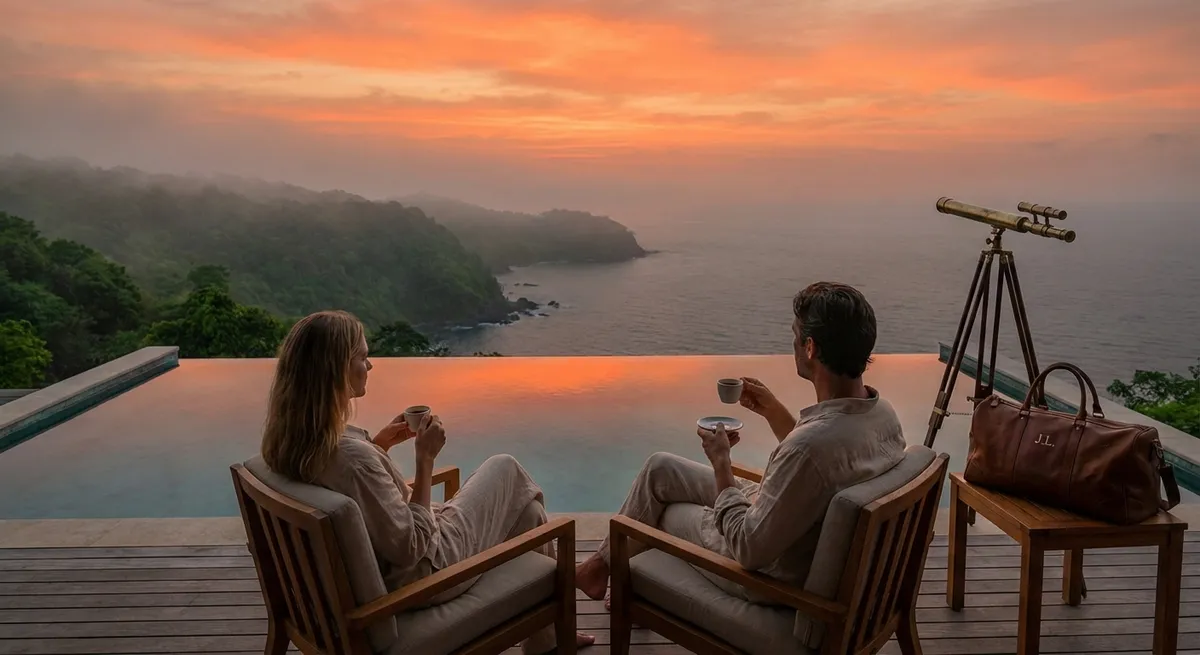
You may notice, for example, that oceanfront loungers are subtly staggered to ensure your horizon remains uninterrupted. Pathways are routed to avoid service back-of-house crossings, sparing you from even a hint of operational noise. Lighting is tuned to transition almost imperceptibly, guiding your circadian rhythm instead of fighting it.
This orchestration of stillness is particularly evident in spa and wellness areas. The leading resorts integrate wellness into the architectural logic of the property—spa suites tucked along prevailing breezes, treatment rooms insulated from structural vibration, relaxation areas framed for natural soundscapes instead of background music. For the traveler accustomed to perpetual motion, this kind of deliberate quiet can feel more indulgent than any visible luxury.
3. Private Access as an Art Form, Not a Perk
The word “access” is ubiquitous in luxury marketing, but at the highest tier, it becomes more than a list of benefits. It becomes a discreet art form.
The most sophisticated resorts are redefining access as a seamless extension of your identity and network, rather than a menu of VIP entitlements. Private villa stays may be paired with entrée to invite-only art previews, off-hours museum viewings, or intimate chef’s table experiences normally reserved for local patrons. The design is intentional: you are not positioned as a tourist with privileges, but as a temporary insider.
Crucially, this sort of access is never broadcast. The experience unfolds as though it were part of the natural landscape of your stay. A sommelier introduces you to a nearby vintner whose allocation is waitlisted for years; a concierge arranges sunrise access to a heritage site before public opening hours, with a cultural expert whose primary role is academic, not hospitality.
The difference is subtle but significant. Transactional perks can be booked by anyone with the right card. This higher order of access is the product of long-cultivated relationships, cultural sensitivity, and an understanding that the most memorable experiences are often the most understated.
4. Culinary Ecosystems Beyond the Plate
Gastronomy has long been a differentiator for top-tier resorts, but today’s elite traveler is looking beyond the plate to the ecosystem that produced it. Provenance, technique, and narrative matter—but so does how quietly and intelligently the entire culinary program fits into the larger journey.
In leading properties, the food philosophy is embedded, not appended. Menus are no longer simply seasonal; they are hyper-contextual. Breakfast offerings may shift slightly based on the day’s activities—lighter options before a sailing excursion, heartier regional fare on a day you’re likely to stay close to the property. Room service evolves from a static booklet into a dynamic, time-sensitive experience: cooling dishes as the afternoon heat peaks, comforting broths and tonics aligned with your body clock after long-haul travel.
Behind the scenes, tight integration with local producers not only ensures quality but aligns with a rising expectation of traceability and environmental responsibility. Guests may be invited to visit a nearby organic farm not as a staged “experience,” but as a quiet, optional interlude where you see the real mechanisms of the resort’s supply chain.
The most refined expressions are often the least theatrical: a pastry chef who adapts your morning basket mid-stay after observing what you leave untouched, or a bar team who quietly remembers that your preferred nightcap should arrive with a glass of still water and something savory, not sweet. This is culinary luxury as a living dialogue, not a fixed script.
5. Sustainability as a Seamless, Invisible Standard
The new generation of luxury travelers expects sustainability, but not at the expense of comfort or discretion. For them, the most impressive environmental efforts are those that do not demand performative sacrifice.
The most advanced exclusive resorts have moved beyond visible gestures—single-use plastic elimination, towel reuse placards—into deep, structural commitments. Renewable energy integration, on-site water treatment, regenerative landscaping, and careful building orientation are engineered in from the outset. The guest’s experience remains uncompromised, yet the property’s footprint is significantly reduced.
What distinguishes leading properties is their ability to make this rigor feel effortless. Air quality is monitored and optimized without obtrusive devices. Intelligent climate control systems maintain comfort while minimizing energy use. Native plantings create a sense of place while reducing irrigation demands. Local cultural partnerships ensure that development supports, rather than displaces, surrounding communities.
For travelers who wish to engage more deeply, the information is available—green building certifications, impact reports, transparent sourcing. But for those who simply want to travel well with a clear conscience, the sustainability is designed to be quietly omnipresent: felt in the quality of the environment, not shouted in the marketing copy.
Conclusion
Exclusive resorts are entering a more nuanced era—one where subtlety is the new status, and where the most coveted luxuries are often the least visible. The future of high-end hospitality belongs to properties that understand how to orchestrate stillness, personalize with precision, extend meaningful access, cultivate complete culinary ecosystems, and embed sustainability so deeply that it becomes part of the property’s invisible infrastructure.
For the traveler who values refinement over display, these emerging codes of exclusivity offer something genuinely rare: the sense that the world has been momentarily—and effortlessly—aligned around the way you wish to live.
Sources
- [World Travel & Tourism Council – Luxury Travel Post-COVID-19 Report](https://wttc.org/research/insights/luxury-travel) – Analysis of evolving preferences among luxury travelers, including personalization and sustainability trends.
- [Virtuoso – 2023–24 Luxe Report](https://www.virtuoso.com/travel/articles/luxe-report-2023) – Insights from a global luxury travel network on what high-end clients are currently seeking in exclusive stays.
- [Forbes Travel Guide – What Defines a Five-Star Hotel](https://www.forbestravelguide.com/about/ratings) – Criteria and standards that shape top-tier hospitality, including service nuance and guest personalization.
- [Condé Nast Traveler – The Future of Sustainable Luxury Travel](https://www.cntraveler.com/story/the-future-of-sustainable-luxury-travel) – Exploration of how sustainability is being integrated into luxury properties without compromising comfort.
- [International WELL Building Institute – WELL Building Standard](https://www.wellcertified.com/certification/v2) – Framework guiding health, wellness, and environmental design in buildings, increasingly relevant to high-end resort development.
Key Takeaway
The most important thing to remember from this article is that this information can change how you think about Exclusive Resorts.