Luxury travelers no longer chase simple opulence; they curate atmospheres where every detail has been considered in advance, yet nothing feels choreographed. In the world of exclusive resorts, the true privilege is not merely access, but alignment—between place, ritual, and the kind of privacy that feels expansive rather than hidden. For those who live comfortably above the ordinary, the difference is in the quiet decisions no brochure ever lists.
Below, we explore five exclusive insights that define the new benchmark of resort sophistication—details discernible only when you’ve experienced the very top tier of hospitality.
1. The Architecture of Privacy: Designing Space Around Silence
At the highest level, privacy is not a locked door; it is a spatial philosophy.
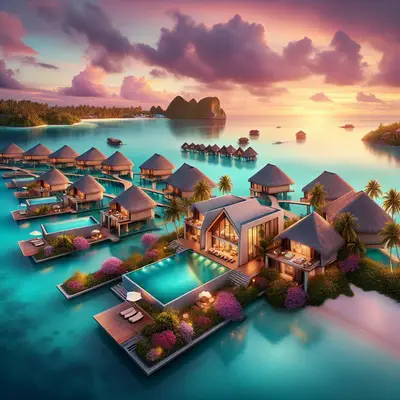
The most elevated resorts operate on an invisible geometry of distance, vantage point, and sound. Villas are angled to capture a horizon line without revealing a neighboring terrace. Pathways bend subtly, preventing direct sightlines into residences. Landscaping is not decoration; it is choreography—dense where discretion is needed, spare where vistas are meant to open like a curtain.
Acoustic privacy is curated with equal care. Materials are chosen not only for aesthetic warmth but for their sound absorption. Stone walkways give way to timber or soft composite near suites, ensuring that even a late-night return is silent. Service routes are mapped behind the scenes so that guests rarely encounter carts, laundry, or staff crossings, preserving the illusion that the property exists solely for them.
For seasoned luxury travelers, this is the first tell of a truly elite property: the feeling that the resort is at full occupancy, yet it feels as if you have it entirely to yourself.
2. Anticipatory Hospitality: When Preference Becomes Architecture
At exceptional resorts, personalization is not a service layer added on top of the stay; it is embedded in the design and operations from the outset.
This begins long before arrival. Discreet pre-stay questionnaires, quiet conversations with private travel advisors, and data from previous visits are woven into an evolving profile. The resort is not merely reactive to your preferences; it is predictive. Favorite varietals appear in the wine fridge, the in-room bar is edited to your actual habits, and the scent profile of your suite aligns with your preferred notes rather than a generic “signature” fragrance.
Anticipatory hospitality becomes architectural when it shapes physical space and flow. A guest whose schedule tends toward late evenings may find blackout curtains already set and morning housekeeping subtly delayed. A traveler who exercises at dawn might discover a curated in-suite setup—yoga mat, resistance bands, cold-pressed juice—pre-arranged before the first light hits the balcony.
The most discreet touch: preferences are updated in real time. If you leave a certain canapé uneaten at turn-down, you won’t see it again. If you linger over a particular tea at breakfast, it quietly appears in your suite that afternoon. The resort is learning, but never visibly taking notes.
3. Curated Seclusion: Experiences That Exist Outside the Market
What separates truly exclusive resorts from simply expensive ones is not the quality of their amenities, but the singularity of their access.
Curated seclusion is the ability to experience a destination in ways that are not commercially available to the broader market. This might mean a sunrise visit to a heritage site before official opening hours, facilitated through long-nurtured relationships rather than generic “VIP access.” It could manifest as a private tasting in a vineyard area where the wines are not for export, guided by a winemaker who rarely appears in public-facing experiences.
On coastal properties, curated seclusion might be a mooring in a cove that doesn’t appear on mass charter itineraries, secured via local knowledge and long-standing maritime partnerships. In urban-adjacent resorts, it may involve access to private collections, atelier visits, or behind-the-scenes cultural experiences reserved for a single guest or family at a time.
What matters to the sophisticated traveler is not performative exclusivity, but authenticity that is carefully protected. The best resorts do not “own” these experiences; they steward them, ensuring scale never compromises intimacy.
4. Invisible Infrastructure: The Luxury of Frictionless Flow
If you notice the mechanics of your stay, the illusion has already cracked.
At the highest tier, luxury is expressed through a near-total absence of friction. This rests on an invisible infrastructure that aligns technology, logistics, and human discretion. Fast-track immigration assistance, tarmac transfers, and well-timed ground transportation ensure the first contact with the resort feels less like an arrival and more like a continuation of your own private space.
On property, this frictionless flow extends to how the resort breathes around you. Reservations become suggestions rather than rigid bookings—your spontaneous decision to linger at the bar or extend a spa treatment is accommodated without visible strain. Housekeeping appears only when you have naturally vacated the room; if your rhythm shifts, so does theirs. You never sign a bill poolside unless you insist; your preferences and permissions are already understood.
Technology here is present but never obtrusive. Discreet wearables or room-based systems can manage climate, lighting, and requests without intrusive devices cluttering surfaces. Guest recognition occurs without public greetings that compromise privacy. The true luxury is that you are never asked to repeat a request, a preference, or your room number.
Behind this ease lies an intricate operational engine—redundant staffing models, precise logistics, and intelligent systems—but it remains politely out of view.
5. Time-Rich Rituals: The New Currency of Indulgence
For those accustomed to premium environments, the rarest indulgence is not material; it is unfragmented time.
Exclusive resorts at the top of their game understand that structured itineraries can feel like another version of an over-managed calendar. In response, they curate rituals rather than schedules. A late-afternoon tea service that appears on your terrace without a prescribed time. A daily “golden hour” ritual—perhaps a live acoustic set on a bluff or a silent sail as the sun dissolves into the horizon—anchoring the day without imposing on it.
Wellness is reframed from prescriptive programs to deeply personal, time-rich practices. Instead of a checklist of treatments, a dedicated practitioner may design a fluid, evolving ritual across your stay: breathwork at dawn one day, restorative bodywork the next, a tailored sleep protocol woven through them all. The emphasis shifts from “doing more” to “feeling less rushed.”
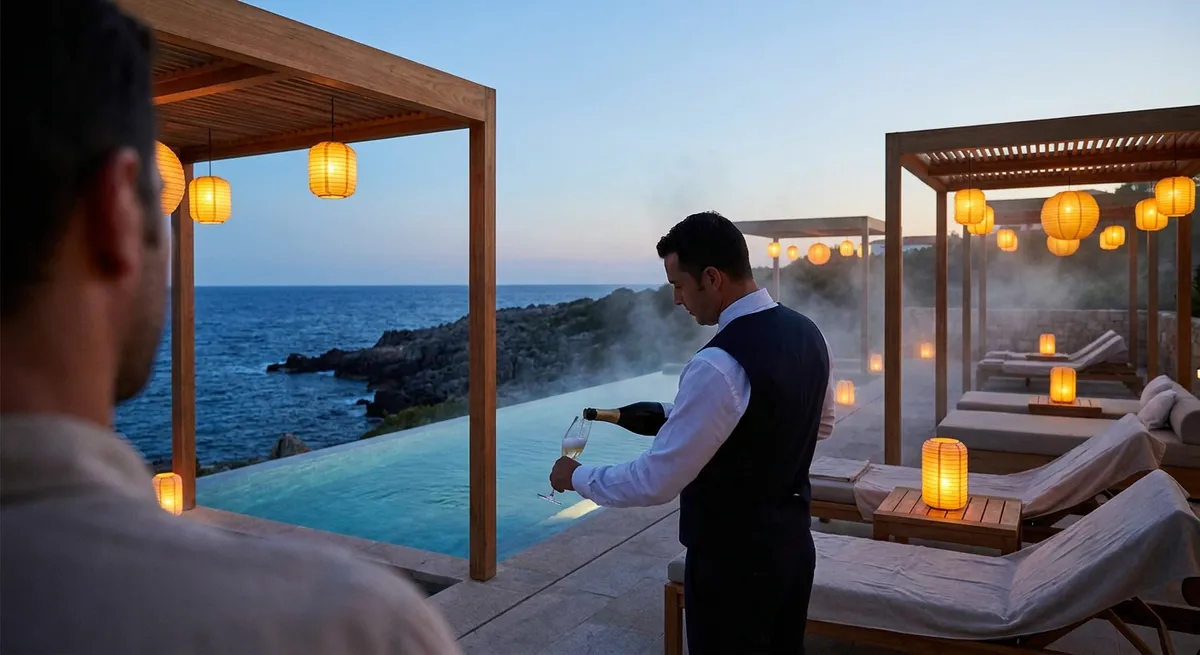
Dining, too, adopts a temporal generosity. The most elevated properties are unhurried in service, never telegraphing the need to turn a table. Multi-course experiences unfold at your pace, not the kitchen’s. If you choose to pause between courses for a call, a swim, or simply another sunset, the entire team flexes around your rhythm.
In this realm, time is not simply spent; it is considered, expanded, and treated as the ultimate premium amenity.
Conclusion
In the rarefied world of exclusive resorts, luxury is less about spectacle and more about calibration. Privacy is engineered but never oppressive; personalization is intuitive rather than intrusive; experiences are singular without feeling staged. The infrastructure that supports your stay hums in silence, leaving you alone with the most valuable asset you carry: your attention.
For the discerning traveler, the true test of an exclusive resort is simple: you leave feeling not that you were pampered, but that your way of living—your pace, your preferences, your definition of ease—was quietly, flawlessly honored. Everything else is decoration.
Sources
- Skift Research: The State of Luxury Travel - Industry analysis on evolving expectations and behaviors among high-end travelers
- Condé Nast Traveler – What Luxury Travelers Want Now - Insight into current trends in personalization, privacy, and exclusivity in luxury hospitality
- McKinsey & Company – The Future of Luxury: Bouncing Back from COVID-19 - Research on shifting luxury consumer values, including experience and time as key currencies
- Forbes – How Ultra-Luxury Hotels Are Redefining Privacy - Examination of privacy and design strategies in top-tier hotels and resorts
- Harvard Business Review – Understanding Customer Experience - Foundational perspective on anticipatory service and frictionless experience design
Key Takeaway
The most important thing to remember from this article is that this information can change how you think about Exclusive Resorts.