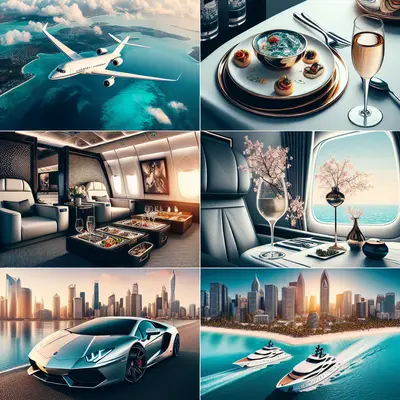
Luxury travel has shifted from glittering surfaces to cultivated substance. Today’s most discerning travelers are less interested in being seen and more invested in being transformed—by a place, a craft, a conversation, or a single, perfectly executed moment. The new benchmark is not price, but precision: how precisely a journey reflects who you are, how you move through the world, and what you choose to remember.
This is a portrait of luxury travel defined by quiet mastery rather than spectacle—and five exclusive insights that matter to those who refuse the generic.
The New Currency: Time Curated, Not Merely Saved
For years, luxury travel was sold as an elaborate exercise in saving time: priority lanes, early boarding, private transfers. Today, the more nuanced traveler is not simply buying hours back; they are commissioning how those hours feel.
This curatorial approach begins before takeoff. Instead of defaulting to the “best available” flight, they choose schedules that align with their natural rhythms—arriving when a city is just waking, not already overexposed by midday. Long-haul flights become deliberate intermissions: cabin environments chosen for air quality and circadian lighting, seats positioned for privacy, menus designed to align with how they wish to feel on landing—light, clear, and composed.
On the ground, transfers are no longer an afterthought. A well-appointed car with a driver who knows when to speak and when to let silence work is more valuable than a faster but chaotic ride. Time is treated as a sequence of atmospheres rather than gaps between events. The ultimate luxury here is continuity: never feeling abruptly pulled from one world into another, but gently escorted between them.
Insight 1: The Art of Invisible Orchestration
The most exclusive journeys are distinguished by what you never have to ask for. This is invisible orchestration: the subtle alignment of people, places, and details around you, so that everything appears to “just happen” at exactly the right moment.
Consider the difference between service that is efficient and service that is anticipatory. Efficient service brings you what you request, beautifully. Anticipatory service remembers that on your last stay you preferred your espresso after a run, that you avoid overly scented amenities, that you linger over local newspapers rather than international ones. In high-caliber properties, this intelligence is quietly shared among staff so the experience feels continuous, not fragmented by each interaction.
Invisible orchestration also extends beyond the hotel. It’s the restaurant that already knows your party’s preferences before you arrive, because your travel curator has communicated them in detail. It’s the museum visit where doors are unlocked a half-hour before opening, with a guide whose expertise is matched to your specific interests—Baroque architecture, not just “art history.” The most discerning travelers understand that the truest luxury is the absence of friction, engineered so delicately that it feels like luck rather than logistics.
Insight 2: Purposeful Itineraries Over Impressive Checklists
The conventional “grand tour” is losing its appeal among those who travel well. Instead of stringing together a series of famous locations, luxury itineraries are being built around a single, resonant purpose: to deepen a craft, explore a theme, or understand a region through a narrow but meaningful lens.
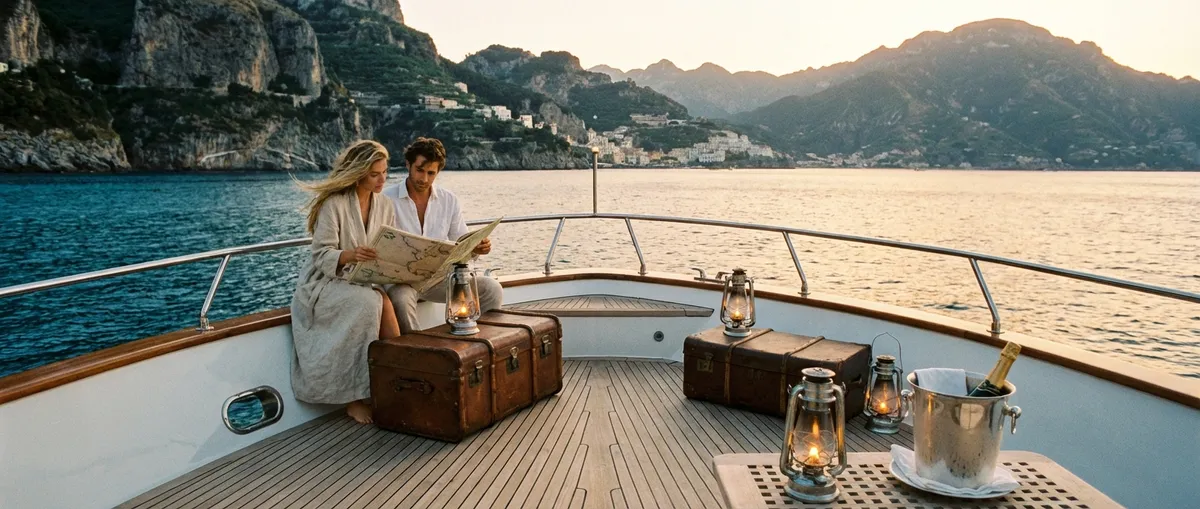
One traveler might structure an entire week in Japan around the idea of “precision” — from observing knife-making in Sakai to studying tea ceremony rituals in Kyoto and staying in a ryokan where the choreography of a kaiseki dinner becomes a living art form. Another might experience the Mediterranean through its coastal light, arranging private access to artist studios, remote coves reached by classic wooden boat, and sunset dinners where the timing of each course is synchronized with the sky.
This thematic approach has a subtle power: it turns memories into a coherent story rather than a scattered collage. It also gives your travel curator and on-the-ground partners a framework to say no—politely and firmly—to experiences that are merely impressive, in favor of those that are deeply aligned. The result is a journey that feels less like consumption and more like authorship.
Insight 3: Elevating Journeys Through Craft, Not Hype
The sophisticated traveler is increasingly drawn to places and people defined by mastery rather than marketing. A hotel’s Instagram presence is less persuasive than the provenance of its materials, the restraint of its design, and the depth of its local relationships.
This is where craft becomes a navigational tool. A stay in a high-altitude Andean lodge is elevated not simply by its views, but by the way its architecture respects the landscape: low-impact structures, local stone, textiles woven by nearby artisans whose work is properly credited and fairly compensated. A yacht charter is judged not just by its length and finish, but by the seamanship of its crew, the chef’s understanding of local produce, and the captain’s sensitivity to both environment and privacy.
Discerning guests increasingly ask questions that go beyond the usual: Who designed this property, and why? How does the hotel engage with its community outside of peak season? How are staff trained, developed, and retained? In the realm of ultra-premium travel, the answers to these questions often separate enduring houses of quality from fleeting trend-chasers.
Insight 4: Privacy as a Designed Experience, Not a Simple Absence
Privacy in luxury travel is no longer just about seclusion; it is about intentional control over access, visibility, and pace. The truly premium experience acknowledges that privacy is not binary, but highly contextual.
At one moment, you may want to feel folded entirely into a destination—anonymous in a neighborhood café, wandering a market without a guide in tow. Hours later, you may require controlled separation: a private entrance, a hidden terrace, or a reserved wing of a villa where the world cannot follow. Superior properties and operators recognize this fluidity and design environments that can expand or contract around you.
Digital privacy also matters. The rising elite traveler looks beyond passwords and room safes, inquiring how their data is stored, how facial recognition or biometric systems are used, whether in-room devices can be disabled. Operators who thoughtfully address these concerns, and who understand that many guests now live public lives but seek private interiors, are quietly redefining what true discretion means.
Insight 5: Sustainability as an Elegantly Integrated Standard
For the most astute travelers, sustainability is no longer a virtue signal—it is a baseline expectation. Yet what they seek is not moral grandstanding, but seamless integration: environmental and social responsibility embedded so gracefully into the experience that it enhances, rather than compromises, comfort.
In this sphere, the credible signals are specific and verifiable. A private island retreat that generates its own solar power, desalinates its water, and limits guest numbers not as a marketing tactic but as a carrying-capacity discipline. A safari lodge that co-owns conservation land with local communities, ensuring that revenue directly supports both wildlife and livelihoods. Fine-dining programs anchored in regenerative agriculture, where the sommelier’s narrative includes how vineyards are adapting to climate shifts rather than merely listing tasting notes.
The luxury lies in knowing your presence has been considered—not as damage to be minimized, but as a potential force for refinement and repair. When sustainability is executed at this level, it adds depth to the journey: you are not only inhabiting extraordinary places, but contributing, however quietly, to their continued excellence.
Conclusion
Luxury travel, at its most evolved, is less about escalation and more about calibration. It is the difference between more and better; between being everywhere and being precisely where—physically, mentally, and aesthetically—you are meant to be.
For those who travel with intent, the destination is only one dimension. Equally important are the invisible orchestrations, purposeful narratives, refined crafts, designed privacy, and integrated responsibility that frame each moment. These are the elements that turn a trip into a private vocabulary of experiences—understood fully only by those who were there, and remembered long after the boarding pass has disappeared.
Sources
- [UNWTO: Tourism in the 2030 Agenda](https://www.unwto.org/tourism-in-2030-agenda) - United Nations World Tourism Organization overview of how tourism is evolving, including sustainability and quality-of-experience trends
- [Virtuoso: 2024 Luxe Report](https://www.virtuoso.com/travel/articles/virtuoso-2024-luxe-report) - Insight into current preferences of high-net-worth travelers and emerging luxury travel patterns
- [Forbes Travel Guide: What Defines Luxury in Travel?](https://www.forbestravelguide.com/about/our-standards) - Details on the standards and service principles that shape luxury hotels, restaurants, and spas worldwide
- [Harvard Business Review: The New Science of Customer Emotions](https://hbr.org/2015/11/the-new-science-of-customer-emotions) - Explores how emotionally resonant, personalized experiences drive loyalty—highly relevant to luxury travel design
- [World Travel & Tourism Council: Environmental & Social Research](https://wttc.org/research/insights) - Data and insights on sustainability, community impact, and the future of responsible high-end travel
Key Takeaway
The most important thing to remember from this article is that this information can change how you think about Luxury Travel.