Luxury travel today is less about visible opulence and more about the quiet choreography of a life lived on one’s own terms. For the truly discerning, a journey is not a break from reality; it is a continuation of a carefully curated existence—translated into new geographies, cultures, and textures. The most privileged travelers are not simply moving through the world; they are editing it in real time.
What follows are five exclusive, often unspoken insights that shape how sophisticated travelers design their movements: not for show, but for seamlessness, discretion, and a richer command of experience.
The Private Framework: Curating a Personal Travel Governance
Those at the top end of the travel spectrum rarely “plan trips” in a conventional sense—they maintain a personal framework for how all movement happens. This is less an itinerary and more a governance model: preferred aircraft types, minimum standards for privacy, non-negotiable health protocols, and precise definitions of acceptable risk.
A private framework might specify which airlines or jet operators are trusted for certain corridors, which airports are considered “civilized” for arrivals, and which times of day one is willing to move. It can dictate everything from ground transfer standards (wheelbase length, tint, and driver briefing expectations) to the maximum number of touchpoints between curb and cabin.
This architecture of rules creates predictability that feels glamorous precisely because it is frictionless. The affluent traveler is not reacting to logistics; they are applying a personal operating system. Over time, this system evolves with new data—updated preferences based on weather patterns, airport renovations, geopolitical nuance, even personal wellness rhythms—so each journey becomes a refinement of the last.
Invisible Access: Mastering the Art of Quiet Gateways
At the premium end of travel, true luxury is not about being seen in coveted places—it is about entering them in ways others can’t. Invisible access, for the sophisticated traveler, means more than VIP lines and elite statuses; it encompasses private immigration channels, invitation-only airline services, and access to airport infrastructures that most passengers will never notice.
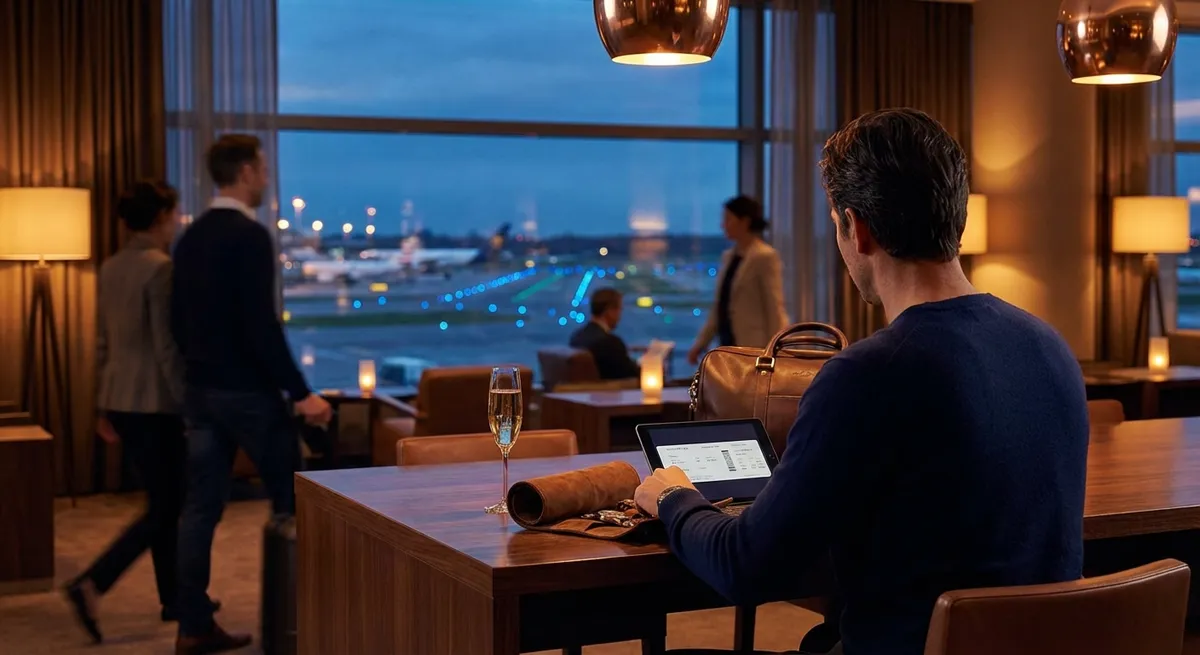
Many high-net-worth travelers quietly leverage private terminals, airport meet-and-assist services, and airline-operated invitation-only programs that handle everything from re-ticketing to security escorting, often out of public view. These services are not merely conveniences; they are strategic instruments to compress uncertainty and protect time, attention, and security.
In urban centers, invisible access extends to by-appointment-only boutiques, members’ floors within major hotels, and cultural institutions that open before or after official hours. The premium traveler understands that access is not a perk to flaunt but a tool to practice presence: the fewer distractions, queues, and interruptions, the more mental bandwidth remains for the experience itself.
Precision Companions: Building a Circle of Specialized Allies
Exceptional journeys are increasingly orchestrated not by a single agent, but by a constellation of specialists who operate like a private “travel board.” For the ultra-discerning traveler, this might include an aviation broker, a security advisor, a medical concierge, a personal art consultant, and a lifestyle curator—each responsible for a distinct dimension of the trip.
These specialists do more than arrange logistics; they interpret the traveler’s values and anticipate preferences before they are expressed. A security advisor might quietly adjust routes based on real-time intelligence. A medical concierge ensures access to top-tier clinics and telemedicine globally, reducing the anxiety of health contingencies. A lifestyle curator may coordinate gallery previews, private kitchen tastings, or intimate performances aligned with the traveler’s aesthetic sensibility.
The luxury lies in orchestration: these professionals operate behind the scenes, often interacting directly with one another rather than burdening the traveler with coordination. This network becomes a form of soft infrastructure—an invisible scaffolding that allows the traveler to maintain a high standard of living in any time zone.
Temporal Luxury: Designing Arrival, Not Just Departure
While most travelers obsess over departure times, premium travelers focus on the texture of arrival. The question is not “When do we land?” but “In what condition do we step into the next environment?” Time, for them, is not only measured in hours, but in quality of transition.
This might manifest as deliberately extending ground time instead of rushing to depart, allowing for proper rest, spa treatment, and mental decompression before a long-haul flight. Onboard, the focus is not merely on seat class but on circadian-aware lighting, meal timing aligned with destination time zones, and curated sleep routines that minimize physiological shock upon landing.
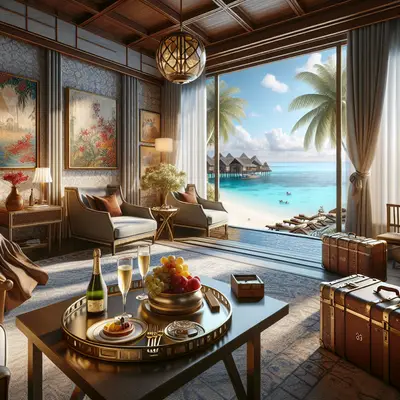
On arrival, a subtle choreography continues: pre-coordinated room temperature and scent profiles, wardrobe steaming completed before check-in, light, hydrating cuisine ready in-suite, and immediate access to wellness resources—massage, stretching, even IV therapy where legal and appropriate. The affluent traveler is often less interested in how fast they can get somewhere and more interested in how gracefully they can become present once they are there.
Cultural Fluency: Treating Global Movement as a Form of Literacy
Among the truly sophisticated, luxury travel is not a trophy hunt of destinations; it is an ongoing acquisition of cultural fluency. These travelers understand that access without understanding is vulgar. Their premium lifestyle extends beyond hardware—jets, suites, reservations—to the software of respect, curiosity, and nuance.
Cultural fluency might look like engaging local fixers and cultural interpreters, not just guides, to decode etiquette, power structures, and subtleties of communication. It means mastering basics of greeting and gratitude in local languages, understanding dress codes that signal respect rather than wealth, and recognizing when discretion is more elegant than documentation.
This sensibility also informs where they spend their capital. The refined traveler seeks out properties and experiences that demonstrate meaningful engagement with local communities—through fair employment, architectural sensitivity, and support of regional artisans. Luxury, in this context, is the ability to move through the world without leaving a trail of disruption, instead leaving behind investments in cultural continuity and preservation.
Conclusion
For the most discerning travelers, premium lifestyle in motion is not a collage of upgrades and status symbols. It is an intricate, evolving system—a combination of governance, access, alliances, temporal mastery, and cultural intelligence.
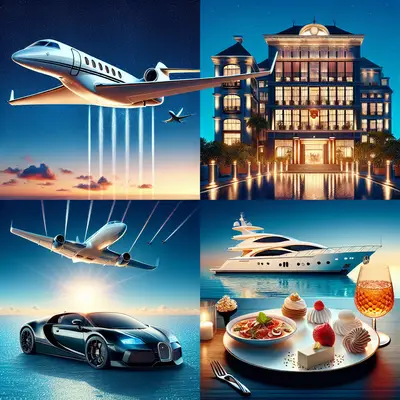
The private jet or penthouse suite may still be present, but they are no longer the story. The story is the invisible architecture that supports a life lived globally with precision and grace: arriving ready, every time, wherever the map unfurls next.
Sources
- [U.S. Department of State – Traveler Risk & Security Guidance](https://travel.state.gov/content/travel/en/international-travel.html) - Provides official guidance on safety, security, and risk considerations for international travelers
- [McKinsey & Company – The Future of Luxury: Bouncing Back](https://www.mckinsey.com/industries/retail/our-insights/the-future-of-luxury-bounces-back) - Explores evolving luxury consumer behaviors, including preferences for privacy, experience, and personalization
- [EY – How Luxury Travel is Changing](https://www.ey.com/en_gl/consumer-products-retail/how-luxury-travel-is-changing) - Analyzes trends in high-end travel, including experiential focus, health, and wellness dimensions
- [Harvard Business Review – The New Luxury Experience](https://hbr.org/2020/01/the-new-luxury-experience) - Discusses how affluent consumers increasingly value access, time, and personalization over visible status
- [IATA – Future of the Airline Industry 2035](https://www.iata.org/en/publications/store/future-airline-industry/) - Offers insight into the evolution of premium air travel, infrastructure, and passenger expectations
Key Takeaway
The most important thing to remember from this article is that this information can change how you think about Premium Lifestyle.