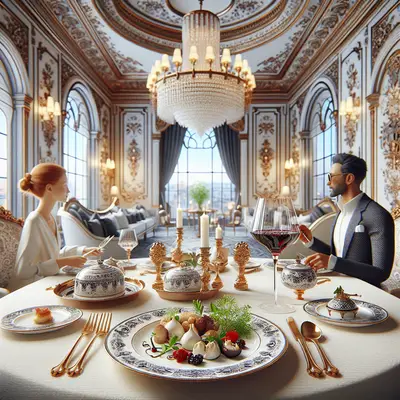
Fine dining has quietly slipped beyond the realm of “special occasion” and into something more nuanced: a discreet art form for those who travel not simply to arrive, but to savor. For the luxury traveler, the table is no longer a stage set for spectacle; it is a finely tuned instrument where time, privacy, and provenance are composed with the same care as a grand cru blend. What distinguishes an elevated experience today is not the obvious signal of luxury, but the subtle alignment of craft, intention, and restraint.
Below, five exclusive insights shape the way the most discerning travelers now approach fine dining around the world—each one a lens for recognizing, and quietly securing, the most exceptional experiences.
The Shift from Reservation to Relationship
For the serious gastronome, a restaurant isn’t a one-night encounter; it’s the beginning of a relationship. At the highest level, the most meaningful fine dining experiences are not booked—they are curated, often long before your plane lands.
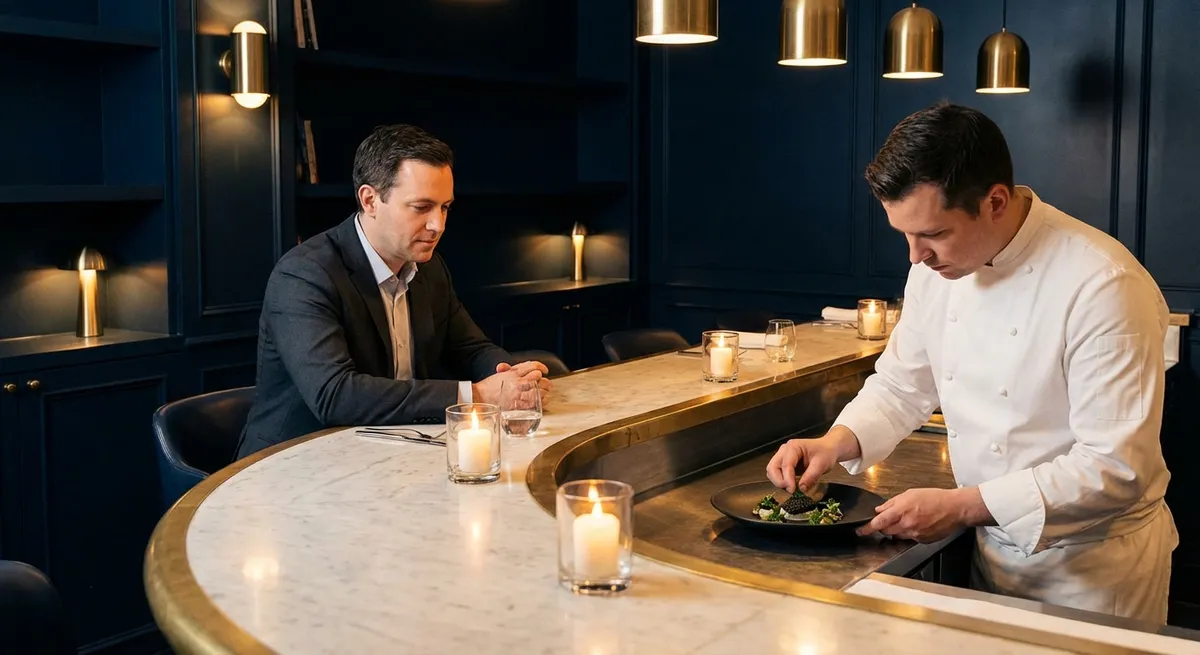
Concierges at top-tier hotels and private-jet services increasingly maintain personal rapport with chefs, sommeliers, and maîtres d’hôtel, allowing favored guests access to coveted time slots, off-menu dishes, and kitchen-adjacent tables where the choreography of service is visible but never intrusive. The guest profile shared in advance—dietary subtleties, preferred pacing, an inclination toward discovery over comfort—becomes the discreet briefing document behind a truly tailored evening.
Luxury travelers understand this and cultivate continuity. They return to the same properties or restaurant groups in different cities, letting familiarity work in their favor. Names are remembered, preferences are anticipated, and what begins as a reservation slowly matures into recognition. In a world where anyone can technically “book” a table, relationship capital is the true luxury currency.
Provenance Beyond the Plate
To the uninitiated, provenance is a line on a menu. To the refined traveler, it is a narrative thread that runs from field and sea all the way to the final pour of digestif. The most compelling fine dining experiences now offer not just exceptional ingredients but a traceable, ethical, and often hyper-local story behind them.
Luxury diners increasingly seek restaurants that operate more like micro-ecosystems: in-house bakeries and aging rooms, rooftop gardens, partnerships with single-origin cacao farms and regenerative vineyards. Knowing that the sea urchin was harvested at dawn from a specific inlet, or that the olive oil is from an estate the chef’s family has tended for generations, transforms a dish into a living geography of taste.
For the traveler, this is an invitation to read the destination through its ingredients. It means asking gentle, well-placed questions—“Which coastal village does this fish come from?” or “Is this producer available to visit?”—not to interrogate, but to signal a genuine appreciation for the ecosystem of artisans behind the plate. The reward is often a richer, more grounded connection to place, and sometimes, privileged introductions to winemakers, foragers, or growers beyond the dining room.
The Quiet Luxury of Temporal Control
Time is the rarest luxury in modern travel, and fine dining has begun to reflect that truth. The most elevated experiences now pay as much attention to tempo as to taste. For those flying across time zones, the difference between a memorable evening and a fatiguing one often lies in how the meal is paced.
Discerning travelers increasingly coordinate with the restaurant in advance: specifying a desired duration—perhaps a seamless two-hour arc between late meetings and an early flight—or requesting a gently extended progression for a celebratory evening where conversation is meant to breathe. Some properties design bespoke tasting menus for private-jet arrivals, calibrated to counter jet lag with lighter courses, precise hydration, and moderated alcohol pairings.
In the most refined rooms, this control over time is nearly invisible. Service glides in when conversation ebbs and recedes when it intensifies. Courses arrive with unhurried precision, and the transition from apéritif to final pour feels like a single, uninterrupted gesture. For the luxury traveler, this orchestration of time is as critical as any rare ingredient—because it respects not only the palate, but the rhythm of a journey.
Personalization as a Subtle Language
At the upper echelons of hospitality, personalization is no longer about monogrammed menus or overt displays. It is a subtler language—small inflections that communicate, “We understand you,” without declaring it to the room.
Luxury travelers often collaborate quietly with concierges or lifestyle managers to shape this language: a dining room that understands you prefer low, indirect lighting and a corner banquette; a sommelier who remembers your aversion to heavily oaked whites but your fondness for mature Barolo; a pastry chef who knows you prefer fresh fruit to elaborate sugar work at the end of the night. These nuanced details, when carried across multiple visits or properties within a brand, create a sense of being known without needing to repeat yourself.
Some of the most sophisticated experiences now discreetly integrate guest data—taste profiles, allergy histories, even how swiftly you move through a tasting menu—to preemptively tailor the evening. The effect, when done well, is not one of surveillance but of effortless compatibility: a sense that every element of the meal aligns with your sensibilities, as if by intuition rather than design.
The Rise of the Destination Pairing
Historically, travelers chose a destination first, and restaurants followed. Increasingly, for the well-traveled gastronome, the vector is reversed: a single, extraordinary dining experience becomes the gravitational center around which an entire journey is drawn.
The most recherché tables—seasonal experiences in remote coastal villages, chef’s counters in discreet townhouses, alpine dining rooms accessible only by snowcat or funicular—now inspire carefully orchestrated itineraries that align flights, private transfers, and stays with the rhythm of a reservation calendar. In this model, the restaurant is not an amenity; it is the axis.
Luxury travelers who pursue these destination pairings think beyond the evening itself. They consider how the surrounding hours frame the meal: a late-afternoon tasting at the winemaker whose bottles will appear with the third course, or a morning at the market where the chef sources the day’s catch. The journey becomes a multi-chapter narrative, with the dinner at its core but not its entirety.
This approach elevates fine dining from “experience” to “pilgrimage”—not in a grandiose sense, but in the quiet acknowledgment that some tables, in certain places, at specific moments in time, are worth organizing a life of travel around.
Conclusion
For the contemporary luxury traveler, fine dining has evolved into a discreet, deeply personal art—one defined less by spectacle and more by intention, provenance, and the quiet mastery of detail. The true privilege lies not in merely accessing renowned tables, but in inhabiting them in a way that feels intimately calibrated: a relationship rather than a transaction, a dialogue rather than a performance.
Recognizing the subtle levers—relationship-building, provenance, temporal control, nuanced personalization, and destination pairings—enables the discerning traveler to move through the world’s finest dining rooms with refined ease. In doing so, each journey becomes not just a movement across distance, but a carefully composed sequence of flavors, stories, and moments that linger long after the last glass is cleared.
Sources
- [The World’s 50 Best Restaurants – Official List](https://www.theworlds50best.com/list/1-50) – Global benchmark for high-end dining destinations, useful for identifying restaurants around which to build travel itineraries
- [Michelin Guide – Official Website](https://guide.michelin.com/) – Authoritative resource on starred restaurants worldwide, including inspector notes on service, sourcing, and overall experience
- [James Beard Foundation – Dining & Sustainability Insights](https://www.jamesbeard.org/impact) – Explores the importance of provenance, ethical sourcing, and sustainable practices in contemporary fine dining
- [Cornell University School of Hotel Administration – Research on Restaurant Service and Personalization](https://scholarship.sha.cornell.edu/hospitalityfaculty/) – Academic studies on how service design, pacing, and personalization shape guest satisfaction in luxury hospitality
- [U.S. Department of Agriculture – Local Food and Farm-to-Table Resources](https://www.usda.gov/topics/organic) – Background on local sourcing, organic standards, and the broader ecosystem behind ingredient provenance
Key Takeaway
The most important thing to remember from this article is that this information can change how you think about Fine Dining.