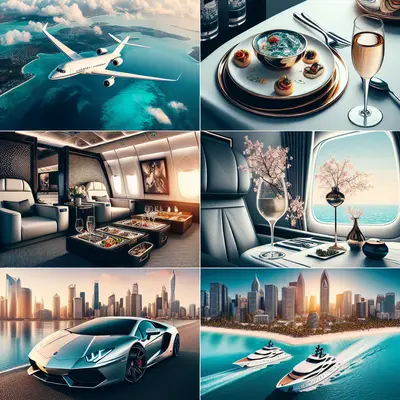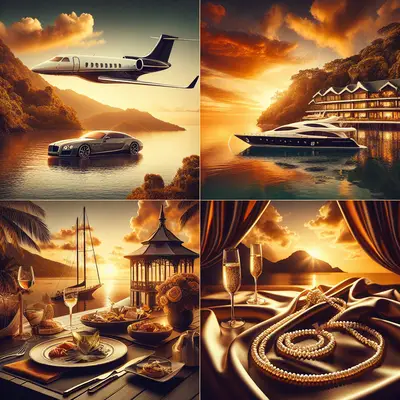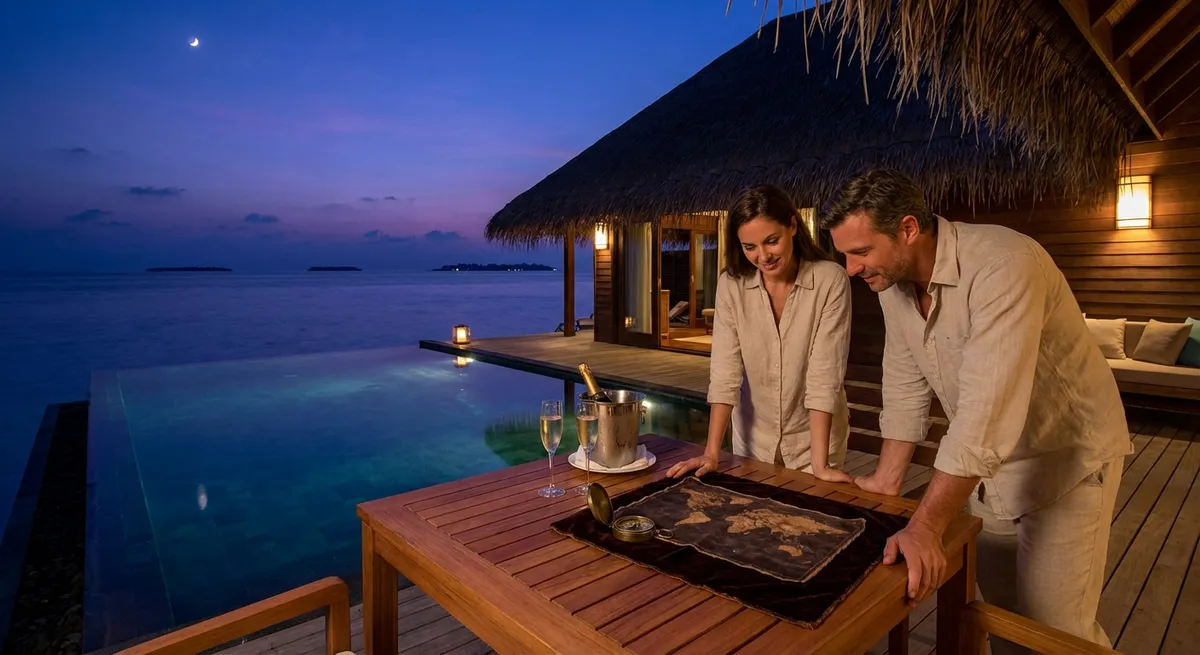
There is a quiet shift unfolding in how the most discerning travelers move through the world. The conversation is no longer about suites versus villas, or first versus business. It is about choreography—how time, privacy, access, and sensory detail are orchestrated into something that feels less like a trip and more like a private composition. Luxury travel today is defined not by excess, but by precision.
Below are five exclusive insights shaping this new landscape—signals that the truly initiated are already following, and that separate a polished itinerary from a genuinely elevated journey.
1. Designing the Journey Backwards: Arrival as the First Signature
The most sophisticated itineraries are now engineered in reverse. Instead of starting with destinations and working forward, seasoned travelers begin with the feeling they want to experience the moment they arrive—and architect everything backwards from that single frame.
This might mean timing an arrival so that a private car glides into a coastal property exactly as the sun sets in line with floor‑to‑ceiling windows, or ensuring that the first hour after landing is spent not in a lobby but in a reserved spa suite with a tailored jet‑lag protocol. It involves aligning flights, transfers, and even meal timing with circadian rhythms and personal preferences, so the body never feels the shock of movement across time zones.
Increasingly, premium travelers are also leveraging airport services—fast‑track immigration, private terminals, and discreet meet‑and‑assist teams—to make the threshold between “in transit” and “arrived” almost imperceptible. The signature of the trip is not the Instagram moment days later; it is that first, deeply considered hour, when the world softens and the journey announces its intent.
2. Curated Micro-Access: Beyond the Obvious “Exclusive Experience”
What used to pass for exclusivity—after‑hours museum tours, private yachts, chef’s tables—is now merely the baseline. The frontier has shifted to micro‑access: precise, often ephemeral privileges that are not broadly advertised and cannot be simply booked online.
This may look like a conservator unlocking a museum’s archive room to show a single work rarely seen by the public; a vintner opening a barrel that was never intended for commercial release; or a designer granting after‑closing access to a studio, not a store. The value lies less in the price tag and more in the subtlety of access and the feeling of being momentarily behind the curtain of a city’s true working life.
Such experiences demand a different kind of planning: relationships over reservations, cultural literacy over checklists. They are rarely transactional. The partners who facilitate them—fixers, concierges, cultural advisors—operate in quiet networks and rely on trust built over repeated collaboration. For the traveler, the reward is a form of intimacy with place that cannot be replicated by even the most lavish public offering.
3. The Precision of Time: Treating Hours as the New Currency
Among those who travel frequently at the highest level, time is no longer managed—it is sculpted. The question is not “What can we fit into three days?” but “What deserves presence, and what must be eliminated so that it can breathe?”
This philosophy is reflected in itineraries that deliberately include unstructured windows, not as an afterthought but as a core design element. A day might be anchored by a single, exquisitely chosen experience—a late‑afternoon sail that coincides exactly with a local regatta, or a performance at a historic theater in the one balcony box with a particular acoustic sweet spot—while the rest of the hours remain fluid by design.
Travelers at this level are also increasingly relying on intelligence, not just information: tools that track seasonal crowd patterns, local festival calendars, and even climate data to avoid peak congestion and optimize conditions for specific pursuits, from stargazing to wine tasting. The result is an itinerary that feels uncrowded and unhurried, even in iconic locales.
In this context, saying no becomes a luxury skill. Declining the extra excursion, skipping the “must‑see” that conflicts with one’s own rhythm, or choosing a long lunch over a fourth landmark is not a loss—it is an act of refinement.
4. The Sensory Signature: Elevating the Invisible Details
The most memorable journeys are increasingly defined by elements that do not appear on a booking confirmation: scent, acoustics, linens, light. These sensory nuances form a kind of private signature that stays with the traveler long after the geography fades.
Consider the difference between a villa and a well‑tuned villa: the particular thread count and weave of sheets selected not for show, but for breathability in a specific climate; glassware chosen to match not just the wine list, but the way a traveler prefers to hold a stem; lighting scenes calibrated for morning, pre‑dinner, and late‑night, with color temperature tuned to promote rest, not just ambiance.
Sound is emerging as a serious consideration. Quiet is no longer enough. Sophisticated travelers are asking: What does the property sound like at dawn? Does the suite invite in the murmur of a city or fully seal it away? Is there intentional sound design—curated playlists, or better yet, the absence of canned music in favor of natural acoustics and local soundscapes?
These details are not incidental; they shape the nervous system’s response to place. The most forward‑thinking properties and private travel teams now treat them as foundational, elevating the experience from “beautiful” to deeply, almost subconsciously restorative.
5. Hyper-Personal Permanence: Leaving Traces Instead of Footprints
Sustainability in luxury travel has matured beyond opting out of daily linen changes. For a growing segment of refined travelers, the question is: What remains when I leave, and is it better than what was there before?
This has given rise to a more discreet, hyper‑personal approach to giving back. Rather than broad charity initiatives, travelers are increasingly channeling resources into tightly focused, place‑specific projects aligned with their own interests—restoring a single architectural detail in a historic property, underwriting the training of a young local chef, or funding a micro‑scholarship for guides specializing in regional ecology or heritage.
On the environmental side, the calculus has become more sophisticated. Carbon offsets alone feel insufficient; instead, travelers—and the brands that serve them—are engaging with more transparent frameworks: direct contributions to verified conservation projects, support for destinations implementing responsible tourism policies, and a careful preference for operators who can substantiate their practices rather than merely market them.
The effect is subtle but powerful. The journey becomes reciprocal: not just an extraction of experiences, but a conversation with place. The traveler departs, but a part of their presence persists in a way that is tangible, traceable, and quietly aligned with their values.
Conclusion
Luxury travel today is defined less by spectacle and more by discernment: the choreography of arrivals, the grace of micro‑access, the sculpting of time, the refinement of the sensory environment, and the intention to leave meaningful traces behind. For those attuned to these codes, the world feels different—less like a series of destinations, and more like a collection of precisely tuned moments.
The most coveted luxury is no longer just where you go, but how intimately, intelligently, and responsibly you move through the spaces between departure and return.
Sources
- World Travel & Tourism Council (WTTC) – Economic Impact Reports – Data and analysis on how high-end travel shapes global destinations and economies
- Virtuoso – 2024 Luxe Report – Insights into evolving preferences and behaviors of luxury travelers
- Condé Nast Traveler – Future of Luxury Travel – Editorial perspective on current and emerging trends in premium travel experiences
- United Nations World Tourism Organization (UNWTO) – Frameworks and guidelines on sustainable and responsible tourism practices in premium segments
- Harvard Business Review – The New Luxury Experience – Analysis of how luxury is being redefined around experience, personalization, and meaning
Key Takeaway
The most important thing to remember from this article is that this information can change how you think about Luxury Travel.