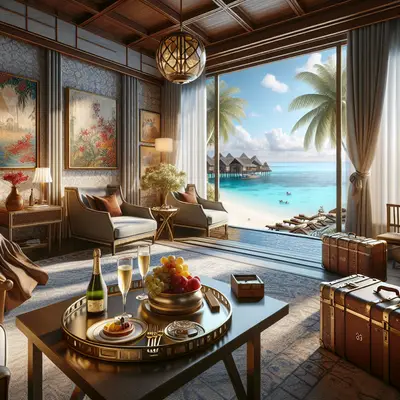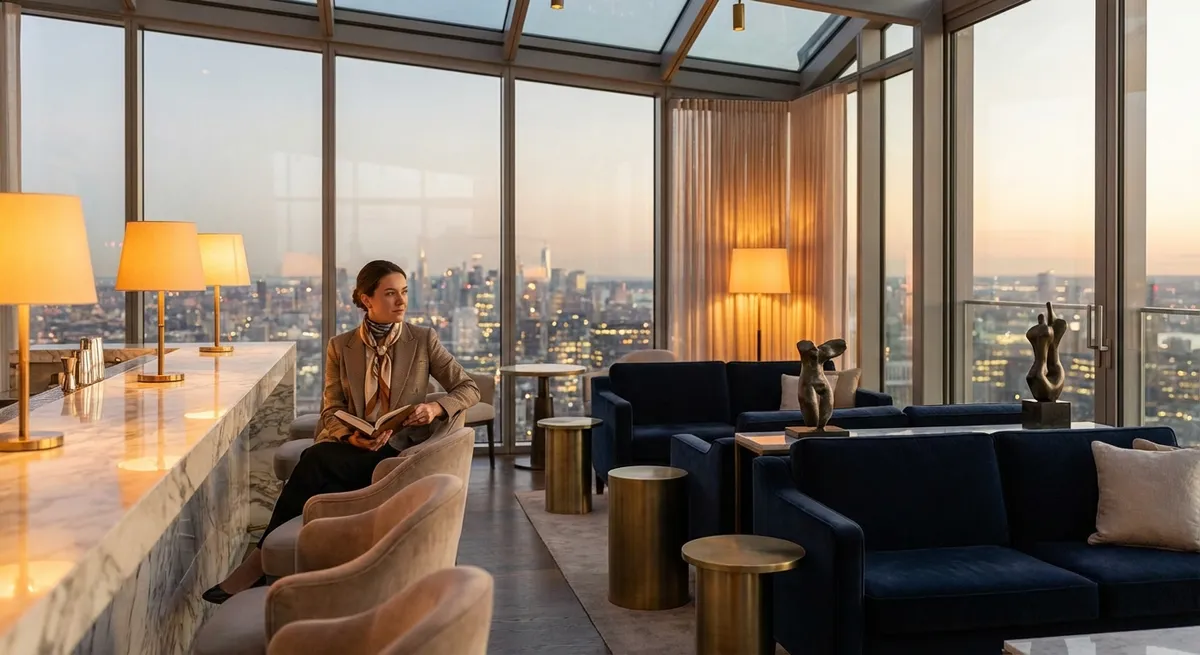
The true premium life is no longer measured in carats or square footage; it is measured in control—of time, of privacy, of sensory detail. For the modern luxury traveler, indulgence is not a spectacle but a calibration: of temperature, of lighting, of service that anticipates rather than intrudes. At 40,000 feet or behind the gates of an unlisted villa, the most coveted amenity is the feeling that the world has been edited just for you. This is the longitude of privilege: a carefully drawn line between access and anonymity, abundance and restraint.
Below are five exclusive, nuanced insights shaping how discerning travelers are quietly redesigning what “premium” truly means.
1. The Precision of Time: Curating a Personal Tempo
For high-net-worth travelers, time is the only non-renewable luxury, and the most sophisticated itineraries now revolve around protecting its texture, not merely saving minutes. It is less about flying faster and more about eliminating friction between the moments that matter.
This might begin with tailored departure windows, built not around airline schedules but around circadian science and personal energy patterns—leaving when your body performs best, not when the timetable dictates. Private aviation operators and elite travel advisors increasingly collaborate with sleep specialists and performance coaches to design flight times that minimize jet lag and maximize cognitive clarity upon landing.
On the ground, the new premium tempo removes queues from the equation altogether: discreet immigration facilitation, in-villa security screenings, on-demand chauffeured transfers that feel choreographed rather than arranged. At the ultra-luxury level, some travelers are quietly commissioning “temporal concierges”—dedicated fixers whose sole mandate is to align meetings, dinners, spa appointments, and transfers so that the day unfolds with cinematic ease.
The result is a life in transit that does not feel like transit at all. Time is no longer sliced into appointments and obligations; it becomes a continuous, controlled atmosphere, curated to your preferred rhythm—unhurried, insulated, and remarkably free of interruption.
2. The Architecture of Silence: Designing for Acoustic Privacy
Luxury has always whispered, but the new premium lifestyle is engineered around silence as a design principle. The most coveted spaces—suites, villas, executive lounges, even private airport terminals—are now assessed not only by their aesthetics but by their acoustic signature.
Sophisticated travelers are requesting decibel data as part of pre-arrival briefs: thickness of glazing, level of sound insulation between adjoining suites, HVAC noise specifications, and proximity to high-traffic service corridors. Top-tier hotels are responding with “quiet stack” floors, sound-absorbing materials hidden in wall paneling and textiles, and micro-zoned air systems that hum at the threshold of perception.
At the ultra-premium end, residential-style suites and private residences are being commissioned with layered acoustic zoning: one atmosphere for sleep, another for work, and a third for socializing—each insulated yet seamlessly connected. Some brands are partnering with acoustic engineers typically found in concert hall design, ensuring that conversation in a living room cannot be overheard in a study a few meters away.
For the traveler, this architecture of silence creates a new kind of security: not simply from being seen, but from being overheard. In an era of perpetual connectivity and open-plan everything, a room where your thoughts land softly and stay there is no longer a mere amenity; it is an asset.
3. Scent, Texture, Temperature: The Micro-Sensory Suite
At the highest tiers of travel, luxury is migrating from what is visible to what is almost imperceptible. The new premium suite is curated less around ostentatious décor and more around nuanced sensory programming that most guests will never consciously analyze—but will feel, profoundly.
Elite clients now work with private travel designers to define a “sensory profile” that accompanies them around the world. Preferred fragrance families for in-room diffusers, the precise thread count and weave pattern that feels familiar against the skin, favored pillow density and fill material, the ideal ambient temperature for focus versus relaxation. These details are cataloged, updated, and deployed from Paris to Phuket with near-clinical precision.
Top properties and members’ clubs are building guest intelligence systems that move beyond preferences like “no feathers” to record the exact pressure at which a mattress was last dialed, which side of the bed a guest sleeps on, and whether blackout curtains should be pre-drawn before arrival. Some are even collaborating with olfactory designers to create custom scent “signatures” for individual guests or suites—subtle enough to avoid recognition, consistent enough to create a sense of continuity wherever one lands.
For luxury travelers who live much of their life in transit, this micro-sensory continuity creates something rare: a feeling of embodied familiarity, even in a different country each week. The real indulgence is not the marble bathroom or the ocean view, but the way the room seems to remember you.
4. Discreet Infrastructure: The Invisible Technology of Ease
To the refined traveler, visible technology is starting to feel gauche. Screens, cables, and blinking devices disrupt the visual quiet that premium spaces strive to protect. What is emerging instead is a new layer of discreet infrastructure: deeply intelligent, almost entirely invisible.
Smart suites in the highest-end properties are being wired not for show, but for intuition. Lighting shifts almost imperceptibly with the time of day and local weather conditions, maintaining an optimal balance between alertness and relaxation. Window shades autonomously adjust to protect art, maintain privacy, and control thermal gain, all without a wall of visible switches.
At the infrastructure level, privacy-first networks separate guest devices from the rest of the property’s ecosystem, with enterprise-grade security standards borrowed from financial institutions. For those traveling with sensitive intellectual property, dedicated secure networks and isolated workspaces within a suite are becoming a quiet demand—requested through private channels rather than public booking notes.
Wearables are beginning to integrate with this environment as well: your preferred jet cabin temperature follows you to your car transfer and then to your room. Your biometric data informs in-suite wellness features, from circadian lighting to guided breathwork on the in-room display—if you choose to activate it. The key distinction is agency: the best technology in a premium environment is not the most visible, but the most politely optional.
5. Intelligent Access: Private Worlds Within Public Destinations
The most seasoned travelers no longer seek isolation from the world; they seek the ability to move through it selectively. The pinnacle of premium living is not owning an island, but having a private “layer” wherever you choose to be—nested within global capitals, cultural hubs, and sought-after resorts.
This manifests as a quiet network of keys: memberships that unlock unlisted entrances, by-invitation-only lounges, and residence-only floors in hotels where the lobby is a stage but your corridor is never a thoroughfare. Major cultural institutions are now offering private viewing windows outside public hours, accessible only through tightly curated programs. Culinary capitals are establishing micro-dining spaces adjacent to lauded restaurants: same kitchen, different room, no social choreography required.
The most astute luxury travelers work with advisors who specialize in stitching these access points into a seamless personal topology. A trip to a major city is no longer a random walk between landmarks but a series of layered environments—some public, some cloistered, all orchestrated around your bandwidth for visibility on any given day.
This intelligent access is subtle but profound: you are never stranded in the crowd, never entirely detached from it, and always able to modulate your proximity to the world. In a culture obsessed with exposure, the ultimate privilege is selective permeability.
Conclusion
Premium living in the modern era is an exercise in fine-tuning. It is not the loudest expression of wealth, but the quietest mastery of detail: time that bends to your will, spaces that protect your thoughts, environments that remember your body, systems that serve without being seen, and access that feels tailored rather than granted.
For luxury travelers who measure value not in how much they can acquire but in how precisely they can live, the destination is no longer a place on a map—it is a standard of experience. Once that standard has been set, every journey, however brief, becomes another opportunity to inhabit the world on your own exacting terms.
Sources
- Skift: How Luxury Travel Is Evolving – Industry analysis on evolving expectations and behaviors among luxury travelers
- McKinsey & Company – The New Dynamics of Personalization – Insight into hyper-personalization trends that inform ultra-customized travel experiences
- Harvard Business Review – The Value of Customer Experience, Quantified – Research on how meticulous experience design creates outsized value in premium segments
- National Sleep Foundation – Circadian Rhythms and Travel – Background on circadian science relevant to time-optimized itineraries
- MIT Sloan Management Review – Designing Emotionally Aware Environments – Exploration of sensory and emotional design principles applicable to high-end hospitality environments
Key Takeaway
The most important thing to remember from this article is that this information can change how you think about Premium Lifestyle.