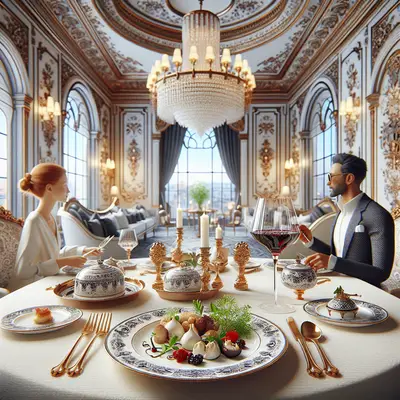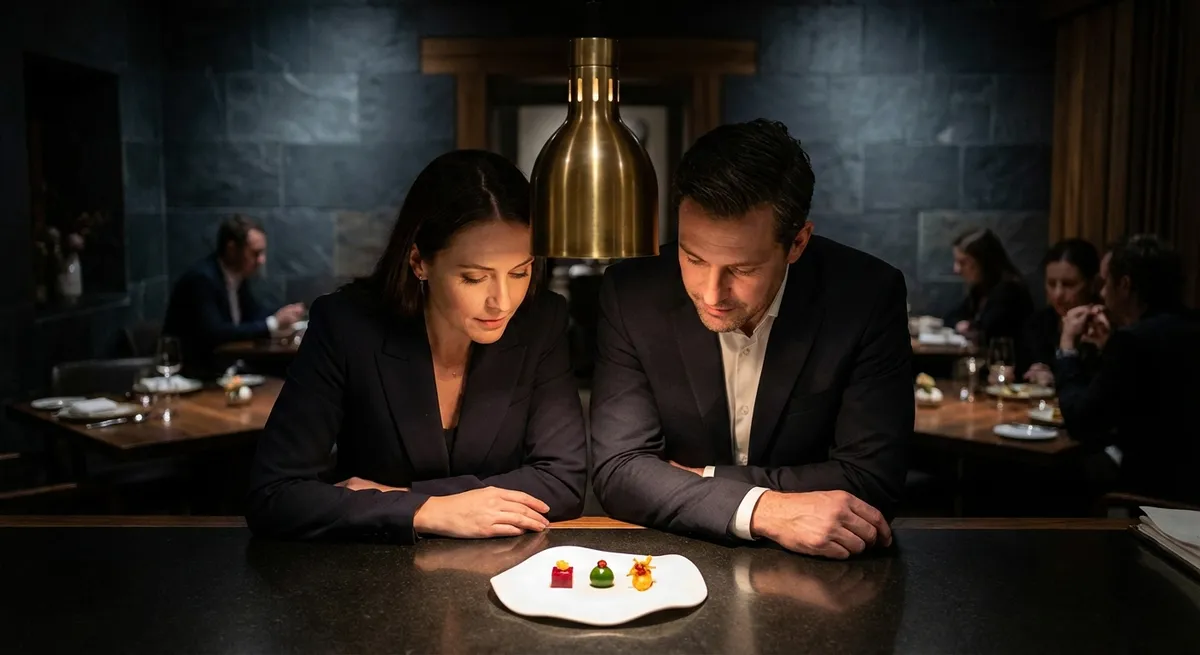
Fine dining has slipped its velvet gloves. The theatre is quieter now, the gestures more deliberate, the indulgence less about spectacle and more about precision. For the luxury traveler, the most memorable meals are no longer defined solely by Michelin stars or hard-to-get reservations, but by the way an experience aligns—almost invisibly—with one’s rhythms, preferences, and expectations of ease. This is dining as an intimate dialogue: between guest and chef, heritage and innovation, place and palate.
Below, five exclusive insights shaping the way discerning travelers now experience the world’s most refined tables.
1. The Chef’s Library: Menus as Curated Narratives, Not Performances
For the serious gastronome, a menu has become less a list of dishes and more a tightly edited library of ideas. The most compelling rooms are moving away from exhausting, multi-hour marathons toward tasting sequences that function like a well-composed short novel: precise, layered, and impossible to skim.
This subtle shift matters for travelers who cross time zones and cultures regularly. A composed progression of six or eight courses respects stamina and focus, allowing each plate to register rather than compete for attention. Many modern fine-dining chefs now build menus around a central motif—perhaps a coastline at different tides, the life of a single ingredient through seasons, or the dialogue between classical technique and indigenous produce.
For the guest, the privilege lies in being invited into that narrative without having it over-explained. The highest caliber service teams read the table quickly: how inquisitive you are, how much storytelling you want, whether you prefer to engage with the philosophy of the dish or simply enjoy its execution. Menus are increasingly designed with quiet escape valves—alternate courses, softened spice levels, or discreet substitutions—so the story can be edited in real time to match your mood and capacity.
2. Precision Pairings: Beyond Wine Lists to Liquid Cartography
The classic wine list, written in dense columns and organized by region, is gradually giving way to something far more intelligent: liquid cartography that maps flavor, texture, and tempo to the experience you want, not just the plates you order.
In the world’s more forward-thinking dining rooms, traditional pairings coexist with explorations of non-alcoholic fermentations, micro-seasonal teas, low-intervention wines, and bespoke infusions. For the luxury traveler, this is liberation: you are no longer confined to the binary of “pairing or bottle,” but presented with a spectrum of options that can be tailored without fuss to your evening—whether you have a flight at dawn, a board call across time zones, or simply prefer a lighter lift.
An emerging form of exclusivity lies in data-informed discretion. Elite beverage programs increasingly keep quiet records of returning guests: your tolerance for tannin, your preference for lower ABV, your reaction to that smoked oolong in Kyoto. On your next visit, in another city, the sommelier might suggest a progression that feels uncannily attuned to you—because it is. The goal is not to overwhelm with choice, but to eliminate friction: fewer decisions, better decisions, perfectly timed.
3. Invisible Personalization: When the Room Learns Your Rhythm
True luxury in dining now has less to do with excess and more to do with anticipation. The most refined experiences feel choreographed without ever feeling staged, and the finest rooms operate on a principle of invisible personalization: your preferences appear without being declared, and your boundaries are respected without being tested.
For frequent travelers, this can be transformative. A discreet inquiry at booking about arrival time, jet lag, or dietary sensitivities can translate into thoughtful touches: a slightly accelerated pacing to offset fatigue, lighter early dishes after a day of meetings, a quieter corner table shielded from the dining room’s energy. The artistry lies in doing all this without interrupting the flow of the evening.
Technology supports this, but does not lead it. Yes, some restaurants quietly maintain guest profiles, shared within their group or with select partner properties; but the human dimension remains central. A maître d’ who remembers that you prefer still water at room temperature or that you gravitate toward raw preparations at the start of a meal delivers something no algorithm can: the feeling of being known. For the luxury traveler, that recognition—repeated across cities and continents—becomes a subtle, highly personal network of culinary sanctuaries.
4. Provenance with Restraint: Ethics as a Quiet Ingredient
Conscious sourcing is no longer a marketing line; it is an expectation among discerning guests. Yet the most sophisticated fine-dining rooms have learned to integrate ethics with restraint. They prioritize traceability, seasonality, and sustainability without turning dinner into a lecture.
For the global traveler, provenance offers a way to read a destination with uncommon clarity. A single oyster can reveal an entire coastal ecosystem; a heritage grain can speak to centuries of local agriculture; a spice blend may trace historic trade routes. The luxury lies in how gracefully this context is made available—shared with those who are curious, left in the background for those who simply wish to enjoy.
Behind the scenes, commitment to responsible sourcing often means complex relationships with small producers, regenerative farms, or specialized fishermen. Guests may not see this infrastructure, but they sense its result: produce at its precise moment of expression, seafood harvested within strict quotas, meat served in smaller, more thoughtful portions. For those who travel widely and see the environmental strain on beloved destinations, dining in a room that takes its responsibilities seriously adds a layer of peace to the pleasure.
5. Tables as Cultural Salons: Access to a City’s Most Private Conversations
At the highest level, a restaurant is never only about food. It becomes a salon—an intersection of local culture, global travelers, creative communities, and discreet power. For the luxury traveler, fine-dining spaces increasingly function as intimate vantage points from which to read a city.
This does not mean conspicuous celebrity spotting. The newer, quieter mode of prestige is more subtle: a chef quietly highlighting a little-known ceramicist through bespoke tableware; a playlist curated by a local musician who dines there often; a collaboration with an independent gallery resulting in rotating artworks. Dining becomes an immersion in a city’s creative ecosystem, distilled into a few square meters of linen and light.
Access, in this context, is about perspective. A conversation with the chef at the pass, a late reservation that extends into industry after-hours, a seat at the counter in front of the charcoal grill—all offer glimpses into a culture’s unguarded self. The most exalted luxury is to feel briefly included in a city’s inner conversation, not as a spectator, but as a welcomed participant.
Conclusion
The contemporary language of fine dining has softened at the edges while sharpening in intent. It is less impressed with its own reflection and far more attentive to yours: your time zone, your palate, your appetite for narrative, your tolerance for performance. For the luxury traveler, the most resonant meals are now precise rather than grand, personal rather than ostentatious, and quietly intelligent rather than loudly exclusive.
To dine well today is to engage in a refined exchange—between craft and comfort, principle and pleasure, locality and global perspective. The finest rooms no longer simply serve dinner; they interpret your journey back to you, one considered, beautifully calibrated course at a time.
Sources
- [Michelin Guide – About the MICHELIN Guide](https://guide.michelin.com/en/article/michelin-guide-criteria/about-the-michelin-guide) – Overview of how Michelin defines and evaluates fine dining at the highest level
- [World’s 50 Best Restaurants – Academy and Voting](https://www.theworlds50best.com/academy/) – Insight into global perspectives on exceptional restaurants and evolving standards
- [Harvard T.H. Chan School of Public Health – Sustainable Diets](https://www.hsph.harvard.edu/nutritionsource/sustainability/) – Background on sustainability and ethical sourcing practices relevant to modern fine dining
- [BBC Travel – How tasting menus are changing](https://www.bbc.com/travel/article/20221019-how-the-tasting-menu-is-changing) – Discussion of the shift from long, theatrical tastings to more focused, guest-friendly formats
- [UNESCO – Intangible Cultural Heritage & Gastronomy](https://ich.unesco.org/en/intangible-heritage-and-creative-cities-01166) – Context on gastronomy as cultural expression and its role in conveying local identity
Key Takeaway
The most important thing to remember from this article is that this information can change how you think about Fine Dining.