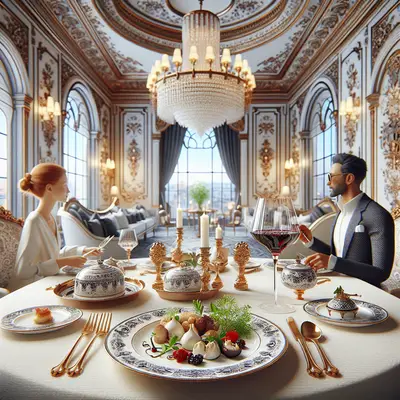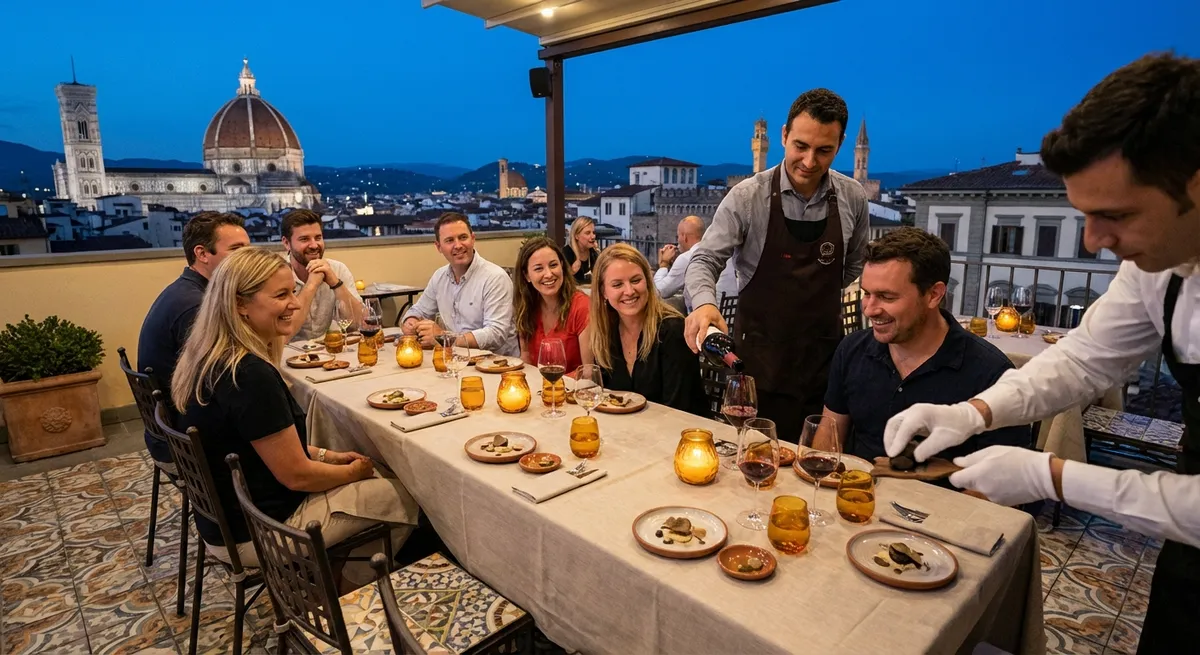
For the discerning traveler, dinner is never merely the final line on an itinerary—it is a lens, a litmus test, and often the most revealing conversation a destination can offer. Fine dining, when approached with intention, becomes less about spectacle and more about precision: of flavor, of service, of atmosphere, and of meaning. At Jet Ready, we see the world’s most exceptional tables as quiet embassies of culture, where every course is a translation and every gesture is an unspoken assurance that you are exactly where you are meant to be.
Below are five exclusive insights that transform fine dining from a reservation into a rarefied experience—subtle calibrations that seasoned luxury travelers recognize, and that distinguish the merely excellent from the truly exceptional.
1. The Prelude Before the Menu: Reading the Room Like an Insider
For those accustomed to premium hospitality, the experience begins long before the first pour of champagne. The most refined guests assess a dining room the way a sommelier assesses a cellar—silently, thoroughly, and with attention to nuance.
Notice the acoustics before you notice the décor. In world-class rooms, conversation is present but never competing; sound is managed with fabrics, spacing, and architectural intent. Ambient music, if there is any, is curated to blend with the room’s tempo, not dominate it.
Lighting is another quiet signal of ambition. The best restaurants sculpt light to flatter both plate and guest: warm without amber heaviness, controlled without feeling theatrical. If the kitchen is open, observe the line—there should be visible urgency, but not visible stress. True excellence shows as choreography, not chaos.
Luxury travelers also recognize the pacing of the greeting as a hidden metric. A subtle pause at the host stand to take in your posture, language preference, and energy level; the unhurried, confident escort; the discreet check that your table positioning matches your stated preferences (window, banquette, view of the room). Before you see a menu, you’ve already learned everything you need to know about the restaurant’s standards.
2. Off-Menu, On-Point: The Quiet Language of Personalization
The real currency of fine dining is not truffle shavings or caviar tins; it is the restaurant’s ability to adapt the experience to you without disturbing the integrity of the kitchen’s vision. Luxury travelers understand that menus are starting points, not borders.
This often begins with an intelligent, understated conversation. A sommelier who inquires not just “red or white?” but about the wines you gravitate toward at home; a server who notes your preference for lower salt or avoidance of rich dairy and quietly coordinates with the kitchen. The rarest refinement is when such details carry forward from one visit to the next, or from one sister property to another.
The most rewarding tables for global travelers are those that treat dietary preferences as opportunities rather than obstacles. If you mention a constraint—kosher-style dining, plant-based cuisine, low alcohol—pay attention to the response. In top-tier dining rooms, the solution arrives as a composed experience, not a compromise: bespoke tasting menus, thoughtful non-alcoholic pairings, or dishes that feel intentional rather than “without.”
Those in the know also understand the tact of asking “Is there anything seasonal that the chef is particularly proud of tonight?” or “Would the kitchen consider a smaller tasting format focused on seafood?” A serious restaurant will often respond with quiet enthusiasm, unlocking dishes, formats, or pairings not listed in print. The line between guest and regular narrows fastest for those who communicate their preferences with clarity and respect.
3. The Art of the Pairing: Beyond Wine, Toward Atmosphere
Wine pairings have long been the accepted benchmark of culinary sophistication, but the global luxury traveler increasingly expects something more nuanced: pairings not only of beverage to dish, but of atmosphere to intention.
In the world’s most forward-thinking dining rooms, beverage programs read like narratives. Wine lists favor producers who work sustainably and express terroir with clarity. Sakes are selected not as novelties but as precise counterpoints to particular textures and temperatures. Cocktail programs integrate local botanicals and regional spirits, making the glass an extension of the destination, not a distraction from it.
Non-alcoholic pairings, once an afterthought, are now a telling differentiator. Look for venues where zero-proof options are structured with the same rigor as wine flights—layered infusions, fermentations, and house-made tonics calibrated to echo acidity, tannin, and minerality rather than defaulting to sweetness. For sophisticated travelers adjusting to new time zones or preserving clarity for business, this is no longer a perk; it is a necessity.
Equally important is how the pairing interacts with your evening’s purpose. A power dinner should be lubricated, not derailed, by the wine list. An anniversary or celebration should progress with a natural arc of intensity and ease. The most capable sommeliers read the table as much as they read the vintage charts, adjusting pour size, tempo, and complexity to the conversation unfolding around the glasses.
4. Sourcing as Storytelling: When Provenance Becomes a Privilege
At the top of the fine dining world, ingredients are no longer simply “high quality”; they are meticulously contextualized. For the sophisticated traveler, provenance is not a boast—it is a narrative thread that ties you to local terrain, traditions, and craftspeople.
Listen carefully to how the restaurant speaks about its ingredients. Are you hearing a list of luxury signifiers—wagyu, caviar, bluefin—or a map of relationships? The latter is the hallmark of a thoughtful kitchen: a specific farmer by name, a grower just outside the city whose greens are harvested at dawn, a fisherman who lands directly to the restaurant’s dock, a cheesemaker whose aging cave you could actually visit the next morning.
For luxury travelers accustomed to private access, the line between dining and discovery can blur elegantly. Some properties now offer visits to their partner farms, vineyards, or fisheries for guests who express genuine interest. Chefs curate limited-availability experiences built around a single producer or ingredient at its absolute peak: a fleeting citrus varietal, a short window of wild mushroom season, a particular cheese at the exact week of ripeness.
Ethical and environmental considerations add another layer of refinement. Top-tier restaurants increasingly publish sourcing philosophies, avoid endangered species, and collaborate with scientists or NGOs to ensure responsible seafood and sustainable agriculture. For the well-traveled guest, this alignment between pleasure and principle is not a trend; it is the new baseline of what “luxury” can and should mean.
5. The Exit Signature: How Elite Restaurants Conclude the Experience
In truly elevated dining, the end of the meal is not a fade to black; it is a carefully orchestrated denouement. Luxury travelers know to watch these final movements closely—this is often where a restaurant’s deepest intentions reveal themselves.
Petit fours and final sips are no longer generic sweet gestures but calibrated endings. A top-tier pastry team will adjust sweetness, texture, and even temperature to leave you refreshed rather than dulled, often incorporating subtle herbs or citrus rather than heavy sugar. Espresso service, if you order it, should arrive with the precision of a serious café, not as an afterthought.
The check handling is an art form of its own. At sophisticated levels, discretion is absolute: the folio placed unobtrusively within reach of the host, totals and cards exchanged with minimal visibility to the rest of the table, and swift processing without the awkward limbo of waiting. In some hotel or members-club settings, the check vanishes entirely into your room or member account, reinforcing the sense that you are moving within an integrated ecosystem of care.
The most memorable departures, however, extend beyond the table. A small, considered takeaway—a house-made chocolate, a mini loaf of breakfast bread for the following morning, a printed menu annotated by the sommelier for your cellar at home—signals that the restaurant understands your life continues beyond this evening. When your car is ready without you asking, your coat is warmed, or the host references an upcoming flight or meeting you mentioned earlier, you are reminded that the most important ingredient in fine dining is not on the plate: it is attention.
Conclusion
For the sophisticated traveler, fine dining is not a collection of Michelin stars or headline chefs; it is a finely tuned conversation between place, craft, and the person seated at the table. The true luxury lies in subtleties—how a room receives you, how a menu flexes around you, how a wine list anticipates your needs, how provenance is honored, and how the evening concludes with grace rather than finality.
To approach fine dining as a passport to place is to understand that each exceptional meal is a limited-edition experience, impossible to replicate in full, yet capable of being recognized by those who have learned to read its codes. The world’s most remarkable tables are not just where we eat—they are where we refine our sense of what travel, and hospitality, can be at its quietest and most extraordinary.
Sources
- [Michelin Guide – About the Guide](https://guide.michelin.com/en/about-us) - Background on how Michelin evaluates fine dining and hospitality standards
- [The World’s 50 Best Restaurants – Awards and Criteria](https://www.theworlds50best.com/stories/News/the-2024-list-of-the-worlds-50-best-restaurants.html) - Insight into global benchmarks for top-tier restaurants
- [Harvard T.H. Chan School of Public Health – Sustainable Seafood Guide](https://www.hsph.harvard.edu/nutritionsource/sustainability/sustainable-seafood-guide/) - Context on responsible sourcing of seafood for high-end dining
- [Cornell University School of Hotel Administration – Restaurant Atmospherics Research](https://scholarship.sha.cornell.edu/articles/947/) - Academic perspective on how ambiance and design influence restaurant experience
- [James Beard Foundation – Smart Catch and Sustainability Initiatives](https://www.jamesbeard.org/smart-catch) - Details on chef- and restaurant-led efforts toward sustainable sourcing and ethical dining
Key Takeaway
The most important thing to remember from this article is that this information can change how you think about Fine Dining.