In the upper tiers of global dining, the table is no longer merely a stage for food; it is an instrument of discretion, choreography, and emotional precision. For the luxury traveler, the true reward is not the reservation itself, but the world that quietly unfolds once the door closes: the unprinted menu, the unlisted vintages, the unspoken understanding that this service is meant only for you. Fine dining at this level is less about spectacle and more about calibration—of pace, of flavor, of atmosphere—where every detail is tuned to a guest who expects nothing less than seamless perfection and nothing more than effortless ease.
From Reservation to Relationship: Culinary Concierges as Architects of Experience
At the summit of fine dining, serious travelers no longer “book tables”; they cultivate relationships. The most coveted experiences are brokered not by generic online platforms, but by culinary concierges—hotel butlers, private travel advisors, and trusted in-house fixers—who maintain direct lines to chefs, maître d’s, and owners.
These intermediaries do more than secure impossible reservations; they translate your personal preferences into a restaurant’s private language. A noted aversion to strong perfumes can mean a particular corner is held for you away from the bar. A preference for unhurried evenings may result in a table assigned to you for the entire night, rather than a timed seating. Over multiple visits, your profile deepens: the temperature at which you like your Burgundy, your favored level of lighting, which water you drink when you are not drinking wine.
For the luxury traveler, the insight is clear: the finest dining experiences are rarely transactional. They are relational ecosystems, where your name is not just recognized but remembered, and where each subsequent visit becomes less about access and more about refinement. The reservation is simply the visible tip of a larger, curated network designed to anticipate what you need before you consider asking.
The Invisible Menu: Off‑List Vintages and Unspoken Pairings
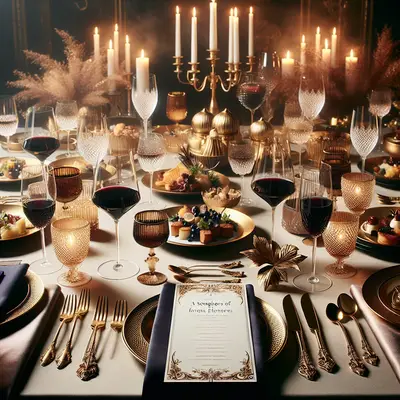
The most interesting wine lists are not always the ones in your hands. Behind the physical pages lies a second, often invisible universe of off-list bottles, rare allocations, and experimental pairings reserved for guests whose curiosity—or reputation—warrants discreet access. Luxury travelers understand that the question is not “What do you have?” but “What are you not pouring for everyone tonight?”
At this level, sommeliers become confidants rather than salespeople. They read not only your stated preferences but your pace of conversation, your comfort with risk, your appetite for narrative. A single, rare grower Champagne may appear at the start of the evening “to see how you feel about this style,” quietly borrowed from a behind-the-scenes allocation. A mature vintage might be poured by the glass for you from a bottle otherwise reserved for regulars, its presence never printed anywhere.
The exclusive insight for the well-traveled diner lies in invitation, not insistence. A simple prompt—“What do you wish more guests asked for?” or “Is there anything special you’re excited about that isn’t on the list?”—often unlocks access to this private layer of the cellar. In these moments, the experience is not about the price of the bottle, but the feeling that something normally unseen has been revealed just for you.
Precision as Luxury: When Timing, Acoustics, and Light Become the Main Course
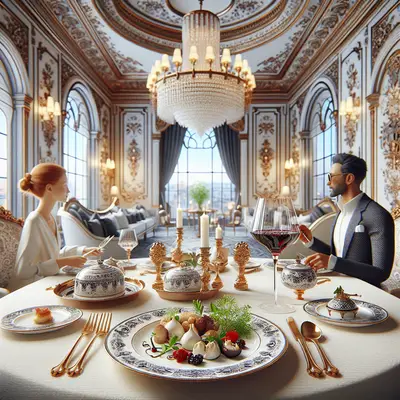
At the rarefied end of fine dining, luxury is measured as much in what you do not notice as in what you do. The quiet orchestration of timing, acoustics, and light can define the memory of a meal as precisely as any signature dish. A room that feels serene without being empty, a playlist you cannot quite hear but would miss if it vanished, a spotlight that flatters without casting shadows—these are the elements that separate a “good meal” from an indelible one.
For luxury travelers accustomed to control, the most exclusive insight is the value of surrendering to a room that has been meticulously pre-considered on your behalf. An impeccably run dining room will sense the tempo of your evening and adjust the cadence of courses accordingly: pausing to let a conversation deepen, accelerating when energy rises, redirecting service to ensure that dessert does not arrive in the middle of a significant negotiation or a fragile moment.
Modern high-end dining also invests heavily in acoustic and spatial design: absorbing sound to allow privacy at close quarters, shaping sightlines to make each table feel both connected to the atmosphere and discreetly self-contained. The result is a form of invisible craftsmanship: a setting in which you register only comfort while an entire architecture of calm hums just outside your awareness.
The Chef’s True Canvas: Bespoke Menus Beyond the Tasting Format
Tasting menus have become the common language of fine dining, but the luxury traveler increasingly seeks a level of personalization that transcends “chef’s choice” as a generic template. At the most responsive restaurants, the chef’s real artistry emerges when they are challenged to compose outside the constraints of a fixed progression—to design a meal around the person, not the program.
This may take the form of a quietly tailored tasting menu that avoids certain textures you dislike while preserving the restaurant’s narrative arc, or a hybrid format that pairs key signature dishes with off-menu improvisations. For regulars and high-value travelers, it might mean a dish revisited in a new variation or a once-loved course resurrected “just for tonight,” revived from a past menu for a guest who remembered it.
The exclusive advantage lies in sharing a bit more context than usual. Communicating why you chose the restaurant—perhaps a particular ingredient, a culinary memory from another city, or a curiosity about a region—gives the chef something specific to respond to. In these rare moments, the menu ceases to be a sequence and becomes a dialogue, with each plate reflecting the intersection of the restaurant’s identity and your own.
Dining as Sanctuary: Private Rooms, After‑Hours Access, and the Gift of Uninterrupted Time
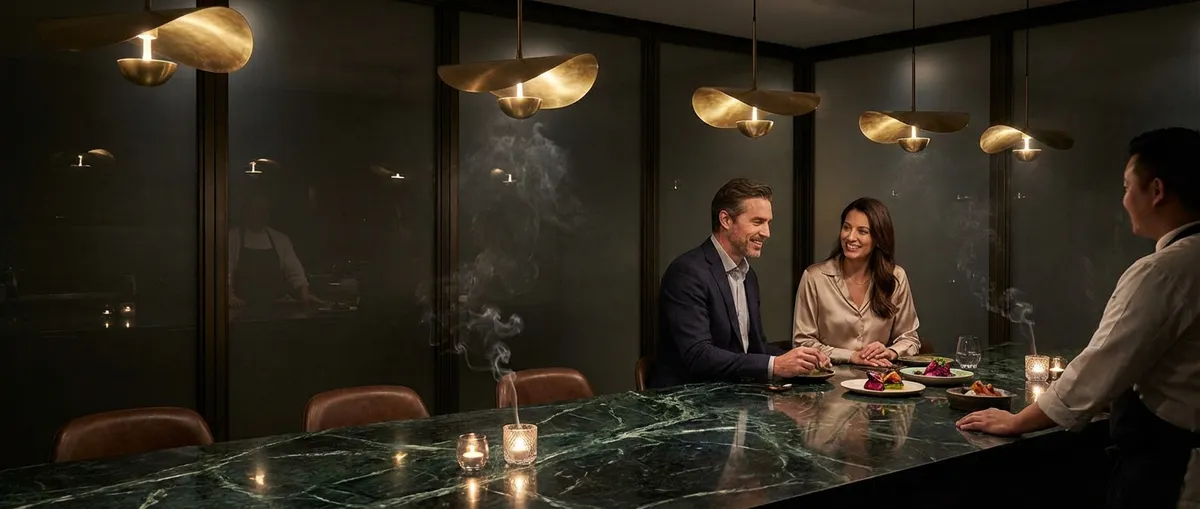
For those who travel in the upper echelons—whether for business, diplomacy, or deeply personal occasions—the true luxury of fine dining is often privacy, not prominence. Private rooms, discreet side entrances, and after-hours services transform the restaurant from a public destination into a temporary sanctuary where deals are concluded, confidences exchanged, and celebrations quietly sealed.
Some establishments now engineer these experiences with meticulous sensitivity: tables shielded from view but still within reach of the kitchen’s energy, private terraces with their own soundscapes, or salon-like spaces where a dedicated team serves only your party all evening. In select cases, entire restaurant buyouts or late-night “second seatings” are arranged for elite guests, allowing dining to begin only after public service has ended.
For luxury travelers, the insight is that premium fine dining is increasingly about the control of context as much as cuisine. It is not only where you eat, but who sees you, when you appear, and how much of your evening is visible to others. The most valuable reservations are not always during peak hours or in the center of the room; they are the moments when the restaurant bends its rhythm to match yours, providing not just a meal, but a sheltered interval of uninterrupted time.
Conclusion
At its highest level, fine dining is no longer defined by theatrics or conspicuous display, but by a quieter, more discerning set of values: relationships instead of mere access, invisible layers of hospitality beyond the printed menu, atmospheres engineered for calm rather than noise, and highly personal experiences that answer to the individual rather than the trend. For the luxury traveler, the table has become both mirror and refuge—a place where identity, taste, and privacy are honored in equal measure.
In this world, the finest meals are not the ones that are most talked about, but the ones that are least visible: evenings in which the staff seems to move one thought ahead of you, where the rare bottle feels chosen rather than flaunted, and where the city outside recedes for a few hours into a soft, distant hum. This is the new language of fine dining for the few who recognize that true luxury is not in being seen at the right table, but in knowing that the table has been quietly, precisely set for you.
Sources
- [Michelin Guide – Understanding the Michelin Star System](https://guide.michelin.com/en/article/dining-in/what-is-a-michelin-star) – Overview of how top restaurants are evaluated and what defines excellence at the highest levels
- [The World’s 50 Best Restaurants – Restaurant Profiles](https://www.theworlds50best.com/list/1-50) – Detailed descriptions of leading fine dining restaurants and their approaches to service and experience
- [Harvard Business School – The Perfect Storm: Dining Experience Design](https://hbswk.hbs.edu/item/the-perfect-storm-designing-the-dining-experience) – Explores how timing, atmosphere, and service design shape high-end dining
- [Cornell University School of Hotel Administration – Restaurant Atmospherics and Behavior](https://scholarship.sha.cornell.edu/cgi/viewcontent.cgi?article=1180&context=chrpubs) – Research on how lighting, acoustics, and layout influence guest perception in fine dining
- [Wine Spectator – Insider Access to Restaurant Wine Programs](https://www.winespectator.com/articles/restaurant-wine-lists-insider-secrets) – Insight into how sommeliers manage on- and off-list bottles and rare allocations
Key Takeaway
The most important thing to remember from this article is that this information can change how you think about Fine Dining.