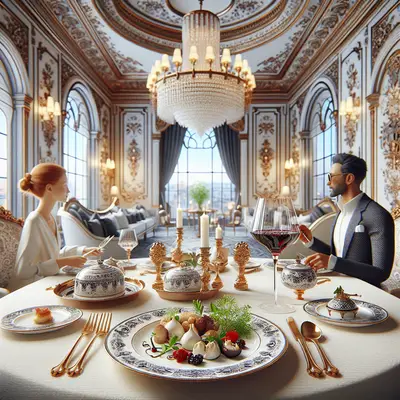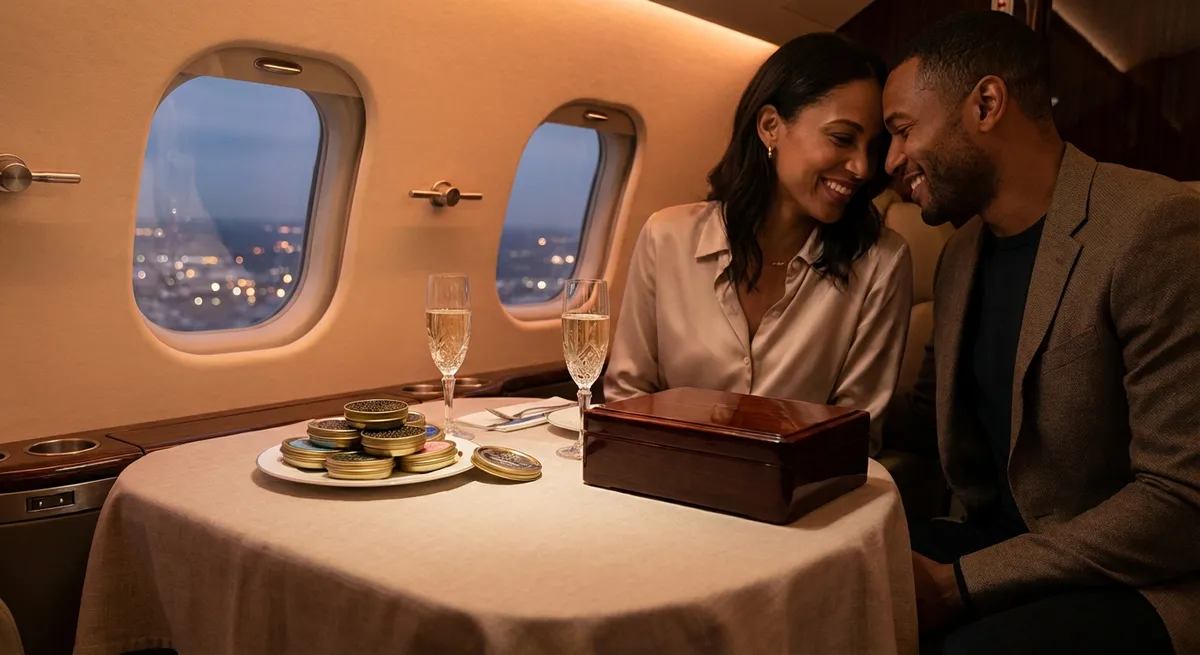
In the upper echelons of travel, fine dining is no longer a single evening’s reservation—it is the quiet architecture around which a journey is designed. For the luxury traveler, the most memorable tables are less about spectacle and more about precision: the exact temperature of the room, the cadence of service, the way a sommelier anticipates a mood rather than a grape. This is dining as a private room in motion: a succession of curated environments where geography, culture, and technique are distilled into a few unhurried courses.
Below are five discreet, insider-level lenses that transform fine dining from a destination into a personal operating system for life on the move.
1. The Table as Command Center: Designing Your Evening, Not Just Booking It
For most guests, a reservation is a time slot. For the sophisticated traveler, it is a framework around which the entire evening is orchestrated.
The most coveted experiences begin long before you are seated. Concierges at leading hotels and top-tier credit card lifestyle desks maintain direct lines to restaurants, not just for access, but for calibration: preferred lighting (corner banquette vs. chef’s counter), background noise level, pacing of courses, and even discreet timing for business discussion can be noted in advance. A restaurant’s floor plan becomes a strategic asset; a table that faces the room allows for subtle people-watching and soft networking, while a semi-secluded corner invites intimate conversation and unhurried tasting.
Forward-planning travelers will often synchronize their arrival with the kitchen’s rhythm: securing the first seating to experience a tasting menu at its sharpest execution, or opting for a later hour when the room has softened and the sommelier has a few minutes more to talk. In elite dining rooms, the host stand functions almost like an air traffic control tower—tracking regulars, decoding guest preferences, and orchestrating evenings across multiple time zones. Your role is to supply context, not demands: who you are dining with, what the evening should feel like, and what you wish to remember about it.
2. Invisible Choreography: Reading the Codes of World-Class Service
The difference between “high-end” and truly world-class dining is rarely on the plate; it lives in the choreography that surrounds it. Luxury travelers know to watch the service, not just the food.
In elite rooms, service is designed to vanish into the experience. Napkins are refolded when you stand, but only when you have moved far enough away not to see it. Water levels are topped without breaking the thread of a conversation. Cutlery is reset in perfect alignment with your dominant hand and the sequence of the upcoming course. The most refined service culture is anticipatory, not reactive: a server may subtly slow the delivery of the next course when they observe your table deep in discussion, or accelerate pacing when they sense fatigue after long-haul travel.
Understanding these signals allows you to collaborate in the experience. Briefly resting your cutlery in the “pause” position gives the team permission to hold the next course; placing your phone face down and out of reach signals you are ready for deeper engagement with the menu. A quiet mention of jet lag at the start can prompt minor, thoughtful adjustments: smaller pours, gentler dishes early in the meal, or a preemptive espresso offered before dessert. In the best rooms, service is not a performance for the guest—it is a duet, and the most seasoned travelers know how to lead softly.
3. The Sommelier as Global Guide: Beyond Pairings and Into Places
To the experienced traveler, the wine list is not merely a catalogue of labels; it is an atlas. The sommelier becomes less a seller of bottles and more a curator of place, time, and narrative.
Elite diners increasingly look for wines that carry a story aligned with their journey. A volcanic white from Sicily paired with local seafood in Tokyo becomes an exquisite cross-current of terroirs; a structured Nebbiolo enjoyed in New York the week before a Piedmont trip can act as a prologue. The informed guest will often ask not, “What do you recommend?” but “What excites you right now that I won’t easily find elsewhere?” This opens the door to small allocations, off-menu pours, and back-vintage half-bottles that never make it onto printed lists.
There is also a growing convergence between fine dining and sustainability. Those in the know ask about low-intervention producers, regenerative vineyards, and transport footprints, not as talking points but as alignment with a broader travel ethic. Increasingly, major dining capitals maintain deep relationships with growers in less publicized regions—Greece beyond Santorini, Portugal beyond the Douro, the new wave of English sparkling—and it is in these quieter corners of the list that a sommelier can most delight a well-traveled palate. For the luxury traveler, the most memorable pairing is often not the “perfect” one, but the one that feels like a secret introduction to a future journey.
4. Precision Menus for the Constantly Airborne: Jet Lag, Wellness, and Texture
For those who live between airports and boardrooms, the fine dining experience is increasingly judged by how it understands the realities of a body in transit. Tasting menus, once acts of indulgence, are now quietly becoming instruments of calibration.
Forward-thinking restaurants—and hotel dining rooms in particular—are designing experiences around circadian rhythm, digestion, and mental clarity. Post-flight dinners might feature lighter, high-water-content courses early on to counter cabin dehydration, followed by measured proteins and restrained sugars to avoid the spike-and-crash cycle that destroys sleep. Texture becomes a tool: gently cooked vegetables, supple seafood, and broths that soothe rather than assault an already overstimulated system.
Luxury travelers are also using pre-arrival communication to fine-tune menus with an almost surgical precision. Rather than listing intolerances, they share how they want to feel afterward: “rested for a morning presentation,” “sharp enough to work after dinner,” or “ready to sleep on local time.” In the most advanced dining rooms, chefs respond not with compromise, but with bespoke sequencing—lower-sodium broths, reduced sauces, adjusted portion sizes, and carefully curated caffeine timing. Fine dining, in this light, becomes another well-being tool in the traveler’s arsenal, as considered as a premium sleep mask or a perfectly calibrated cabin pressure.
5. Dining as a Discreet Network: Tables as Gateways to People and Places
In certain circles, reservations are not just about access to food, but access to people. The right table, on the right night, in the right city functions as an intersection point for global networks—family offices, emerging designers, discreet investors, and cultural figures moving beneath the surface of the usual social maps.
Luxury travelers understand that some restaurants have informal “houses within the house”: specific sections where regulars are seated, patterns of nights when particular communities organically convene, and late-hour rituals that only begin once the second seating has ended. It is not about celebrity spotting; it is about being folded into a quiet, self-selecting ecosystem where introductions, recommendations, and collaborations emerge organically over a cheese course or a final glass of Armagnac.
The most effective way into this orbit is rarely overt. Long-term relationships with trusted concierges, a consistent presence over multiple visits, and a clear respect for the room’s privacy codes matter more than name-dropping. When a restaurant begins to recognize you—not with overt displays, but with a slight modification of a dish to your known preferences or a pour from an unlisted bottle—you have effectively converted that dining room into a global extension of your living room. For the perpetual traveler, these nodes of familiarity across cities form an invisible network of “home tables” where business can unfold softly and friendships can be renewed with minimal friction.
Conclusion
For the luxury traveler, fine dining is no longer an isolated indulgence; it is an integrated language that connects time zones, cultures, and intentions. The most memorable meals are those in which every element—the placement of a chair, the tilt of a glass, the pacing of each course—has been aligned with how you move through the world.
When approached with nuance, a restaurant becomes more than a place to eat. It evolves into a personal command center, a wellness ally, a cultural guide, and a discreet networking platform—each table a private room where the global journey briefly, beautifully, comes to rest.
Sources
- [The World’s 50 Best Restaurants – Official List](https://www.theworlds50best.com/list/1-50) - Global benchmark highlighting trends, service philosophies, and key destinations in haute cuisine
- [Michelin Guide – Official Site](https://guide.michelin.com/) - Authoritative resource on fine dining standards, star criteria, and notable restaurants worldwide
- [Harvard T.H. Chan School of Public Health – Nutrition and Health Eating Out](https://www.hsph.harvard.edu/nutritionsource/healthy-eating-out/) - Insights into health, nutrition, and how meal composition can affect well-being, relevant to wellness-oriented dining
- [U.S. Department of Transportation – Jet Lag and Air Travel Health Tips](https://www.transportation.gov/airconsumer/jet-lag) - Government guidance on jet lag and travel fatigue, informing the discussion of menus tailored to travelers’ physiology
- [Wine & Spirit Education Trust (WSET)](https://www.wsetglobal.com/knowledge-centre/wine/) - Educational reference on wine regions, pairing principles, and sommelier-level wine knowledge
Key Takeaway
The most important thing to remember from this article is that this information can change how you think about Fine Dining.