Luxury travelers do not search for “the best restaurant.” They search for the most resonant experience: a table where the city’s soul is plated with discretion, precision, and grace. Fine dining, at its highest level, is no longer about spectacle—it is about alignment. The right room, at the right moment, with the right flavors, can recalibrate an entire journey. For the Jet Ready traveler, fine dining is not a detour from the itinerary; it is the essential language in which a destination first introduces itself.
Below are five exclusive, nuanced insights that quietly separate a pleasant meal from a defining travel memory.
The First Menu Is the Room, Not the Plate
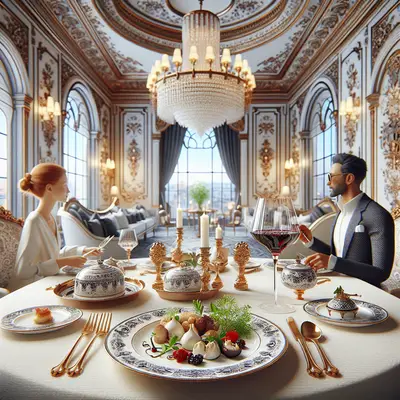
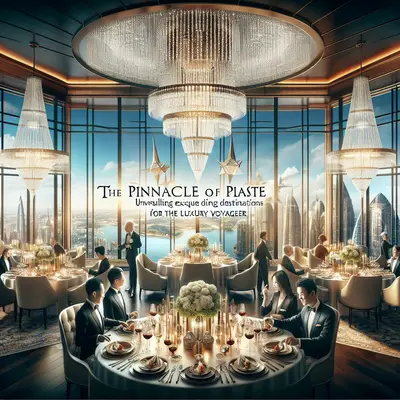
Before a single course arrives, the most discerning travelers read the room as intently as the wine list. In the world of serious gastronomy, architecture, acoustics, and table mapping are deliberate choices, not incidental design. How a restaurant handles sightlines, distance between tables, and the choreography of staff reveals its true priorities.
A truly elevated dining room offers an acoustical hush without deadening the energy; you can hear the person across from you, yet sense the discreet hum of a well-heeled crowd. Lighting is calibrated to flatter both the plate and the guest—no harsh overheads, no theatrical shadows that obscure color and texture. Table placement matters as well: a slightly offset banquette that shields you from the main corridor can feel more luxurious than the obvious “best table” in the center. Seasoned travelers often request “a quiet, corner table with a view of the room, not the door”—a subtle cue to the host that discretion and observation are valued over being seen. When the space itself feels composed, you can be confident that every other detail has been considered with similar care.
The Most Memorable Courses Are Off the Printed Menu
For those accustomed to premium travel, the real experience often begins where the printed menu ends. At the upper tier of fine dining, chefs maintain a quiet, off-menu repertoire: a minimal caviar tasting only offered to regulars, a small plate built around a fleeting seasonal ingredient, or a classic dish retired from the main card but still available by request.
The key is how you ask. Rather than demanding “something special,” signal curiosity and trust. Mention a preferred flavor profile—saline, smoky, vegetal, intensely umami—and invite the kitchen to interpret. Many elite restaurants keep a small reserve of ingredients or signature elements specifically for guests who engage at this level. Over time, some travelers curate an informal “personal menu” around the world: a particular off-menu pasta in Milan, an unlisted yakitori skewer in Tokyo, or a dessert variation built without sugar in Paris. These quiet exchanges create a sense of continuity between journeys, turning a global map of restaurants into a personal network of culinary confidants.
Service as a Silent Concierge to the City
In true fine dining, service is not simply about the table—it is about the city outside the door. The finest teams act as an unofficial, hyper-curated concierge, able to translate your tastes on the plate into experiences beyond it. This is not about asking for the usual tourist recommendations, but about mining the staff’s intimate knowledge of their home.
A skilled sommelier can recommend not just a regional wine bar, but the one where winemakers themselves gather after service. A front-of-house manager may discreetly point you towards a late-night jazz bar that does not advertise, yet regularly hosts off-duty chefs and serious locals. Chefs themselves often know the best markets, bakeries, and street vendors that never appear in guidebooks. For luxury travelers, one dinner can unlock an entire undercurrent of the city—if you frame your questions around curiosity and context: “Where do you go for something completely unpolished but exceptional?” or “If I had just one more meal in this city and it couldn’t be here, where should it be?” Fine dining staff, when engaged respectfully, can recalibrate your entire sense of place.
The Luxury of Precision: Time, Temperature, and Tempo
The true currency of premium dining is not ingredients—it is precision. On a private jet, comfort stems from seamless timing and calibrated environments; the same applies at the table. The most refined restaurants understand that temperature, pacing, and rhythm separate a pleasant evening from an extraordinary one.
Notice how long the interval is between courses: ideally, it adjusts to your behavior. A table engaged in animated conversation may enjoy slightly longer pauses; a solo traveler might appreciate a brisker cadence. Serving temperature is equally telling. Fish should never arrive searingly hot; refined kitchens allow a brief, intentional rest so that flavors bloom and textures relax. Wines are presented at precise temperatures that respect their structure—whites not ice-cold, reds not overly warm, prestige Champagne held just above standard refrigerator chill so its complexity is fully expressed by the third sip. The very best teams will even time the arrival of a key course to a lull in the room, so the impact lands in a moment of collective calm rather than during a flurry of service. For the Jet Ready traveler, recognizing this tempo is part of the pleasure; you are not just eating, you are moving in sync with a carefully orchestrated evening.
Building a Discreet Global Table: Relationships, Not Reservations
Luxury travelers know that access is rarely about status alone; it is about continuity. In the realm of fine dining, the most coveted experiences—bespoke tastings, kitchen counter seats, last-minute tables on fully booked nights—are often extended not through a booking platform, but through relationships quietly and consistently nurtured.
This does not require ostentation. It can be as elegant as sending a concise thank-you note after an exceptional meal, mentioning one specific detail that mattered (a perfect wine pairing, an unhurried explanation, a precisely cooked course). Over time, returning to a restaurant and asking to be seated in a familiar section, or requesting a sommelier by name, signals that you view the place as part of your personal circuit, not a one-off conquest. Many seasoned travelers also establish rapport with one or two global hotel concierges who understand their sensibilities and can coordinate reservations and introductions in other cities. The result is a discreet, global “table network” where you are welcomed as an informed regular, even when visiting a city for the first time. In aviation terms, it is the difference between simply holding a ticket and being recognized on sight by the crew.
Conclusion
For the Jet Ready traveler, fine dining is not about chasing stars or posting plates; it is about cultivating an intimate, portable understanding of excellence. It is the art of reading a room before the menu, of discovering dishes that never appear in print, of using the dining room as an access point to a city’s private rhythm. When approached this way, every journey quietly acquires its own culinary signature—a sequence of rooms, faces, and flavors that, together, define what it means to arrive well.
Fine dining, at its highest expression, is less performance than dialogue: between you and the kitchen, the staff and the city, your expectations and their execution. Master that dialogue, and every destination becomes a table worth crossing the world to reach.
Sources
- Michelin Guide – About the Guide - Background on how top restaurants are evaluated, including criteria around service, ambiance, and consistency
- World’s 50 Best Restaurants – Articles & Insights - Features on leading chefs and global dining trends, including off-menu culture and service philosophy
- Harvard T.H. Chan School of Public Health – The Nutrition Source: Dining Out - Insight into how menu design and portioning reflect deliberate culinary decisions
- Cornell University School of Hotel Administration – Hospitality Management Research - Research on service design, guest experience, and restaurant operations in luxury hospitality
- James Beard Foundation – Industry Articles - Commentary from chefs and hospitality professionals on evolving fine dining practices and guest engagement
Key Takeaway
The most important thing to remember from this article is that this information can change how you think about Fine Dining.