In the highest tiers of travel, “exclusive” is no longer defined by marble lobbies or recognizable logos. It is measured in privacy, in precision, and in how seamlessly a resort disappears into the rhythms of your life. For the Jet Ready traveler, the finest properties are not merely destinations—they are carefully engineered environments where time, attention, and experience are calibrated to the individual. Understanding what truly distinguishes these places is the quiet advantage of those who travel well.
The Architecture of Privacy: Design That Anticipates Your Boundaries
At exceptional resorts, privacy is not a marketing promise; it is an architectural principle.
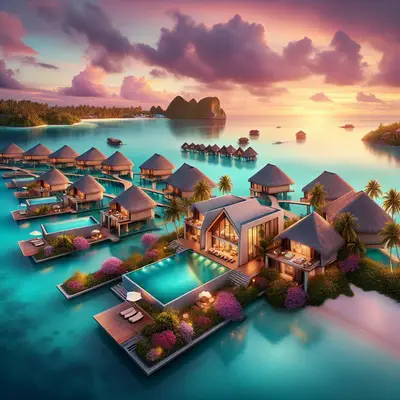
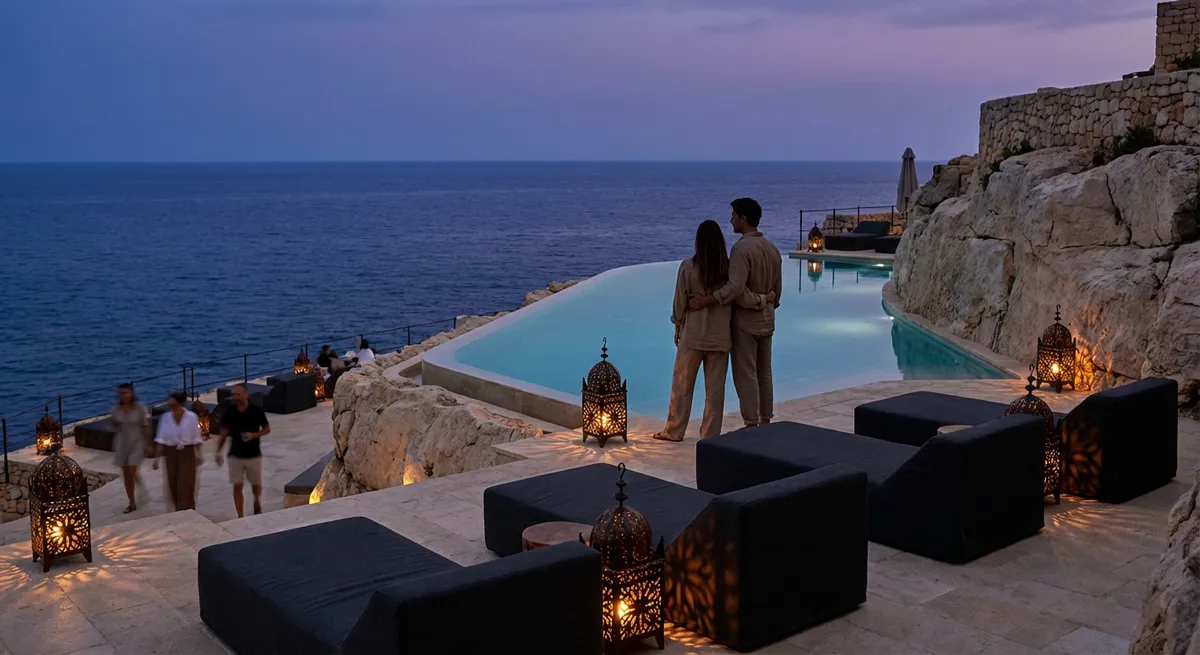
The layout is often tiered and choreographed: villas staggered to avoid sightlines, pathways that eliminate cross-traffic, and service corridors hidden from guest view. The most sophisticated properties are designed so that you rarely encounter other guests unless you deliberately choose to. Private plunge pools, walled gardens, and shaded outdoor lounges are positioned to capture both light and seclusion, allowing you to move freely—coffee on the terrace, a late swim, a call on the daybed—without feeling observed.
You’ll also notice that sound is treated as a design material. Natural sound barriers—dense vegetation, water features, subtle elevation changes—dampen ambient noise. Even arrival and departure are engineered to feel discreet: private car access, direct room or villa check-in, and minimized time in communal spaces. When evaluating an exclusive resort, pay attention to its master plan. The best properties enable you to feel as though you have the entire place to yourself, even when it is quietly at full occupancy.
Quietly Bespoke: Service That Remembers Without Performing
Luxury service is no longer about formality for its own sake; it is about relevance and restraint.
In elite resorts, personalization begins long before you arrive. Pre-stay questionnaires are no longer perfunctory—they are frameworks for building your stay: preferred mattress firmness, minibar contents, exercise habits, and even how you like your morning coffee are documented and quietly executed. The most capable guest-relations teams will also discreetly research open-source information—public interviews, social media, prior reservations—to understand your pace and preferences without ever announcing that they have done so.
The difference is in how this knowledge is deployed. You should never feel managed. A resort with true finesse will limit questions, reduce repetitive confirmations, and anticipate the next move—adjusting dining times if your arrival is delayed, pre-booking spa slots that align with your usual routines, or arranging a private transfer at a connecting city without prompting. Service is present but visually light: a favored table reappears at breakfast, a rowing machine is added to your villa gym overnight, your meeting notes are printed and bound before you ask. The benchmark is this: you feel entirely taken care of, yet never surveilled or staged.
Geography with Intention: Locations That Edit the World, Not Escape It
The most compelling exclusive resorts are not simply remote; they are precisely located.
Location is no longer about being far away—it is about being perfectly placed between worlds. A property may be a short helicopter transfer from a financial hub, but offer complete insulation from noise and visual clutter. Or it may be positioned within a region of cultural depth—vineyards with multi-generational estates, coastal villages with living maritime traditions, desert landscapes revered for centuries—while maintaining a microcosm of contemporary comfort.
The hallmark of refined geography is controlled permeability. You can step into the local fabric—an invitation-only tasting with a winemaker whose bottles never reach public lists, a private opening at a regional museum, a sunrise hike guided by someone whose family has walked that route for generations—then retreat to a sanctuary where the outside world is beautifully edited. The resort becomes a lens rather than a fortress: you are protected from the unnecessary noise of tourism, but open to the essential character of the place.
For the globally mobile, this precision matters. Efficient transfers, access to private aviation facilities, and time-zone-aware itineraries enable you to fold even remote resorts into a demanding calendar without losing days to transit. The best properties understand that your most finite luxury is not space—but time aligned with purpose.
Culinary Precision: Dining as a Reflection of Place and Pace
At the uppermost tier, dining is not about excess; it is about coherence.
Exclusive resorts have moved beyond “international menus” toward sharply curated culinary programs anchored in their environments. You may find a tasting menu built entirely around a single coastline—shellfish, seaweeds, local citrus—paired with small-production wines that never appear on open apps. Or a villa breakfast that quietly reflects your nutritionist’s recommendations while still feeling indulgent: low-glycemic options, specific micronutrient targets, or plant-forward compositions that avoid feeling performative.
Another signpost of excellence is temporal sensitivity. Restaurants that understand the cadence of your day will adjust portions, spice levels, and even plating to your schedule: lighter, hydrating dishes after a long-haul flight; slower, more layered courses on evenings with no early commitments; restorative broths and minimal-sugar options after days in the sun. Room service at this level is not a reduced menu but a parallel expression of the kitchen, with the same attention to temperature, plating, and timing.
Crucially, culinary programs at top-tier resorts are often integrated with the local ecosystem: partnerships with nearby farms and fisheries, use of indigenous ingredients handled with respect, and collaborations with visiting chefs that extend beyond “guest appearances” into genuine exchange. Dinner becomes less about spectacle and more about quiet precision—each course intentional, each glass poured in service of your state of mind, not the property’s social media feed.
Layered Access: Experiences That Are Not Publicly Advertised
The rarest luxury is the door that doesn’t publicly exist.
Truly exclusive resorts maintain a portfolio of unadvertised experiences—access that is never broadly marketed and often not listed in any brochure or official site. These may include early or after-hours access to cultural institutions, private use of off-grid locations (a cove, a mountain hut, a historical estate), or introductions to artisans, researchers, or winemakers who do not operate in the consumer-facing space.
This is where relationships, not budgets, define what is possible. Your resort’s general manager or head concierge may have spent decades building trust locally; one call from them can unlock a silent-opening shop visit, a rehearsal at a concert hall, or a bespoke yacht itinerary that bypasses predictable routes. The point is not conspicuous exclusivity but meaningful rarity—moments that feel unrepeatable because they are, by design, contingent on people rather than processes.
When assessing whether a resort operates at this level, pay attention to how they answer open-ended questions: “Are there experiences you don’t typically list?” A property with real depth will not send a PDF; they will initiate a conversation, ask about your interests, and assemble something that aligns with your knowledge, not a generic luxury template. Over time, as familiarity grows, the portfolio deepens—each subsequent visit granting access to layers that were not visible the first time.
Conclusion
In the world of exclusive resorts, differentiation is increasingly subtle—and therefore more powerful. The properties that matter most to sophisticated travelers are not necessarily the ones most visible online, but the ones most precisely attuned to the realities of modern, mobile lives: architecture that respects your boundaries, service that remembers without performing, locations selected with surgical intent, dining that mirrors your internal rhythm, and access that extends far beyond what any brochure can articulate.
For the Jet Ready traveler, the art is in knowing what to look for. When you begin to evaluate resorts not by their adjectives but by their geometry—how they shape your time, your privacy, and your access—you move from simply booking luxury to quietly curating it.
Sources
- Forbes Travel Guide: What Makes a Hotel Truly Luxurious - Insight into the evolving standards of high-end hospitality and service
- Condé Nast Traveler: The Future of Luxury Travel - Discusses changing expectations among affluent travelers, including personalization and privacy
- Virtuoso: 2024 Luxe Report - Industry perspective on trends in upscale and ultra-luxury travel experiences
- American Express Travel: Global Travel Trends - Data-driven look at how premium travelers are redefining luxury and exclusivity
- World Tourism Organization (UNWTO) - Context on global tourism patterns that underpin the rise of exclusive, low-density luxury stays
Key Takeaway
The most important thing to remember from this article is that this information can change how you think about Exclusive Resorts.