In the upper tiers of travel, the true privilege is not opulence—it is insulation. The most discerning travelers are no longer chasing bigger suites or flashier amenities; they are curating ecosystems of privacy, control, and ease that travel with them. Exclusive resorts have evolved into discreet infrastructures of access, precision, and protection, often invisible to anyone not already inside their orbit. For those who move between continents as casually as others cross a city, the question is no longer where to go, but how to experience a place without surrendering time, security, or anonymity.
This is the new landscape of exclusive retreats: a choreography of invisible privileges, pre-emptive service, and finely tuned environments. Below, five exclusive insights illuminate what truly distinguishes today’s most private escapes—and what sophisticated travelers quietly prioritize when they choose them.
The Architecture of Anonymity
At the top end of the market, the most valuable amenity is not a view—it is disappearance. The most advanced properties are designed as architectures of anonymity, where arrival, movement, and departure can occur almost entirely offstage.
Discreet side entrances, underground approaches from private aviation terminals, and direct-in-suite check-in have replaced the theater of grand lobbies. Security here is multilayered yet understated: facial-recognition access to villas, non-invasive perimeter monitoring, and security teams trained to blend into the environment rather than dominate it.
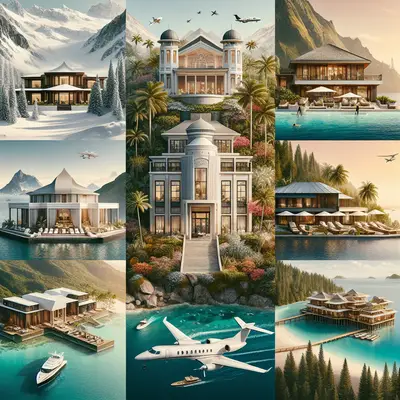
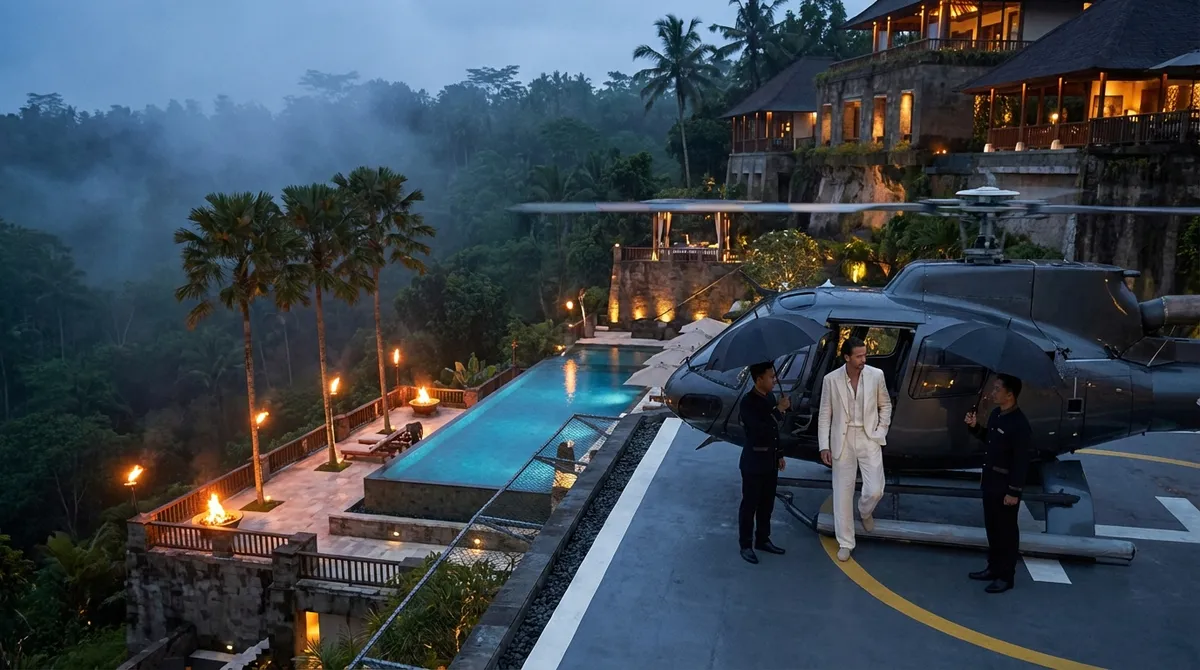
The physical layout of these properties is deliberate: sightlines that protect terraces from neighboring views, landscaped buffers that absorb sound, and circulation routes that prevent guest paths from intersecting unless by design. In certain resorts, private docks or heli-access create a parallel infrastructure, allowing guests to bypass public spaces entirely.
This is anonymity as a spatial discipline. For the traveler, the effect is a peculiar freedom: the ability to inhabit a destination fully while remaining almost entirely unobserved.
Precision Service, Scripted in Advance
The most valuable service at an exclusive resort does not happen in the moment; it is scripted long before a guest arrives. Ultra-high-end properties now treat each stay as an evolving dossier rather than a reservation. Preferences are not simply noted—they are modeled.
Beyond allergies and pillow firmness, these resorts track sensory preferences: typical room temperature by time of day, favored lighting levels, textures tolerated or avoided, even the cadence of housekeeping (some guests prefer their rooms never to be serviced while they are out; others want an invisible reset every time they leave).
Before arrival, cross-functional teams—concierge, culinary, wellness, activities, and security—review a guest profile to choreograph likely needs. Dialects and languages are quietly matched to staff; spa teams prepare protocols based on previous treatments; chefs pre-position niche ingredients that might be requested.
What appears, on the surface, as effortless spontaneity is often the result of weeks of planning. For the traveler, the sensation is one of being deeply anticipated: no decision feels heavy, no request feels large. Life contracts into a series of perfectly timed, low-friction moments.
The Discreet Power of Aligned Security
At the highest levels, security is not an add-on; it is embedded. Yet the most sophisticated travelers are wary of properties where security feels performative or extractive. The ideal is aligned security: measures that mirror the guest’s own risk posture without compromising discretion or comfort.
Exclusive resorts now coordinate closely with private aviation teams, corporate security offices, and, when necessary, government or diplomatic channels. Travel itineraries, ground transfers, and on-site movement are mapped as a single continuum of risk rather than discrete segments. High-net-worth individuals and public figures can opt into silent advance sweeps, secure networks for communications, and highly restricted internal data handling of their identity and movements.
What distinguishes the best properties is their understanding of proportionality. Not every guest requires a visible detail or overt protocols; in many cases, the preference is for quiet resilience—a property that can respond instantly but does not posture. Staff training often extends to digital hygiene, social-media discretion, and crisis communication, ensuring that privacy is guarded as aggressively online as it is on the ground.
The result is an environment where the guest never feels surveilled, yet never feels exposed.
Time as the Ultimate Currency
In the uppermost tiers of travel, money becomes a less interesting variable. Time, however, remains defiantly finite. Exclusive resorts are increasingly built around the stewardship of time—compressing logistics, dissolving delays, and sequencing experiences so that a stay feels far longer than the calendar would suggest.
This begins well before arrival: pre-cleared immigration where legally available, coordinated flight windows to avoid peak congestion, and highly optimized transfer routes. On property, time is reclaimed through invisible orchestration: in-villa check-in, pre-stocked wardrobes via local sartorial partners, spa treatments that begin the moment the guest walks in rather than after a series of administrative steps.
The most advanced properties apply data quietly: identifying when a guest tends to leave their villa and ensuring housekeeping, pool preparation, and in-room dining synchronize around that pattern. Activities are stacked with minimal transition friction—boats waiting precisely when a lunch ends, wellness treatments scheduled so that natural light, circadian rhythms, and personal habit create the least possible fatigue.
To the traveler, the sensation is not rush but abundance. Days seem to open up, margins appear where there were none, and the tempo of life subtly recalibrates to a more considered pace.
Curation Beyond the Property Line
The most sophisticated resorts now function less as destinations and more as operating systems for a region. Their real advantage lies in what happens beyond their borders: curated access to people, places, and perspectives that are typically inaccessible or invisible to the general traveler.
This can mean private access to heritage sites outside public hours, conversations with local cultural figures rather than generic guided tours, or immersion into culinary, artistic, or environmental projects that are normally closed to outsiders. Increasingly, these experiences are co-designed with local communities and institutions rather than merely purchased, which enhances both authenticity and sustainability.
For the discerning guest, the value is twofold. First, the assurance of continuity: the same standards of privacy, logistics, and discretion that exist on property extend seamlessly into the wider world. Second, the depth of engagement: instead of consuming a destination as a series of attractions, the guest encounters it as a layered narrative—one that can be as scholarly, adventurous, or contemplative as they choose.
In this way, the resort becomes less a retreat from the world and more a refined lens through which to experience it.
Conclusion
The future of exclusive resorts is not louder, brighter, or more theatrical. It is quieter, more precise, and more deeply attuned to the invisible pressures that shape the lives of those who use them. Anonymity, anticipatory service, aligned security, temporal efficiency, and curated access beyond the property line now define the upper echelon of hospitality.
For the luxury traveler, understanding these dynamics transforms the way destinations are chosen and evaluated. The question is no longer which property looks impressive in photographs, but which ecosystem of people, protocols, and spaces will best protect your privacy, respect your time, and deepen your experience of the world—without ever announcing itself.
Sources
- World Travel & Tourism Council – High Net Worth Traveler Trends - Provides insights into evolving expectations and behaviors of high-net-worth travelers.
- Skift Research – The Luxury Traveler’s Playbook - In-depth reports on luxury travel trends, personalization, and exclusive experiences.
- Forbes – How Luxury Hotels Are Using Data To Anticipate Guest Needs - Explores how high-end properties leverage data for anticipatory service.
- U.S. Travel Association – Business and Luxury Travel Insights - Offers research on premium and executive travel patterns and priorities.
- Cornell School of Hotel Administration – Hospitality Research - Academic studies on hotel operations, guest experience design, and service innovation.
Key Takeaway
The most important thing to remember from this article is that this information can change how you think about Exclusive Resorts.