Luxury travelers do not chase every reservation that trends on social media; they curate a personal lexicon of experiences that feel both intimate and inevitable. Fine dining, at this level, is less about spectacle and more about quiet assurance—of provenance, of technique, of service that anticipates rather than interrupts. Across the world’s most compelling dining rooms, a new standard is emerging: informed, restrained, and deeply personal.
Below are five exclusive, insider-level perspectives that refine how you choose, experience, and remember fine dining when you travel.
The Discreet Power of the “Pre-Reservation” Conversation
For those accustomed to premium service, the most important moment often occurs before you ever step into the restaurant. At the highest tier of hospitality, the true experience begins with a discreet, intelligent exchange days—or even weeks—in advance.
This is where a restaurant quietly calibrates to you: your preferred pacing of courses, aversions that are culinary (truffle fatigue, caviar indifference) rather than simply dietary, a soft spot for a particular wine region, or a desire to keep the evening short due to a late-night departure. A thoughtful email or a brief call, handled by a reservations director who speaks in the understated shorthand of luxury, allows the team to choreograph your evening with precision.
Savvy travelers share context, not demands: “We’ve just flown in from Tokyo and prefer something lighter and vegetable-driven,” or “We’ll be celebrating a deal closing—please keep it elegant, not theatrical.” In elite dining rooms, this information circulates beyond the host stand, reaching the kitchen, sommelier, and service team. The result is an experience that feels uncannily tailored, not coincidentally aligned.
In cities where flagship hotels and elite restaurants are closely connected, your concierge can further refine this pre-reservation conversation. The most effective introductions are concise and specific: a one-line profile that conveys your style of luxury—not just your status.
Reading a Menu Like an Insider, Not a Tourist
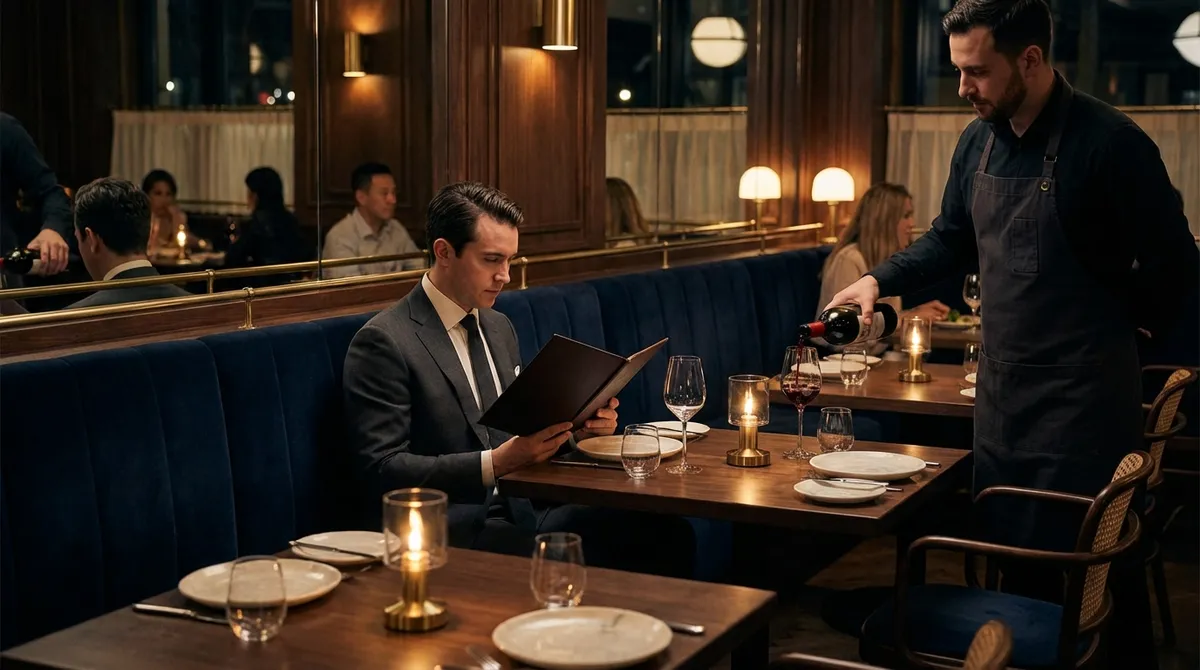
At the high end of gastronomy, menus are written for multiple audiences at once: locals, regulars, critics, and travelers. The discerning guest learns to read between the lines. The most telling details are often quiet: a small local producer listed by name, a humble ingredient given top billing, or an apparently simple dish placed alongside more elaborate signatures.
Minimalist menu descriptions are not an absence of information but a quiet confidence. A three-word dish often signals that the restaurant expects you to understand its reputation, technique, and sourcing without explanation. In contrast, excessive adjectives can sometimes signal that the experience rests more on narrative than execution.
Pay attention to how the restaurant threads its identity through the courses. Are there subtle references to local terroir, coastal waters, nearby farms, or regional heirloom varieties? This is where true destination dining emerges—when the meal becomes legible as a story of place rather than just a sequence of flavors.
Elite travelers often ask a single, strategic question to unlock deeper insight: “Which dish best expresses your region right now?” The response—to both the question and your curiosity—reveals much about the restaurant’s philosophy. In serious dining rooms, there is always one plate that functions as a quiet thesis statement for the chef’s point of view.
The New Luxury Pairing: Beyond Wine as Obligation
For years, prestige tasting menus defaulted to elaborate wine pairings as the unquestioned mark of luxury. Sophisticated travelers are now looking for something more nuanced: beverage programs that prioritize clarity, compatibility, and identity over sheer volume or price.
Leading restaurants increasingly offer parallel worlds: meticulously curated wine pairings alongside non-alcoholic pairings that are as considered as any grand cru. These are not simple juices, but structured drinks built with acidity, tannin-like texture, and aromatic complexity, allowing guests to engage with the cuisine without the blunt expectation of alcohol.
The truly elevated detail is not whether these pairings exist, but how flexibly they are handled. Can you move seamlessly between both tracks? Begin with champagne, pivot into a single white Burgundy that anchors several courses, then slip into a tea-based infusion for the final savory? The most refined programs now accommodate this hybrid approach without hesitation.
Ask for what you actually want, not what tradition dictates. Request a reduced pairing if you prefer a clearer head, or a focused emphasis on one region you are exploring. A great sommelier is less interested in displaying their cellar than in calibrating your evening to precision—subtle, graceful, and personalized rather than performative.
Precision in Timing: When You Dine Matters More Than You Think
For luxury travelers, the time of your reservation can be as strategic as your choice of restaurant. The difference between an early and a late seating in a serious dining room is not a matter of convenience; it’s an entirely different atmosphere, tempo, and sometimes, quality of interaction.
Early in the evening, the kitchen is at its most composed, the staff fully present, and the room still settling into itself. This is often the ideal moment for those who value quiet detail: a longer conversation with the sommelier, more thoughtful explanations from the service team, and a sense that the evening unfolds around you rather than you being swept into its momentum.
Later seatings bring their own rewards: a dining room that has loosened its collar, a more relaxed rhythm, and sometimes, a greater sense of intimacy as the night narrows to the last few tables. In certain cities, late-night service is where the restaurant’s personality is most visible—music softens, the lighting warms, and the professionals have space to exhale.
For travelers crossing time zones, timing also becomes an invisible strategy for comfort. A carefully chosen dinner hour can align with your circadian rhythm, making a tasting menu feel restorative rather than overwhelming. The most refined use of fine dining is not to conquer jet lag with excess, but to ease into a new time and place with intent and grace.
The Private Afterglow: How the Best Meals Linger Beyond the Table
The most exceptional fine dining experiences do not end with dessert; they extend into what happens after you leave the restaurant—how the memory of the evening is held, revisited, and quietly woven into your travel narrative.
At the upper echelon, follow-up is both rare and discreet. A short note the next day from the concierge referencing “how the chef enjoyed designing your vegetable-led tasting” or “a reminder of the wine you particularly enjoyed from Mount Etna” feels considered, not transactional. It anchors the evening as a highlight of your journey without loudly announcing itself.
Elite travelers increasingly curate a private archive of such moments. Instead of posting every course online, they capture a simple record: a copy of the menu annotated with a few key impressions, the name of a winemaker to explore further, a variety of citrus or olive cultivar that speaks to a specific coastline. These artifacts are less for public display than for personal continuity—threads that connect one journey to the next.
The finest restaurants understand that their role in your travel story is to become part of a quiet constellation: a Kyoto counter that shaped how you think about rice, a Mexican coastal restaurant that redefined your understanding of acidity, a Parisian dining room that made restraint feel like the ultimate luxury. What remains is not one viral dish, but a heightened standard for how you wish to dine from this point forward.
Conclusion
For travelers who move easily between continents and time zones, fine dining is no longer a trophy to be collected; it is a language to be spoken fluently. The real luxury lies in nuance—knowing how to engage the restaurant before you arrive, how to decode the menu with quiet confidence, how to shape pairings to your preferences, how to leverage timing to your advantage, and how to let exceptional meals linger beyond the evening itself.
In this world, sophistication is expressed not through visible excess, but through precision of choice. The most memorable tables are not necessarily the most famous; they are the ones that feel, unmistakably, as though they were waiting for you.
Sources
- The World’s 50 Best Restaurants – Official List and Insights – Global reference for influential fine dining destinations and evolving culinary standards
- Michelin Guide – Official Website – Authoritative source on rated restaurants, service philosophy, and culinary trends across major cities
- Harvard T.H. Chan School of Public Health – The Nutrition Source: Restaurant Dining – Context on modern dining habits and considerations for menu composition and balance
- James Beard Foundation – Industry Articles – In-depth features and commentary on chefs, regional cuisines, and evolving concepts in fine dining
- Wine Spectator – Dining & Restaurant Coverage – Expert insight on restaurant wine programs, pairings, and beverage trends at the high end of hospitality
Key Takeaway
The most important thing to remember from this article is that this information can change how you think about Fine Dining.